
UMBC logo

ADVANCE at UMBC

Women in Science and Engineering at UMBC

Professors

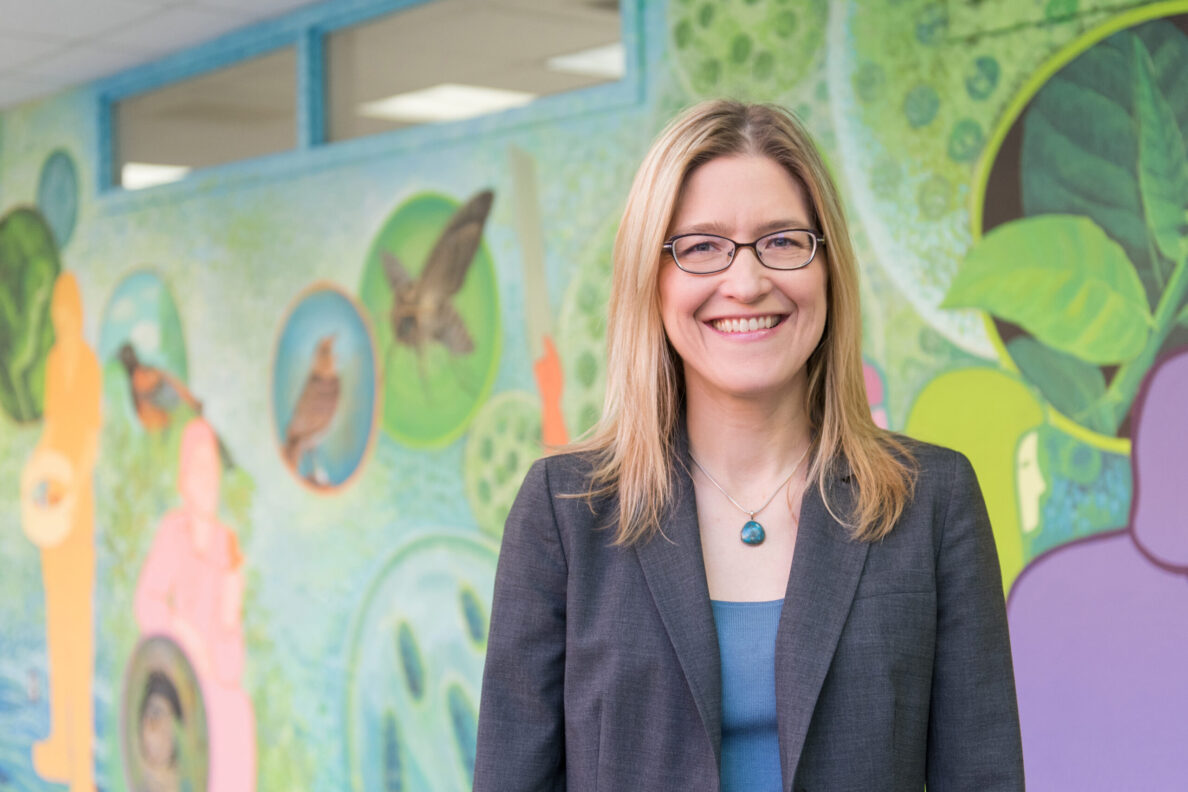
Dr. Tulay Adali, Computer Science and Electrical Engineering

http://www.csee.umbc.edu/~adali/

Tülay Adali (F) received the Ph.D. degree in electrical engineering from North Carolina State University, Raleigh, in 1992 and joined the faculty at the University of Maryland Baltimore County (UMBC), Baltimore, the same year where she currently is a Professor in the Department of Computer Science and Electrical Engineering. She has held visiting positions at École Supérieure de Physique et de Chimie Industrielles, Paris, France; Technical University of Denmark, Lyngby, Denmark; Katholieke Universiteit, Leuven, Belgium; University of Campinas, Brazil; and University of Newcastle, Australia.

Prof. Adali assisted in the organization of a number of international conferences and workshops including the IEEE International Conference on Acoustics, Speech, and Signal Processing (ICASSP), the IEEE International Workshop on Neural Networks for Signal Processing (NNSP), and the IEEE International Workshop on Machine Learning for Signal Processing (MLSP). She was the General Co-Chair, NNSP (2001–2003); Technical Chair, MLSP (2004–2008); Program Co-Chair, MLSP (2008 and 2009), 2009 International Conference on Independent Component Analysis and Source Separation; Publicity Chair, ICASSP (2000 and 2005); and Publications Co-Chair, ICASSP 2008.

Prof. Adali chaired the IEEE SPS Machine Learning for Signal Processing Technical Committee (2003–2005); Member, SPS Conference Board (1998–2006); Member, Bio Imaging and Signal Processing Technical Committee (2004–2007); and Associate Editor, IEEE Transactions on Signal Processing (2003–2006), Elsevier Signal Processing Journal (2007–2010). She is currently Chair of the MLSP Technical Committee and serving on the Signal Processing Theory and Methods Technical Committee; Associate Editor, IEEE Transactions on Biomedical Engineering and Journal of Signal Processing Systems for Signal, Image, and Video Technology; Senior Editorial Board member, IEEE Journal of Selected Areas in Signal Processing.

Prof. Adali is a Fellow of the IEEE and the AIMBE, and the recipient of a 2010 IEEE Signal Processing Society Best Paper Award and an NSF CAREER Award. Prof. Adali’s research interests are in the areas of statistical signal processing, machine learning for signal processing, and biomedical data analysis.

Dr. Marie desJardins, Computer Science and Electrical Engineering

http://www.csee.umbc.edu/~mariedj/

Photo Credit: Marlayna Demond

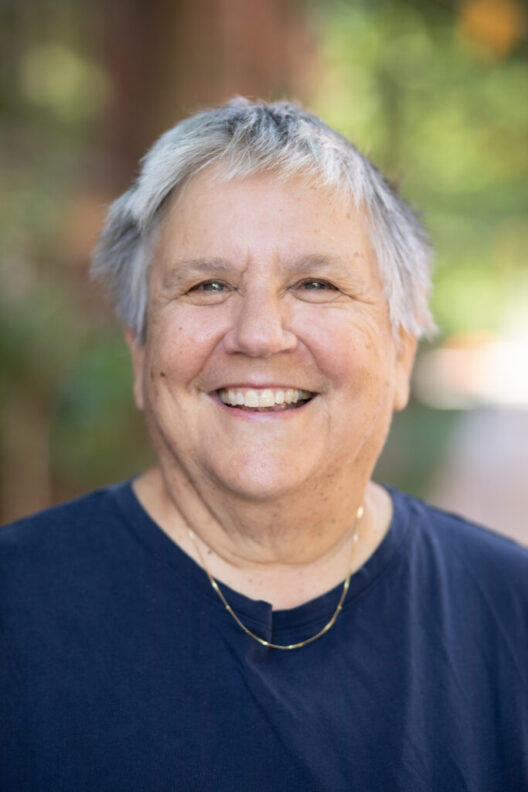
Dr. Marie desJardins is a Professor in the Department of Computer Science and Electrical Engineering. Prior to joining the faculty in 2001, Dr. desJardins was a senior computer scientist at SRI International in Menlo Park, California. Her research is in artificial intelligence, focusing on the areas of machine learning, multi-agent systems, planning, interactive AI techniques, information management, reasoning with uncertainty, and decision theory. She is a Senior Member of both AAAI and ACM, holds an appointment at the University of Maryland Institute for Advanced Studies, chairs UMBC's Faculty Affairs Committee, is a member of the Honors College Advisory Board, and serves on the advisory board of the Center for Women in Information Technology.

Dr. desJardins is active in teaching, mentoring, and advising students. She was named one of UMBC's ten "Professors Not to Miss" in 2011, and is regularly sought out to give invited talks to student groups. She has advised 11 Ph.D. students, 20 M.S. students, nearly 50 undergraduate researchers, and four high school student interns. She was a 2010 CRA-W Distinguished Lecturer and has been involved with the AAAI/SIGART Doctoral Consortium as chair, co-chair, mentor, and/or reviewer from 2001-2011.

Dr. desJardins has been closely involved with WISE since coming to UMBC. She has benefited greatly from the network it provides and in particular from the support that WISE has provided for the tenure and promotion process. She received ADVANCE RA funding to support a graduate student researcher, and was one of the first faculty to take advantage of ADVANCE's Emininent Mentor Program: her mentor not only helped her to better mentor her students, but provided invaluable feedback that helped her to win an NSF CAREER award. Dr. desJardins has also given back to WISE by participating on numerous panels, mentoring junior female faculty within and outside of her department, hosting WISE's annual back-to-school picnic, and serving as the Chair of WISE's Promotion and Tenure Sponsorship Committee.

Dr. Penny Rheingans, Computer Science and Electrical Engineering

http://www.csee.umbc.edu/~rheingan/

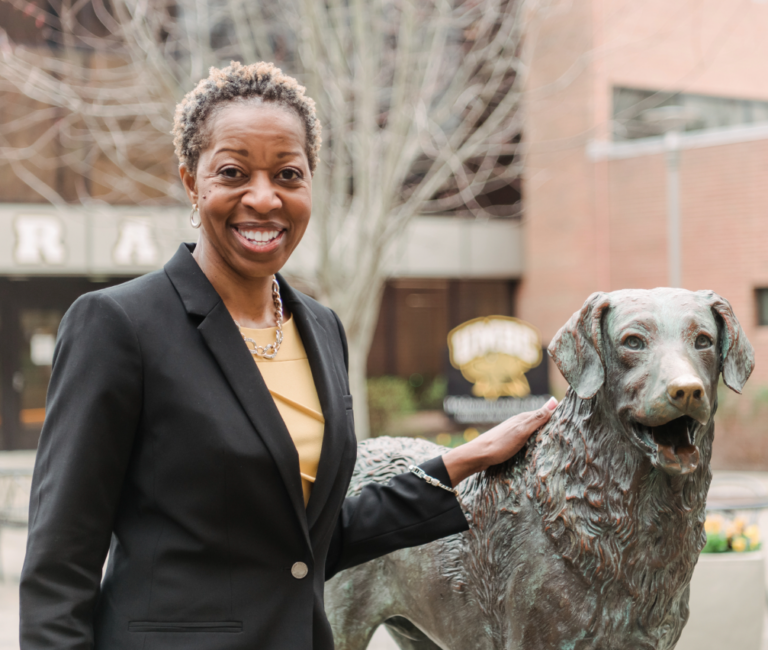
Penny Rheingans is a Professor of Computer Science and Electrical Engineering and Director of the Center for Women in Technology (CWIT) at the University of Maryland, Baltimore County. As CWIT Director, she oversees a scholarship program for undergraduates committed to increasing gender diversity in the technology fields and develops programs to increase the interest and retention of women in technology programs.She received a Ph.D in Computer Science from the University of North Carolina, Chapel Hill and an AB in Computer Science from Harvard University. Her current research interests include the visualization of predictive models, visualization of data with associated uncertainty, volume rendering, information visualization, perceptual and illustration issues in visualization, non-photorealistic rendering, dynamic and interactive representations and interfaces, and the experimental validation of visualization techniques. Dr. Rheingans has over eighty published works in such locations as the IEEE Transactions on Visualization and Computer Graphics, the IEEE Visualization Conference, Eurovis, IEEE Computer Graphics and Applications, and the SIGGRAPH Film Show, as well as included as chapters of various books. In particular, she coauthored the NIH/NSF Visualization Research Challenges report, published in 2006 by IEEE.

Dr. Yelena Yesha, Computer Science and Electrical Engineering

http://www.csee.umbc.edu/research/research-profiles/dr-yelena-yesha-2/

Yelena Yesha is a tenured Professor at the Department of Computer Science and Electrical Engineering, the University of Maryland, Baltimore County. She received her B.Sc. degrees in Computer Science and in Applied Mathematics from York University, Toronto, Canada, in 1984, and her M.Sc. degree and Ph.D. degrees from The Ohio State University in 1986 and 1989, respectively. She joined the Department of Computer Science at the University of Maryland, Baltimore County as an Assistant Professor in 1989. In 1994 she was promoted to the rank of tenured Associate Professor, and in 1995 she was promoted to the rank of tenured Professor. In 1994-1995 she was the Director of the Center for Applied Information Technology (CAIT) at the National Institute of Standards and Technolog. In 1995 she became the Director of the Center of Excellence in Space Data and Information Sciences (CESDIS) at the NASA Goddard Space Flight Center. From 2009 through the present she is the Director of the UMBC site of the National Science Foundation Industry-University Collaborative Research Center for Hybrid Multicore Productivity Research. She has published 10 books as author or editor, and more than 120 papers in prestigious refereed journals and refereed conference proceedings, and has been awarded external funding in a total amount exceeding 21 million dollars.

Associates

Dr. Rachel Brewster, Biological Sciences

http://www.umbc.edu/biosci/general/user/brewster

Dr Brewster joined UMBC in 2003. She received her Ph.D. from the University of Michigan and carried out postdoctoral research at the Skirball Institute of Biomolecular Medicine at New York University and at the Carnegie Institute of Washington. The long term goal of her research is to understand how the central nervous system (CNS), which includes the brain and spinal cord, are assembled during embryonic development. The earliest stage of this assembly, known as neurulation, results in the formation of a neural tube, the precursor of the CNS. In humans, there is a high frequency of birth defects (1/1000) caused by abnormal neurulation, yet the underlying cellular and genetic abnormalities remain for the most part unknown. The first publications from the Brewster laboratory have contributed to our understanding of the mechanisms underlying neural tube formation, using the zebrafish as a model system. By tracking the behavior of single cells at high resolution, Dr Brewster’s laboratory has provided a model for the cellular basis of neurulation, that may explain how the neural tube forms in the caudal region of humans. More recent papers, published and in preparation, identify key molecules implicated in this process, including a gene called linguini required for microtubule stability and pard3, a gene that regulates cell polarity, in part by organizing the microtubule network. These findings increase our understanding of the complex gene networks orchestrating neurulation and establish the groundwork for exploring the etiology of human neural tube birth defects.

Dr. Kathleen Hoffman, Mathamatics and Statistics

http://www.math.umbc.edu/~khoffman/

Kathleen Hoffman (nee Rogers) received her Ph.D. from University of Maryland, College Park in 1997 under the supervision of Prof. John Maddocks on the topic of "'Stability Exchange in Parameter-Dependent Constrained Variational Principles with Applications to Elastic Rod Models of DNA Minicircles''. From 1997-1999, she was a Postdoctoral Fellow at the Institutes for Mathematics and its Applications at the University of Minnesota before starting as an assistant professor at UMBC in 1999. In 2005, she was promoted to the rank of Associate Professor with tenure. She currently holds the position of Graduate Program Director for the program in applied mathematics and co-director of the Women in Science and Engineering (WISE) group. The WISE group and the Advance grant had a significant impact on Dr. Hoffman's success and professional development. These programs provided the impetus for the university family and medical leave policy, which she took advantage of twice before tenure. Additionally, the leadership training sponsored by the Advance grant has provided valuable professional development.

Dr. Carolyn Seaman, Information Systems

http://userpages.umbc.edu/~cseaman/

Dr. Carolyn Seaman is an Associate Professor of Information Systems at the University of Maryland Baltimore County (UMBC). Her research generally falls under the umbrella of empirical studies of software engineering, with particular emphases on maintenance, organizational structure, communication, measurement, COTS-based development, and qualitative research methods.  Carolyn is also a Research Fellow at the Fraunhofer Center for Experimental Software Engineering, Maryland, where she participates in research on experience management in software engineering organizations and software metrics. She holds a PhD in Computer Science from the University of Maryland, College Park, a MS in Information and Computer Science from Georgia Tech, and a BA in Computer Science and Mathematics from the College of Wooster (Ohio).  She has worked in the software industry as a software engineer and consultant, and has conducted most of her research in industrial and governmental settings (e.g. IBM Canada Ltd., NASA, Xerox). Carolyn has participated in WISE since its beginnings, as well as other women-centered initiatives on campus, such as CWIT and ADVANCE. Having opportunities to blend social and professional interaction with female peers is very important to her, and WISE provides a unique opportunity to do that. She has developed close and very valuable relationships through that WISE that would otherwise not have been possible. WISE events have also helped her to develop skills in mentoring, especially of female colleagues and students.

Dr. Jane Turner, Physics

http://physics.umbc.edu/bios/turner/index.php

(Tracey) Jane Turner received her BSc in Mathematics with Astronomy in 1984 and her PhD in X-ray Astronomy in 1988, both from the University of Leicester in the United Kingdom. Arriving in the USA Oct 1988 she first worked as an Associate Research Scientist with USRA, based at NASA's Goddard Space Flight Center (GSFC). During her time at GSFC Jane supported the guest observer facility for the X-ray satellite ROSAT. Jane then supported timeline planning for the GSFC-built instrument BBXRT, when it flew as part of the ASTRO-1 shuttle mission STS-35. Jane's research interests are based around the study of active galactic nuclei (AGN): this has entailed analysis of data from a large variety of X-ray instruments including EXOSAT, Einstein, Ginga, ROSAT, BBXRT ASCA, XMM-Newton, BeppoSAX, Suzaku and Chandra. Jane and her collaborators use X-ray data to pick up signatures of material close to the black hole that lies at the nucleus of an AGN. From these X-ray signatures they can learn about accretion onto black holes, and the process of forming a wind that returns gas back to the host galaxy. Jane as been a part of UMBC since 1998. She is currently an Associate Professor in the Department of Physics. ADVANCE has created a strong network of well-informed and supportive women at UMBC, ensuring that women's contributions to STEM departments are appropriately recognized and appreciated. This backbone of support is one of the most important components of my work life at UMBC. 

Dr. Lina Zhou, Information System

http://userpages.umbc.edu/~zhoul/

Lina Zhou is an Associate Professor of Information Systems, University of Maryland, Baltimore County. Her current research interests include deception detection, ontology, social network analysis, and computer-mediated communication. Dr. Zhou has published over 30 refereed papers in journals such as Journal of Management Information Systems, MIS Quarterly, Communications of the ACM, Information & Management, IEEE Transactions, Information Systems Journal, Decision Support Systems, Group Decision and Negotiation, Small Group Research, and Journal of Database Management. She is a member of the editorial board of the Journal of Database Management, Information Systems Frontier, International Journal on Semantic Web and Information Systems, and Electronic Commerce Research and Application.

Dr. Liang Zhu, Mechanical Engineering

http://www.me.umbc.edu/content/profile-page-dr-liang-zhu

Dr. Liang Zhu received her B.S. in Engineering Thermophysics at University of Science and Technology of China in 1988, Ph.D. in Engineering at City University of New York in 1995. Currently she is an Associate Professor of Mechanical Engineering at University of Maryland Baltimore County. Dr. Zhu's research focuses on thermal science with clinical applications, including imaging processing, hyperthermia treatments using microwave, radio frequency, laser, magnetic nanoparticles, and gold nanorods, and developing cooling devices and protocols for head injury patients. Dr. Zhu served as Chair (2007-2010) and co-Chair (2005-2007) of Biotransport Committee of ASME Bioengineering Division and ASME Heat Transfer Division. She is also interested in engineering education and currently serves as Director of the Mechanical Engineering S-STEM Program at UMBC.

Assistants

Dr. Marie-Christine Daniel, Chemistry and Biochemistry

http://www.umbc.edu/chem/general/user/mdaniel

Marie-Christine Daniel received her B.S. degree from the University of Rennes 1 and her Ph.D. in Chemistry from the University of Bordeaux 1 (France). She then worked as a postdoctoral researcher at Indiana University. Since 2007, she is Assistant Professor in the Chemistry and Biochemistry department at the University of Maryland Baltimore County. Her research interest includes multifunctional nanocarriers, gold nanoparticles, dendrimers and targeted combination therapy.

Dr. Elsa Garcin, Chemistry and Biochemistry

http://www.umbc.edu/chem/general/user/egarcin

Dr. Elsa Garcin is an assitant professor in the Department of Chemistry and Biochemistry at the University of maryland Baltimore County. Dr. Garcin obtained her B. Sc. degree in Biochemistry (1992) from the University of Marseille in France, and received her M.S. degree in "Biological Crystallography and NMR" (1994) and PhD degree in Physics (1998) from the Université Joseph Fourier in Grenoble (France), where she worked with Prof. Juan-Carlos Fontecilla-Camps. She trained as a postdoctoral fellow with Prof. Elizabeth Getzoff and John Tainer at the Scripps Reserach Institute before moving to UMBC in 2008. Dr. Garcin's research interests include structural biology (x-ray crystallography and small-angle x-ray scattering), enzyme catalysis and regulation, posttranslational modifications, conformaitonal changes, and protein-DNA/RNa interactions, in particular the nitric oxide signaling pathway.

Dr. Amy Hurst, Information Systems

http://www.amyhurst.com/

Amy is an assistant professor of Human-Centered Computing in the Information systems department whose research focuses on empowering technology, with projects investigating automatically adaptive interfaces and DIY-Assistive Technology. She is interested in working to help more people gain access to the Assistive Technology they need by empowering non-engineers to "Do It Yourself" (DIY) and create, modify or build. She received her PhD from the Human-Computer Interaction Institute at Carnegie Mellon, and a BS in Computer Science from Georgia Tech. She is a member of the Baltimore Node, and enjoys crafting, building, and yoga. She is passionate about supporting women in Science, and is always willing to chat with a fellow WISE member over coffee. 

Dr. Vadana Janeja, Information Systems

http://userpages.umbc.edu/~vjaneja/

Vandana Janeja is an Assistant Professor in the Information Systems department. She received her Ph.D. and M.B.A in Information Technology from Rutgers Business School, Rutgers University in 2007, M.S in Computer Science from the New Jersey Institute of Technology (NJIT) in 2001 and M.S. in Computer Management from Devi Ahilya Vishwa Vidhyalaya, India in 1999. Prior to joining UMBC, she worked as a Research Associate at the Center for Information Management, Integration and Connectivity (CIMIC), Rutgers University. Her area of research is Data Mining with a focus on anomaly detection in traditional and spatial data. She has published in various refereed conferences such as ACM SIGKDD, SIAM Data Mining, IEEE ICDM, National Conference on Digital Government Research, IEEE ISI and journals such as IEEE TKDE, DMKD and IDA. She has served in the program committees of various international conferences, and has also been a reviewer for the leading academic journals and conferences in her field.

Dr. Maricel Kann, Chemistry and Biochemistry

http://www.umbc.edu/biosci/general/user/mkann

Dr. Maricel Kann is an Assistant Professor at the University of Maryland,Baltimore County. She received a B. Sc. degree in Chemistry and a graduate degree in Pharmaceutical Chemistry from the Universidad de la Republica in Montevideo (Uruguay), where she was a research assistant in the Quantum Chemistry Department. In 2001, she obtained a doctoral degree from the University of Michigan in Chemistry. Her thesis work under the guidance of Dr. Richard A. Goldstein focused on the theory, statistics and methods for protein sequence alignment. After completing her Ph.D., Dr. Kann joined the Structure group at the National Center for Biotechnology Information (NIH) as a postdoctoral fellow. In August 2007, she joined the Department of Biological Sciences at UMBC as an Assistant Professor. Dr. Kann’s research focuses on computational approaches to annotate the human genome with the goal of revealing the molecular underpinning of human diseases. One of the crucial steps after sequencing the genome is to classify and assign function to gene-encoded proteins. Dr. Kann’s work addresses these challenges studying new computational methodologies to align, classify and predict interactions of proteins as well as to identify the role of certain mutations in the disease mechanisms. Dr. Kann is one of the leading experts in the area of translational Bioinformatics, she is the editor of the textbook "Translational Bioinformatics and has chaired several international conference sessions at the Pacific Symposium on Biocomputing (PSB), the Intelligent Systems and Molecular Biology (ISMB) and the American Medical Informatics Association (AMIA) Summit in Bioinformatics. She is a member of AMIA, the American Association for the Advancement of Science and the International Society of Computational Biology. Dr. Kann is part of the editorial boards of the Journal of Biomedical Informatics and the International Journal of Computational Models and Algorithms in Medicine and she is an advisory board member of the PubMedCentral National Committee.

Dr. Sreedevi Sampath, Information Systems

http://userpages.umbc.edu/~sampath/

Sreedevi Sampath is an Assistant Professor in the Department of Information Systems at the University of Maryland, Baltimore County. She earned her Ph.D. and M.S. in Computer and Information Sciences from the University of Delaware in 2006 and 2002, respectively, and her B.E. degree from Osmania University in Computer Science and Engineering in 2000. Her research interests are in the areas of software testing, web applications and software maintenance. She is interested in regression testing and test generation for web applications and in exploring uses of web application usage data. She has served on the program committees of conferences, such as the International Conference on Software Testing Verification and Validation (ICST), International conference on Empirical Software Engineering and Measurement (ESEM), and International Symposium on Software Reliability Engineering (ISSRE). She is a member of IEEE Computer Society.