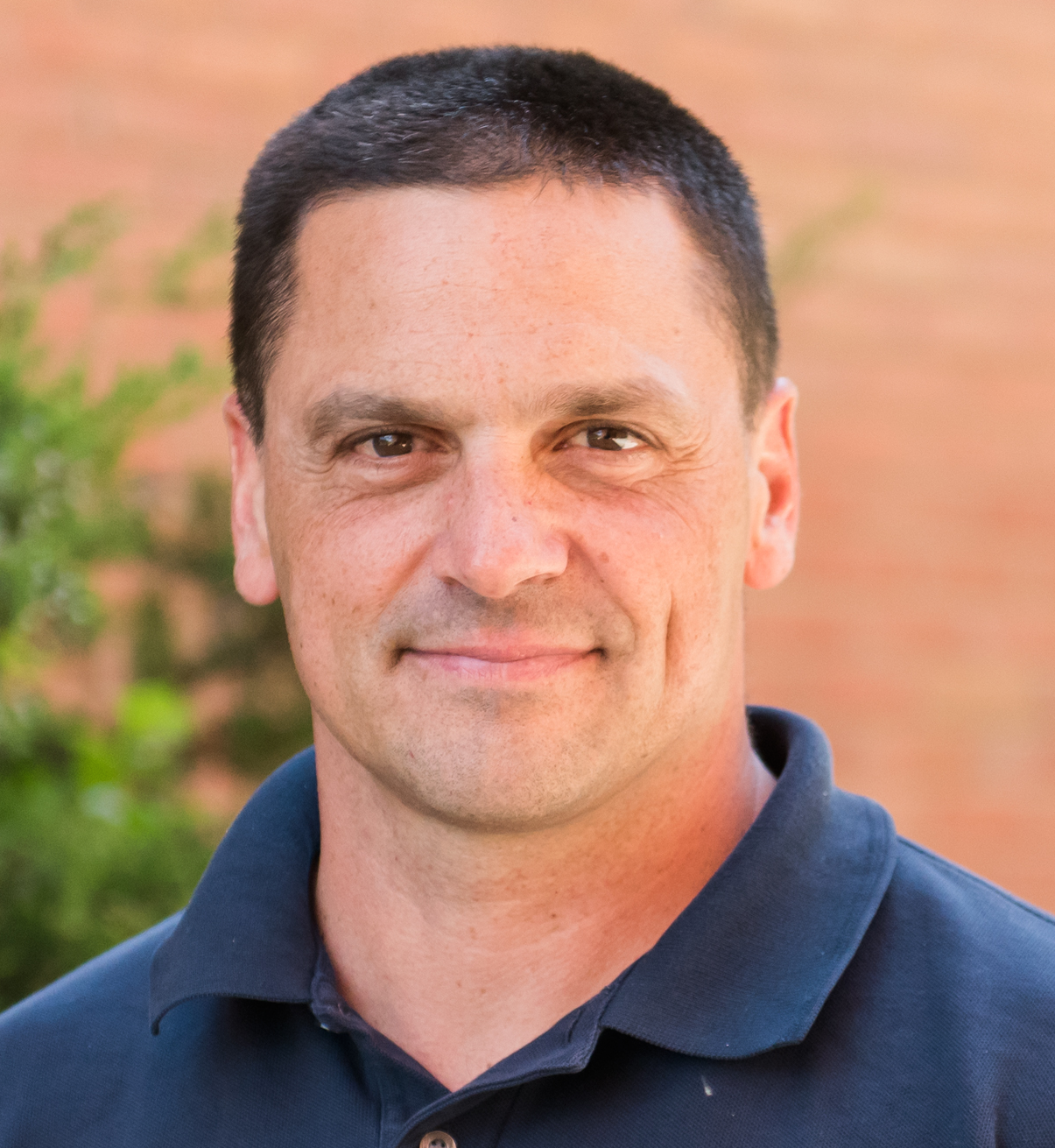
Ph.D., University of Michigan, Ann Arbor, 2002
Professor of Geography & Environmental Systems
211-C Sondheim Hall
410-455-3759
mbaker@umbc.edu
Research Interests
Watershed ecology; urban forest ecology; biodiversity, ecohydrology and biogeochemistry in urban and rural systems; riparian ecosystems; landscape ecology; geospatial applications
Recent Research Activities
-
- Understanding tree species response to urban heat using high resolution remote sensing (NSF)
- Channel mapping and hydrographic densification across the Chesapeake Bay watershed (Chesapeake Bay Program)
- Measuring the impacts of stream restoration on physical habitat with remote observation from UAVs (MD SeaGrant)
- Species and Community response of forest patches to urbanization gradients across cites in the Eastern US (SESYNC, USFS)
- Geomorphic effects of dam removal on the Patapsco River (American Rivers, NOAA)
- Biodiversity, structural, and functional characteristics of forest patches along urban land use gradients (in partnership with Baltimore Greenspace, USFS, Baltimore Ecosystem Study)
- Long-term change in urban forests: the ForestGEO network (Smithsonian Institution)
- Threshold Indicator Taxa ANalysis (TITAN): download R package from CRAN here
- Unpacking impacts of impervious surface on stream assemblages (USGS, Mass. Dept Fish and Game)
Selected Recent Publications
* denotes student author
Schmit, JP, L Johnson, ME Baker, L Darling*, R Fahey, DH Locke, AT Morzillo, MFJ Aronson, NF Sonti, M Johnson. (in review) The influence of urban landscape context on the diversity and structure of forested natural areas. Ecological Applications.
Darling*, L, DH Locke, CR Rollinson, JP Schmit, AT Morzillo, ML Johnson , RT Fahey, LR Johnson, ME Baker , BS Hardiman (in revision). Ecological and segregationist histories impact access to ecosystem services from forests. Frontiers in Ecology and the Environment.
Baker ME, I Yesilonis, K Lautar, L Templeton*, B Shoebe*, J Bos*, and NF Sonti. (in revision) Distributed urban forest patch sampling detects edge effects for monitoring and management. Ecosphere.
Collins, MJ, ME Baker, MJ Cashman, AJ Miller, S VanRyswick. (in press) Releasing sediments while reconnecting rivers: dynamics of sediment evacuation from dam ponds. Earth Surface Processes & Landforms.
Metes*, M, A Miller, M Baker, K Hopkins, D Jones*. 2024. A lidar based method to remotely maps gullying and incision in Maryland Piedmont headwater streams. Geomorphology 109205.
Locke, DH, M Baker, M Alonzo, Y Yang, C Ziter, C Murphy-Dunning, J O’Neil-Dunne. 2024. Do trees cool the same every summer’s day? Temporal non-stationarity in urban environments from bike-based air temperature monitoring in New Haven, CT. Heliyon 25041.
Locke, Dexter H.; Baker, Matthew; Alonzo, Micheal; Yang, Yichen; Ziter, Carly D.; Murphy-Dunning, Colleen; O’Neil-Dunne, Jarlath P.M. 2024. Data and replication code for analyzing the variation in urban tree canopy and air temperature reduction in New Haven, Connecticut, 2019 – 2021. Fort Collins, CO: Forest Service Research Data Archive. RDS-2024-0012
Delavaux, C et al. 2023. Mycorrhizal feedbacks linked to global forest biodiversity gradient. Nature Communications.
Weller DE, ME Baker, RS King. 2023. Improved methods for quantifying the effects of catchment spatial patterns on aquatic responses. Landscape Ecology https://doi. org/10.1007/s10980-023-01706-x.
Alonzo M, M Baker, J Caplan, A Williams*, A Elmore. 2023. Canopy composition drives variation in urban growing season more than the heat island effect. Science of the Total Environment http://dx.doi.org/10.1016/j.scitotenv.2023.163818.
Dixon*, AP, ME Baker, EC Ellis 2023. Passive monitoring of avian habitat on working lands. Ecological Applications https://doi.org/10.1002/eap.2860.
Arseniou* G, D MacFarlane, K Calders, M Baker. 2023. Accuracy differences in aboveground woody biomass estimation with terrestrial laser scanning for trees in urban and rural forests in different leaf conditions. Trees: Structure and Function 10.1007/s00468-022-02382-1
Van Appledorn*, M and ME Baker. 2022. Flood regimes alter the role of landform and topographic constraint on functional diversity in floodplain forests. Ecography.
Morzillo, AT, KJ Lautar, KL King, L Rhodes, L Scott, M Johnson, M Clarke, LK Campbell, LR Johnson, S Pincetl, NF Sonti, DH Locke, JP Schmit, RT Fahey, ME Baker. 2022 A tale of urban forest patch governance in four eastern US cities. Urban Forestry & Urban Greening 10.1016/j.ufug.2022.127693.
Metes*, M, DK Jones*, ME Baker, AJ Miller, D Hogan, JV Loperfido, KH Hopkins. 2022. Ephemeral Stream Network Extraction from Lidar‐Derived Elevation and Topographic Attributes in Urban and Forested Landscapes. Journal of the American Water Resources Association http://dx.doi.org/10.1111/1752-1688.13012
Swan, CM, ME Baker, D Borowy*, A Johnson*, M Shcheglovitova*, A Sparkman*, F Valente Neto*, M Van Appledorn*, N Voelker*. 2022 Loss of Phylogenetic Diversity under Landscape Change. Science of the Total Environment.
Alonzo, M, M Baker, Y Gao, V Shandas. 2021. Spatial configuration and time of day impact the magnitude of urban tree canopy cooling. Environmental Research Letters https://iopscience.iop.org/article/10.1088/1748-9326/ac12f2
Davies, SJ et al. 2020. ForestGEO: Understanding Forest Diversity and Dynamics through a Global Observatory Network. Biological Conservation 253, 108907
Dixon*, A, M Baker, E Ellis. 2020. Agricultural landscape composition linked with acoustic measures of avian diversity. Land https://doi.org/10.3390/land9050145.
Bezerra*, M, M Baker, M Palmer, S Filoso. 2020. Gully formation in headwater catchments under sugarcane agriculture in Brazil. Journal of Environmental Management 110271.
Pickett, S., Cadenasso, M., Baker, M., Band, L., Boone, C., Buckley, G., Groffman, P., Grove, M., Irwin, E., Kaushal, S., LaDeau, S., Miller, A., Nilon, C., Romolini, M., Rosi, E., Swan, C., Szlavecz, K. 2020. Theoretical Perspectives of the Baltimore Ecosystem Study: Conceptual Evolution in a Social-Ecological Research Project, Bioscience 70(4):297–314. https://doi.org/10.1093/biosci/biz166.
Van Appledorn* M, ME Baker, AJ Miller. 2019. Empirical evaluation of 2D unsteady hydraulic models for applications in floodplain forest ecology. Physical Geography https://doi.org/10.1080/02723646.2019.1676186.
Baker, ME, ML Schley*, JO Sexton. 2019. Impacts of expanding impervious surface on specific conductance in urbanizing streams. Water Resources Research https://doi.org/10.1029/2019WR025014.
Phillips*, T, M Baker, K Lautar, I Yesilonis, M Pavao-Zuckerman. 2019. The capacity of urban forest patches to infiltrate stormwater is influenced by soil physical properties and soil moisture. Journal of Environmental Management 246: 11-18.
Van Appledorn* M, ME Baker, AJ Miller. 2019. River-valley morphology, basin size, and flow-event magnitude interact to produce wide variation in flooding dynamics. Ecosphere 10(1):e02546.
Macchi, L, C Levers, M Baumann, M Baker, T Kummerle. 2019. Satellite-based tree and shrub cover reveal thresholds in the bird community of the South American dry Chaco. J. Applied Ecology 1-11, DOI: 10.1111/1365-2664.13342.
Dandois*, J, M Baker, M Olano, G Parker, E Ellis. 2017. What is the Point? Using Computer Vision Point Clouds to Observe Vegetation Structure and Spectral Properties. Remote Sensing doi:10.3390/rs9040355.
Collins, MJ, NP Snyder, G Boardman, WSL Banks, M Andrews, ME Baker, M Conlon, A Gellis, S McClain, A Miller, P Wilcock. 2017. Channel response to sediment release: insights from a paired dam-removal analysis. Earth Surface Processes and Landforms .
Donovan* M, AJ Miller, ME Baker. 2016. Reassessing the role of milldams in Piedmont floodplain development and remobilization. 2016. Geomorphology 268:133-145.
Utz, R, K Hopkins , D Booth , R Hawley , ME Baker, L Beesley , M Freeman, K Jones. 2016. Do specific natural watershed and channel attributes confer ecological resistance to urbanization in streams? Freshwater Science 35(1):380-397.
Recent Presentations
Baker, ME, M Katoski, NF Sonti, K Lautar. 2023. Seeing Forests for the Trees: Distinguishing Patches of Forest Within Urban Tree Canopy. IALE-NA, March 2023, Riverside, CA.
Oakland, H and ME Baker. 2023. Using continuous remote characterization of physical habitat heterogeneity to compare restored and degraded stream channels. IALE-NA, March 2023, Riverside, CA.
Katoski, M and ME Baker. 2023. Characterizing urban woodlands using LiDAR derived metrics of vertical structure in Baltimore, MD. IALE-NA, March 2023, Riverside, CA.
Oakland, H and ME Baker. 2020. Continuous assessment reveals homogenization of stream habitat following restoration. Maryland Water Monitoring Council, Dec 2020, Baltimore, Maryland.
Baker ME. 2020. Hyper resolution stream channel delineation and dimensions. Cascade Cities & Fire, Portland, Oregon, October 2020
Baker ME and D Saavedra. 2020. Development and application of hyper resolution stream channels in Chesapeake Bay Watersheds. US EPA Region 3, Stream Resilience Working Group, October 2020, Philadelphia Pennsylvania.
Baker, ME and D Saavedra. Development and Application of Automated Channel Extraction From LiDAR in Chesapeake Bay Watersheds. Society for Freshwater Science Annual Meeting, May 2019, Salt Lake City, UT.
Baker, ME, K Nelson*, R Wooldridge, A Miller, S Van Reswick, E Boyd, M Cashman, S McClain, M Andrews, M Collins. Tracking Geomorphic Change and Downstream Progress of Sediment Released by Removal of Bloede Dam, Lower Patapsco River, Maryland. AGU Annual Meeting, December 2018, Washington, DC.
Baker, ME, D Saavedra and M. Norton. Development of Automated Channel Extraction From LiDAR in Chesapeake Bay Watersheds. Presentation to the STAR workgroup, Chesapeake Bay Program, November 2018, Annapolis, MD.
Baker, ME. Assessing causality in stream assessment and restoration: a case study in Appalachian surface mining. Invited presentation, Smithsonian Environmental Research Center, November 2018, Edgewater, MD.
Baker, ME and D Saavedra. Development and Application of Automated Channel Extraction From LiDAR in Chesapeake Bay Watersheds: Effects of Physiography and Land-use. AWRA Conference, November 2018, Baltimore, MD.
Baker, ME. Seeing the forest for the trees: mapping and characterizing Baltimore’s forest patches. Oral Presentation at the Baltimore Ecosystem Study Annual Meeting. Ootober 2018, Baltimore, MD.
Baker, ME. What we have learned about Baltimore forest patches. Oral Presentation for Baltimore’s Fantastic Forest Forum, Cylburn Arboretum, November 2017, Baltimore MD.
Baker, ME, D Jones, E Woytowitz, A Miller. Alternative models of hydrogeomorphic connectivity in urbanizing Piedmont landscapes. Society for Freshwater Science Annual Meeting. May, 2017. Raleigh, NC.
Ph.D. Students
Master’s Students
Nicati Robidoux (UMBC-GES), Michelle Katoski (UMBC-GES), Tyrah Cobb-Davis (UMBC-iCARE-GES), Zach Banham (UMBC-GES), Erin Hamner (UMBC-iCARE-GES), Philip Worster (UMBC-GES), Sarah McDonald (UMBC-GES), Donovin Smith (UMBC-iCARE-GES), Megan Curtiss (UMBC-GES)
Former Students
Drew Powell (MS 2023, @USEPA), Hayley Oakland (MS 2020 @Mont St Univ), Zach Clifton (MS 2018; @USGS), Katherine Ralston (MS 2017), Molly Van Appledorn (MS 2009, PhD 2016, @USGS), Dan Jones (MS 2013, @USGS), Haley Martin (MS 2012), Christina Simini (MS 2012, @ECS Mid-Atlantic), Matthew Panunto (MS 2012, @USFS), Mattie Whitmore (MS 2012, @Booze Allen), Andrew Hill (MS 2010, @BLM), Amanda Schulz (MS 2010)
Other Activities
Associate Editor, Freshwater Science
Member, Science and Technology Advisory Committee, Chesapeake Bay Program
Courses Taught
Graduate Research Methods, Physical Geography, Watershed Science and Management, Forest Ecology, Watershed Analysis & Modeling, Riparian Ecosystems, Applied Landscape Ecology