Home

Calendar

Map
Home
Computing

Library

Search
A Conference in Honor of Thomas I. Seidman
Advances in Control of Partial Differential Equations
Department of Mathematics and Statistics
University of Maryland, Baltimore County
October 28 - 29, 2006


Home

Overview

Scientific Program

Social Program

Schedule of Events

Travel Information

Registration Information

Registered Participants


Overview

Photograph of Dr. Thomas I. Seidman
Dr. Thomas I. Seidman

Conference Description: The conference, Advances in Control of Partial Differential Equations, is being held in honor of the 70th birthday of UMBC Professor Thomas I. Seidman. Dr. Seidman received his Ph.D. from New York University with K. O. Friedrichs in 1959. In his early career, he spent time both at national laboratories and in industry, before joining the faculty at Wayne State University and Carnegie Mellon University. In 1972, he moved to UMBC and is now serving UMBC in the 35th year. With this conference, we will honor Dr. Seidman's outstanding research productivity, which includes over 150 papers with more than 60 collaborators, and his continuing research productivity publishing over 4 papers per year. His long and distinguished career over 50 years has particularly impacted the area of control of partial differential equations.

Control theory came of age in the Second World War, when it was characterized by its intimate connection between a rich new mathematics and specific applications. The subject has flourished ever since. In the twenty-five years after the war, the treatment of systems governed by a finite number of functions of time, such as systems of ordinary differential equations, reached a level of maturity combining techniques of analysis, geometry, and computation, which were brought to bear on an increasingly wide range of applications. This part of control theory has continued to grow. In the 1970's began a sustained interest in the rich and technically demanding control of partial differential equations (sometimes under the rubric of control of distributed parameter systems or of infinite-dimensional systems). The growth of this new part of control theory has gone hand-in-hand with modern developments in evolutionary partial differential equations, both linear and nonlinear, requiring all the technical apparatus of this field. Control theory for partial differential equations has been applied to a growing list important applications: damping of acoustic vibrations in the fuselage of an airplane or helicopter, directed steering of biological cells through micro-fluidic solutions, leading to a more targeted approach to cell annihilation, navigation of autonomous vehicles through biochemically contaminated areas (of interest to homeland security), control of smart materials, which typically have nonlinear material properties coupled with electromagnetic and/or thermal effects, development of algorithms for the steering of spacecraft and fighter jets, and even the climate control system in large buildings.

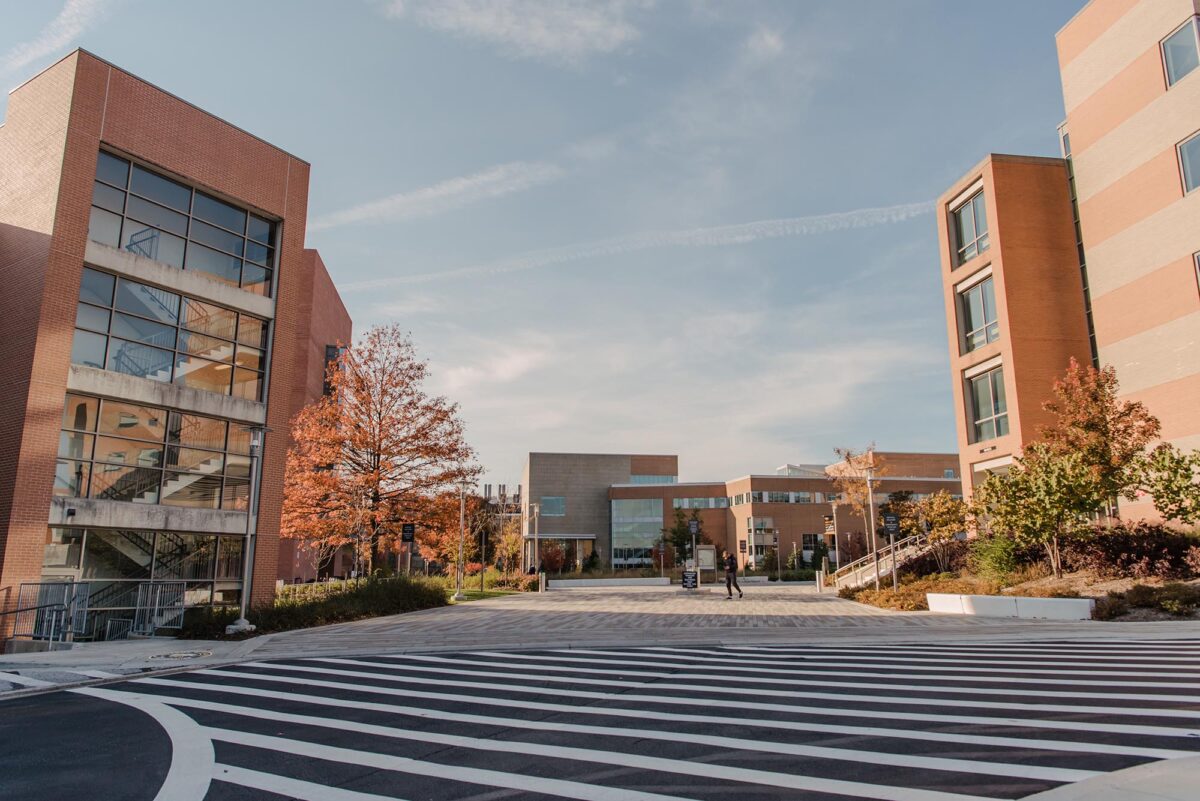
Location and Venue: The workshop will take place on the campus of University of Maryland, Baltimore County (UMBC). The campus, which currently serves over 12,000 undergraduate and graduate students, is located just outside the city of Baltimore and a short distance from Washington, DC. It can be reached conveniently by car from Interstate I-95, by air to BWI Thurgood Marshall Airport, and by train (Amtrak) to the BWI Rail Station, all just minutes from campus. See the UMBC Visitor's Guide for an interactive campus map and directions to UMBC. The campus offers state-of-the-art presentation facilities for the invited presentations, as well as a comfortable environment for participants to discuss presentations as well as on-going research. All sites will be accessible to speakers and participants with disabilities.

Financial Support: Pending funding, we anticipate to be able to provide financial support to a limited number of participants. Please use the webform to register and apply for assistance and check this site for updates regarding the conference.

Scientific Program