
News Archives
Digital Stories from Charlestown
 This summer UMBC students teamed with residents of Charlestown Retirement Community to create a series of digital stories. Drawn from the life experiences of the residents, the stories combined narration, animation, photos and music in short movies to be shared with others. Residents worked closely with student partners, acting as author and creative director of their individual story. Each student brought their own style and talents to the project, helping to create some unique examples of intergenerational storytelling.
The project was organized by the New Media Studio with funding from Retirement Living TV. You may view the videos below (requires Quicktime 7).
| A Traveler at Heart | Barbara Walker and An Nguyen-Gia |
| Mary's Waltz | Jean Singleton and Jorge Rios |
| My Two Grandsons | Mary Hein and Paul Iwancio |
| Barn Story | Joan McMann and Cathryna Brown |
| The Music Box | Marie Brinsfield and Samantha Duvall |
| Call Me Patsy | Tommy Koch and Andrea Olivier |


More Digital Stories from Charlestown
 During the fall semester and winter break, students from the New Media Studio returned to the Charlestown Retirement Community for another round digital storytelling. Following the success of last summer's project, Retirement Living TV agreed to extend the workshop which they hope will form the basis of an ongoing program of viewer-submitted content for the network. This time cameras from RL-TV and the New Media Studio followed the students and residents as they collaborated in the creation of eleven new stories. The documentary footage and stories will be a part of an upcoming series on the project to be aired on RL-TV. You can view a short feature about the project here.
| Candles for the Wake | Jesse Poole and Joanna Lit |
| Christmas in England | Mary Hein and Andrew Chang |
| Crystal 3 | Jim Poole and Bill Shewbridge |
| Families are Forever | Barbara Walker and Jorge Rios |
| Ivan and Goo Goo | Barbara Kurz, Andrea Olivier and Cathryna Brown |
| Little Dog Miles | Jerri Mullinex, Andrea Olivier and Cathryna Brown |
| Magic Dust | Charlotte Valentine and Andrew Chang |
| My Father's Letter | Barbara Walker and Samantha Duvall |
| Nun for a Day | Marie Brinsfield and An Nguyen-Gia |
| Rude Polite | Barbara Kurz and Cathryna Brown |
| You're Never Too Old | Mary Zotain and Paul Iwancio |
Charlestown Digital Stories at the Maryland Film Festival
Participants in the UMBC Charlestown digital story project had an opportunity to screen their works at the 2007 Maryland Film Festival as part of a master class sponsored by the Creative Alliance. Documentary filmmaker Aaron Matthews was on hand to lead a critique of the stories produced in last year's summer and winter workshops. Matthews, whose new film The Paper was screened at the festival, was impressed by the stories and encouraged the group to continue making films. "There is something really refreshing about hearing your voices.There are not a lot of films by older women and it was really nice to hear that. I would definitely encourage you to think of yourself as filmmakers and keep doing it. I think there is a lot of interest in hearing more stories from people from your perspective."

Summer Seminar in New Media and Culture 2007
 During summer session of 2007 for the first time English Language Center offered the Seminar in New Media and Culture to level 3 (intermediate) students. The class met five days a week for 3.5 hours during the eight weeks of the summer session and was taught by Polina Vinogradova.
The goal of this class was to introduce the students to a number of cultural concepts and illustrate how these concepts can be recognized and analyzed using a variety of new media genres. For example, in class, the students talked and read about the Iceberg Theory, individualistic and collectivistic cultures, cultures that use high and low context communication styles, identity, culture sock, and aspects of verbal and non-verbal communication. At the same time, the students watched a number of motion pictures, documentary films, online advertisements, and digital stories applying the cultural concepts they have learned about in the analysis of the latter. The students also worked on a number of weekly group projects one of which was a production of photographic maps in which they illustrated how the aspects of culture can be visually present and interpreted.
The final project of the class was a production of individual digital stories on which the students worked during the eight weeks of class. In this process, the students chose the topics of their stories, wrote their narratives, collected photographic images, and chose the music to accompany their verbal narration. The students also discussed their stories in class, peer-reviewed their narratives, and made online journal entries twice a week which allowed them to reflect on their progress and express their doubts and concerns to their instructor. The students also intensively worked in the computer lab putting their stories together under their instructor's guidance. Several digital stories that were produced in this class can be viewed here.
| My Family | SUN HEE (SUNNY) CHOI |
| My Friends | JONG YOON (KEVIN) HAN |
| Travel is my Breath | BO HYUNG KOH |
| Vietnam: My Country, My Family | THAO NGUYEN PHAM |
| Sweet Homesick | OUMOU HELENE SAADE |
| JISUG (MELISA) SHIN | |
| The Market in Vietnam | LUAN MINH TRUONG |
| Changing Me: My Life in the US | HYUN JU (JAMIE) KANG |
UMBC Faculty Explore Digital Storytelling in Summer Workshop 2007
 This summer, nine UMBC faculty members participated in a three-day digital storytelling workshop at UMBC. For the second time in two years, OIT and the New Media Studio brought experts from the Center for Digital Storytelling in Berkely to campus, giving faculty members an opportunity to learn the basics of creating digital stories while exploring possibilities for integrating new media into their teaching.
 Joe Lambert and Stephany Sesse led the group through the writing and production process as each participant created a digital movie relating a short personal story. Faculty members included: Beverly Bickel, ELC; Steve Bradley, Visual Arts; Jason Loviglio, Media & Communication Studies; Nicole King, American Studies; Doug Hamby, Dance; Pat Scully, Education; Jody Shipka, English; Joan Shin, LLC; and Joby Taylor, Shriver Center. The workshop was conducted in the International Media Center with assistance from New Media's Bill Shewbridge. Several of the stories produced in the workshop can be viewed here:
| Steve Bradley | Rubbernecking |
| Jason Loviglio | The Fire |
| Joby Taylor | This I Believe: Mystery with a Capital "M" |
| Jody Shipka | Gonna Make You Sweat: Composing a History of 'this' Space (Windows Media) |
| Nicole King | Going Down South |
| Pat Scully | Our Family is Born! |
| Doug Hamby | My Big Sister Dianne |
For more information visit Digital Storytelling @ UMBC.
Charlestown Digital Stories Wins Telly Award
 A pioneering and unique Digital Storytelling Project organized by UMBC's New Media Studio and funded by Retirement Living TV (RLTV) has won a Bronze Telly Award. The prestigious Telly Award cites the Digital Storytelling Project as being among the world's best in local, regional, and cable television commercials and programs, as well as among the finest in video and film production. This year's Telly Awards received over 13,000 entries from all 50 states and 5 continents.
The Digital Storytelling Project combines the efforts of RLTV, UMBC and Charlestown Retirement Community. It partners a UMBC undergraduate student (hands-on with the media technology) with a Charlestown resident (autobiographical story and narrative) to produce 2-3 minute video stories. Drawn from the life experiences of the residents, the stories combine narration, animation and photography. The award-winning digital stories can be viewed at:
www.umbc.edu/oit/newmedia/studio/digitalstories/ctds.php
The Digital Storytelling Project is the nation's first three-way partnership between a media company, a university and a retirement community. UMBC students team with Charlestown residents to create a series of 17 digital stories and music in short movies to be shared with others. Charlestown residents work closely with student partners, acting as author and creative director of their individual story. Each student brings their own style and talents to the project, helping to create some unique examples of intergenerational storytelling. The project is organized and supervised by UMBC's New Media Studio.

Student award winners Jorge Rios, An Nguyen-Gia, Samantha Duvall, Andrew Chang, Joanna Lit, and Cathryna Brown received their statues at a ceremony held on September 12 at Charlestown. Andrea Olivier, not pictured. also received a statue.
"We are honored that the television industry has recognized the hard work that went into producing these fascinating digital stories," said Brad Knight, president of RLTV. "The digital stories are reality TV at its finest. They provide a rich, intergenerational experience for Charlestown residents and UMBC students."Winning an award like the Telly is significant in that it acknowledges that stories drawn from the life experiences of retirees with a wider audience," said Knight. "It is also gratifying that the award recognizes the entire collection of work from the Charlestown project. It is very much a group process and every story enriched the experience."

Andrea Olivier with RL-TV president Brad Knight
Somali Bantu Refugees Speak Through Digital Stories
 In October 2008, the New Media Studio worked with members of the Somali Bantu community to create digital stories as part of the American Friends Service Commitee's "Project Voice." The production workshop was facilitated by the Center for Digital Storytelling with a final production session at UMBC's International Media Center.
Baltimore's Somali Bantu's tell their stories of war, forced migration and resettlement to our city. In short digital videos, using original art, narration, and music, five young Somalis share powerful testimonies in English and their native Maay Maay, which they wrote and produced with the AFSC. Hand-drawn pictures of soldiers wielding automatic weapons and bulldozers decimating the countryside combine with moving narration, such as Mohamed Iftin whose farm was confiscated by the Somali Government.
 The stories were released online on Dec. 10 to commemorate the 60th anniversary of the Universal Declaration of Human Rights.
You can view the stories and learn more about Project Voice here.
Summer Digital Story Workshop for Faculty 2009


On May 25, 26 and 27, UMBC's New Media Studio conducted a three-day introductory level digital story workshop for faculty. In addition to producing a digital story of their own, those attending the workshop gained insight into digital storytelling as a pedagogical and research tool.
The workshop was facilitated by a team of faculty, staff and graduate assistants who have over the last few years have worked extensively with digital stories in a number of ways. These included Bev Bickel, Jason Loviglio, Steve Bradley, Paul Iwancio, Bill Shewbridge, Polina Vinogradova and Satarupa Joardar.
One of the highlights of the workshop was a session on audio conducted by Steve Bradley of Visual Arts. Steve covered recording techniques and sound effects with a hands-on demonstration of creative techniques for building soundtracks.
The Stories |
|
| The Last Dog | Bob Sloane |
| My Dearest Alexandra | Taryn Bayles |
| The Best Laid Plans | Susan Mundy |
| Lost and Found | Shuhua Bloom |
| See-It-There | Olga Kritskaya |
| Trashy Art | Sandra Abbott |
| My Movie Theater | Nicoleta Bazgan |
| 13,500 Feet | Bob Reeves |
| Hair Matters | Kimberly Moffitt |
| Everyone Should Be So Lucky | Jim Milani |
| Everything I Need to Know in Life I Learned from the Obama Inauguration | Christine Mallinson |
| Those Shoes | Constantine Vaporis |
| Diss-Eeese | Barry Casey |
BCPS Summer 2009 Workshop in Digital Storytelling and Oral History


During the summer of 2009, UMBC’s New Media Studio teamed with the Center for History Education to offer a two-week workshop for Baltimore County K-12 teachers exploring the intersections of oral history and digital storytelling. The workshop was the culminating activity in CHE’s two-year “Making Master Teachers” program. Year One of the program focused on reading and research, while Year Two focused on incorporating primary sources in the classroom. The program was funded through the U.S. Department of Education's Teaching American History Grant Program. Teachers had an opportunity to learn classroom skills for creating their own work and developing student projects.
Projects from the workshop included "Hampton: A Revolutionary Place" .
Information for attendees : This summer workshop provides you with the opportunity to learn skills of digital storytelling that you will be able to use in your classrooms, both in delivering your own content and as a project option for your students' original work. In addition it will allow you to disseminate the work you did on Baltimore '68 and will provide UB with an innovative addition to its Baltimore '68 website. Since we are working under time constraints, we hope to come to the June sessions with a good idea of the form of the project, although the content can evolve over the course of the workshop. I propose that the Baltimore County high school group break into two teams and produce two digital stories about the uprising of April 1968 in Baltimore. I would suggest that each team takes a section of the UB Baltimore '68 driving tour (voted "Best Driving Tour for Visiting In-Laws" by City Paper and available at http://archives.ubalt.edu/bsr/timeline/index.html) and flesh it out with primary documents, excerpts from oral histories, music, images and anything else that would be illuminating. Before and after shots would be particularly effective in telling the story of the events. The finished products could find a home on the UB and CHE websites. This project would build on research you have already begun, could draw on the resources we have collected on the website, and would contribute greatly to UB's effort to make this time period understandable to the public. I hope you will consider it.
Recommended readings We recommend reviewing these first articles during the initial week and guide the discussion around the question: What makes an effective digital story? Other questions could be: What is a digital story? and How might I use digital storytelling in the classroom? The Educational Uses of Digital Storytelling The Art of Digital Storytelling These next two articles will be discussed in the second week. The discussion could may on: What are the barriers to implementing digital storytelling in the classroom? As an advocate, how could I overcome these hurdles? Implementation of Digital Storytelling in the Classroom Digital Storytelling: Moving from Promise to Practice ALSO, here is a link to the introductory chapters of the Digital Storytelling Cookbook: http://www.storycenter.org/cookbook.pdf
Digital Stories from SPAN 305 Fall 08: Spanish for Heritage Spanish Speakers II
The MLL Department worked for the first time using Digital Stories with Spanish 305 for Heritage Spanish Speakers during fall 2008. This course is an advanced Spanish course for Latino students at UMBC (3-credit course) taught by Dr. Ana María Schwartz and Adriana Val as Tech Assistant.
The goal of this class is to connect the students with their Spanish heritage language and culture, as well as to prepare them to be competent bilinguals who can use Spanish for academic and professional purposes. Students participated in face-to-face as well as online projects to improve their oral, writing as well as technical uses of the Spanish language.
One of the projects designed by Dr. Schwartz was the use of Digital Stories. Students worked during the semester choosing their own topics, writing narratives, collecting photographs, and finding appropriate music to accompany their verbal narration. All students participated in peer-review in class, reflected with instructors and classmates about their narratives, and worked in the computer lab under the assistance of Ms. Val, personnel from the IMC such as Ms. Joan Costello, and video experts from the New Media Studio at UMBC. The product of this powerful work is the collection of the first digital stories from the first Heritage Spanish speakers who work intensively to share their personal stories.
Elver Alarcón: Todo sobre mi familia
Cristina Dalton: ¿Qué soy yo?
Ana Torres: Hacia los Estados Unidos
Claudia Zuniga: Mi mamá, mi héroe
Deepening Student Literacy with Visual Assignments - Nicole King
Who doesn't like a good show and tell? Now, this favorite grade school assignment is finding its way into more UMBC classrooms as digital stories: short (3-5 minute) digital movies based on personal photos, artifacts and a vivid memory of the students who produce them. In addition to assigning digital stories to develop or harness student media skills, many faculty are finding visual assignments deepen textual literacy, too. Starting with a 300-word focused narrative that students share in a story circle, Nicole King, Assistant Professor of American Studies, and a digital storytelling peer faculty trainer, shares how and why she offers visual assignments, how she evaluates them, and what she and her students are learning from the process.
Digital Stories from German 303: ‘German Immigration into the US’
 In the Fall of 2009, Susanne Sutton, lecturer of German with the Modern Languages, Linguistics and Intercultural Communication Department (MLLI) taught an Advanced German 303 topics course, "German Immigration into the US".
As semester project, students worked on their own digital stories (in German) in which they recounted an experience they had had while having worked, studied, or vacationed abroad. Students then teamed up with first-generation German immigrant women from the larger Baltimore area. Students and immigrants collaborated to produce the immigrants' personal digital stories during a two day workshop. At the end of the semester, after the students had finished the immigrants' stories, everyone came back for a 'story festival' to view the finished products.
Immigrant and Student Projects:
| Regina Brady und Nick Pinkin | Das schoenste Geschenk |
| Edeltraud Wolff und Lisa Runion | Es war einmal… |
| Rita Feher und Robert Mauler | Lehrling in der Schneewolke |
| Brigitte May und Tereza Kaplanova | Ein neues Leben in Amerika |
| Sylvia McDowell und John Hager | Am Wasser |
| Thea Lindauer und Ana Ruta | Stille Nacht, Heilige Nacht |
| Haidi Zech und Samantha Musgrave | Haidi's Story |
Student Projects:
| Nick Pinkin | Tereza Kaplanova |
| Robert Mauler | Kalena Alam |
| John Hager | Samantha Musgrave |


Digital Stories from MLL 605 The Field of Intercultural Communication
In this core course for the MA program for Intercultural Communication in the Fall 2009 semester, the students worked with undergraduate students in Visual Arts 395 to develop stories about an intercultural incident or encounter that was a crucial factor in motivating them to study intercultural communication. Accompanying a final paper, in which this incident was the framework for an analysis of intercultural competency, sensitivity, and awareness, the stories tell of very personal encounters of US students either in the US or abroad, or international students in the US. They relate some of the painful and embarrassing, but also enjoyable and stimulating difficulties they have had adjusting and adapting to cultures that were other than their own.
| MLL 605 | ART 395 | |
| Language, Culture & Life | Sherri McCusker | Justin Kennedy |
| The Human Redbox | Peter Gallagher | Nadia Muha |
| Red Style | Nathan Ferrell | Sarah Khaki |
| "Contrast" | Marta Ortiz de Rozas | |
| The Beauty of Life | Maha Aldhahi | Mike Parks |
| My UNNC Memory | Lei Lou | Seung Hwan Lee |
| Intercultural Competance: Am I There Yet? | LaRita Hagar | Michelle Salazar |
| Never Assume: Lessons from a Gringa | Kate Meyer | Shane Logue |
| Culture Shock Trip | David Morales | Daniel Supanick |
| Why Doesn't That Cathedral Interest Me? | Duncan Cohen | Corey Fitzpatrick |
| The Clock in Ticking | Sean Carmody | Zach Seidel |
| I Want to Get Out of Hair | Andrea Vespoint | Josh Cochran |
| My Story | Ai Wang | Drew Harcharik |
| moving | Meri Collazos Sola | Caroline Gergely |
Stories from the 5th Annual UMBC Digital Storytelling Workshop


During January break the New Media Studio held its fifth annual digital storytelling workshop for UMBC faculty. Participants learned the technology and methodology of digital moviemaking, creating their own personal narratives while exploring applications in teaching and learning. Ten UMBC faculty members were joined by Archana Bhandari, Director of Instructional Technology at UMB School of Social Work for the three-day course. Workshop alumn Jason Loviglio, Director of the Media and Communication Studies program assisted in facilitating the writing component of the workshop. Other facilitators included Paul Iwancio, Bill Shewbridge and studio research assistants Satarupa Joardar, Chris Ferrera and Steve Yeager.
Enjoy stories from the group:


View more photos from the workshop.
New Media Studio and CHE Collaborate on "Hampton: A Revolutionary Place"

UMBC's Center for History Education (CHE) and New Media Studio have collaborated with teachers from Baltimore County Public Schools to create a new online resource for Hampton National Historic Site. "Hampton: A Revolutionary Place" was created as part of CHE's Making American History Master Teachers in Baltimore County Program, funded with a grant to Baltimore County Public Schools from the United States Department of Education. The Hampton project is one of several "virtual fieldtrips" to come out of last summer's workshop in digital storytelling and oral history. During the program, the New Media Studio worked with BCPS teachers to create rich media resources combining digital storytelling, photography, videography and web design.
The National Park Service is featuring the project on the Hampton website.
Final Projects from MCS 101L Multimedia Literacy Lab
MCS101L, Multimedia Literacy Lab, is a one-credit course offered for the
first time at UMBC in the Spring of 2010. Students were given 6 story
prompts to choose from for their final digital story projects.
Arbutus Digital Stories in the Arbutus Times
The new Arbutus Public Library opening this week brought some publicity for the story project MLL 495/695 worked on last spring. Here is the article from the Arbutus Times: http://www.explorebaltimorecounty.com/news/108164/new-library-offers-chance-view-stories-past/
You can learn more about the project and watch the stories at: http://www.umbc.edu/oit/newmedia/studio/digitalstories/arbutus.html
Digital Storytelling in Bogotá, Colombia
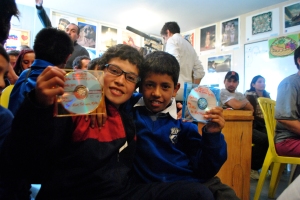 Many of us remember Kyle Halle-Erby who joined us for our 2008 faculty workshop at UMBC. Kyle is now active in story work with youths in Colombia. His collaborator
Tatiana Rais has shared with us two blogs created during a recent workshop. The first is an explanation (in english) of their daily schedule and the workshop process. They also created the second blog for the students. Part of the workshop was to give the students access to the internet and to self-publication. Here, the kids introduced themselves and wrote about their experience. The site includes all of their written stories with some pictures and a few of the final videos. While this website is entirely in spanish, all of the videos themselves have been subtitled.
Digital Stories from HONORS 300-4/HIST355-2 "Constructing the Samurai"
In "Constructing the Samurai" students used digital story techniques to explore aspects of samurai culture through visual assignments. The honors class was taught by Professor Constantine Vaporis during the Fall 2009 and 2010 semesters. Here are the results:
Fall, 2010
Oishi and the Loyal Retainers (Tina Zou)
The Adventures of Samurai Asakura Yoshimoto (Sara Ross, Cynthia Dang)
Samurai Final Open Shot (Sean Palmateer, Julian Brezon)
"Armor of the Samurai" (Brandon Callahan and Adam Robinson)
Martial Arts During the Tokugawa Era (David Eastman, Glen Langan)
"Forging the Samurai" (Steven Cornthwaite, Max Petulante)
"Zen Buddhism and the Samurai" (Caitlin Smith)
"Seppuku: Death Before Dishonor" (Nathaniel Castill Jr.)
"Seppuku in 20th Century Japan" (Sarah Stark)
"Tokugawa's Melting Pot" (Dwumah Frimpong)
Fall 2009
Women's Role in Samurai Films - Samantha Larsen
Samurai Honor - Rebecca Walter
Recipe for a Samurai - Becca Reeves
Seppuku
Marriage and Gender Among Samurai in Tokugawa Japan - James Chrismer, Momoka Watanabe, Kazutomo Terada
Chushingura in Transition - Matthew Murphy
The Social Relationships of the Samurai - Sammantha Chin and Lara English
HIST 355 Final Project - Daniel Graham
Armor of the Samurai - Rachel and Angela
Bushido: The Way of the Warrior - David Baldwin
Progression of the Samurai
Fallen Cherry Blossoms- Kamikaze Pilots - Harsh Bambawale
Samurai in Games
Projects from MCS101L Multimedia Literacy Lab - Fall, 2010
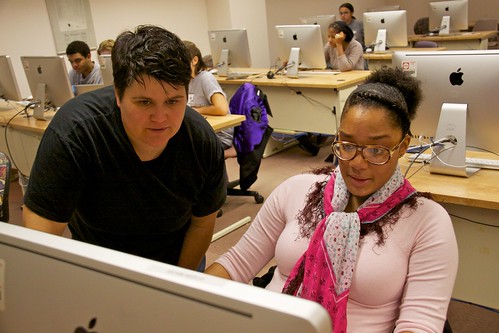
MCS101L, Multimedia Literacy Lab, is a one-credit course offered in two sections. The class is taken in conjunction with MCS333 . Students were given 6 story prompts to choose from for their final digital story projects.
Alexander Smith: The Ravens / Steelers rivalry
Allan Carey: Night Photography
Donald Hankerson: UMBC Cribs Mockumentary
Julianne Baskerville: Her family from the point of view of their couch
Justin Eisenstadt: His love for vintage vinyl records
Marlie Somers: Her ultimate frisbee team
Abel Mengistu: Ethiopian New Year
Round Two of the Arbutus Library Project
www.flickr.com
|

Round Two of the Arbutus Library Project
www.flickr.com
|
MLL 495/695 create Charlestown and Arbutus Stories
|
During the spring 2011 semester, students in MLL 495/695 Intercultural Video productions completed two community-base digital story projects. The first brought the class to the Arbutus branch of the Baltimore County Public Library to help tell the stories of the librarians and others in the community. This was the second year for the project.
Next the class went to the Charlestown retirement community for aa new round of Charlestown stories. This was a continuation of an award-winning project that began in 2006.
The semester culminated in a showing of all stories hosted by the Arbutus Library.
| Charlestown Stories | |
| My Life as a Boy Scout | Barbara Walker and Thomas Conner |
| Caterpillar Corral | Marie Brinsfield and Abigail Farrara |
| The Old Farm House | Jeri Mullinix and Josh Cochran |
| In My Heart I Will Always be a Dancer | Ebbe Saleski and Madeline Smith |
| An Unexpected Slap | Lloyd Stewart and Keith Blomberg |
| Girls of the Limberlost | Miriam Tongier and Brandon Callahan |
| The Little Girl Who Grew Up at Charlestown | Charlotte Valentine and Amanda Winters |
Arbutus Library Stories |
|
| Getting from Here to There | Gloria Ries, Tom Conner & James Peak |
| Arbutus Library | Gail Ross, Abby Fanara and Lei Lou |
| The Fair of the Iron Horse | John Roth, Josh Cochran & Keith Blomberg |
| Library Rat | Aldemore Turgeon,Cara Marie & Muhammed Ashraf |
| Arbutus Library | James Klein, Brandon Callahan & Christine Sadowski |
| Arbutus Branch Library: Then and Now | Jennie Gill, Madeline Smith & Amanda Winters |
|
Exploring Youth Activism through Digital Storytelling: Seminar in American Political History
This spring students examined the history of American Youth Activism from 1945-1975 while producing digital stories and documentaries. Young Americans were important participants in the social, economic, and political changes that took place across society during the most intense years of the Cold War. The class emphasized skills in writing, oral history, and traditional research as well as digital storytelling computer technologies. Student first produced digital stories exploring the roots of their own political awareness. HIST 495 - 710 was held in the spring of 2011. The course was taught by Dr. Kriste Lindenmeyer, Chair of the UMBC History Department and Dr. Bill Shewbridge, Director of the New Media Studio.
You can view the projects here.
Stories from MCS 101L Multimedia Lab, Spring 2011
www.flickr.com
|
MCS101L, Multimedia Literacy Lab, is a one-credit course offered in two sections. The class is taken in conjunction with MCS333. Students were given 6 story prompts to choose from for their final digital story projects.
Final Projects
First Project
Culture Shock Story
As part of her Independent Studies in the New Media Studio, Fulbright Scholar Meri Collazos Sola developed a multimedia project using digital digital storytelling to explore identity and culture shock. The project website, www.cultureshockstory.com is based on Meri's research in the Intercultural Communications program.
"This project contains the materials I will focus on for my scholarly paper. The scholarly paper should be related to some of the topics that we've done for the core courses. The main topics of the research will be intercultural competency, creativity and two up and coming new media formats: digital storytelling and personal documentary film."
Stories from French 440 - French Cinema
Prof. Nicoleta Bazagan has posted stories from her Spring 2011 French Cinema class here: http://www.youtube.com/user/nbazg . The stories are primarily in French however some students also produced english versions for extra-credit.
Charlestown Stories Project in the Erickson Tribune
Digital Storytelling Winter Workshop 2012
In January, 2012, the New Media Studio offered its sixth annual digital storytelling workshop. As in past years, the workshop gave faculty members an opportunity to explore digital media production while creating a personal narrative, integrating voice-over with images and sound. This year for the first time the workshop was offered as a one-credit course as part of UMBC's winter session. As a result graduate and undergraduate students joined the group, giving the workshop a new dimension.
Here are some examples of the stories produced.
| UMBC | Patsy Kerstetter |
| Hidden Treasures | Gergana Kostova |
| Mexico | Meghan Park |
| Emma | Denise Perdue |
| The Unforgettable Year | Keegan Skipper |
| Through Natalie's Eyes | Joyce Bedi |
| Knowing Shakespeare | Robin Farabaugh |
Created with Admarket's flickrSLiDR.
Multimedia Literacy Lab in "Urbanite"
The New Media Studio's digital story work and the MCS 101 Multimedia Literacy Lab were featured in the April edition of "Urbanite" magazine. You can read "The Wired Campus" article online here.
UMBC Digital Stories in EDUCAUSE "Game Changers"
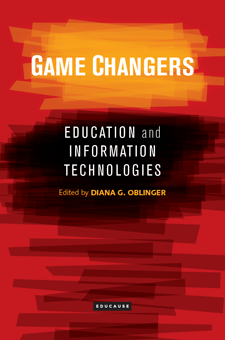
UMBC's digital story work is highlighted in a new publication from EDUCAUSE. Game Changers: Education and Information Technologies contains case studies highlighting creative solutions to higher education challenges in difficult times. The chapter Stories in Our Classrooms: A Faculty Community of Practice as an Agent of Change by Beverly Bickel, William Shewbridge, and Jack Suess, describes the development of story work at UMBC and its importance in promoting digital literacies on campus.
Editied by Diana Oblinger, the book and individual chapters are avaiable for free download.
Stories from the 2013 Faculty Digital Story Workshop
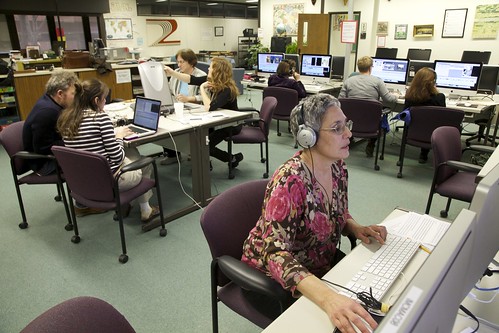
Once again, in January, 2013, the New Media Studio offered its annual digital storytelling workshop for faculty. As in past years, the workshop gave participants an opportunity to explore digital media production while creating a personal narrative, integrating voice-over with images and sound.
Here are some examples of the stories produced.
| Icebox Cookies | Jane Short |
| Vessels of Meaning | Denise Meringolo |
| Getting Lost | Kate Drabinski |
| Ode to Tracy | Sandra Abbott |
| How it All Winds Up | Lynn Tomlinson |
| Scientific Social Network | Shu Qian |
New Webinar and book from the Center for Digital Storytelling
Here are two updates from the Center for Digital Storytelling of interest to the UMBC community. First, there is an upcoming Webinar series, Seven Stages: Story and the Human Experience. Details are available here.
Also, the fourth edition of Joe Lambert's Digital Storytelling: Capturing Lives, Creating Community is now available . You will find our work at UMBC highlighted in a new chapter on digital storytelling in higher education.

Stories from Linehan Art Scholars
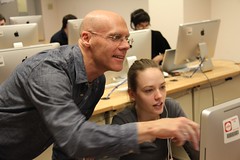 With the goal of building a greater sense of community in the Linehan Artist Scholars Program, students in the Linehan Freshman Seminar class participated in a Digital Story Workshop over a four week period. Their stories reflect the broad concerns of young talented artists as they begin their university careers in the arts. The stories speak of family, creative passions, and the search for identity in a complicated and fractured world.
Mill Stories: Sparrows Point Steelworkers and Community Speak
Mill Stories is a collaborative project bringing together UMBC students to help preserve stories from the Sparrows Point community. As the project develops, we hope that this website will present a form of database documentary, in which users can access interviews, videos photos and other cultural materials gathered from the community.
Two classes participated during the Spring 2013 semester. Students in AMST 358 Cultural Documentation in Partnership with Communities were introduced to the ideas, techniques and ethical considerations that underpin qualitative research, particularly from a community-based, out-in-the-field perspective. The course focuses on cultural research and documentation within the communities that have been shaped for over a century by the Sparrows Point Steel Mill. Students have also been introduced to broader notions of community cohesion, senses of place and belonging, as well as the realities of post-industrial economic and social transition.
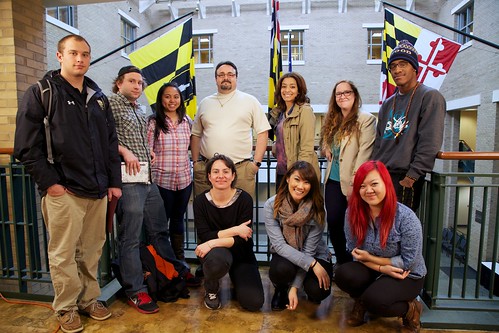
Students in MLL 495/695 Intercultural Video Production focused on creating short digital stories based on community interviews. The class takes a collaborative approach, allowing participants to tell their stories in their own words.
Visit the Project Website: millstories.org
Read about the project in the Baltimore Sun and the Dundalk Eagle.
Stories from the Shriver Center's Brazil Leadership Camp
From July 2-11, 2013, 12 young people from Brazil attended a leadership camp through The Shriver Center at UMBC. The students are all participants in the English Access Microscholarship Program, which provides English-Language skills to talented young people from economically disadvantaged areas. During their time at UMBC, the students participated in service-learning projects, spent a weekend with American families, toured Baltimore and DC, and created digital stories.
| Carlos | Vitor |
| Vinicius | Victoria |
| Cintia | Luma |
| Lucas | Leticia |
| Jessica | Jean |
| Gabriel |

Digital Stories from the Shriver Center's Peaceworker Program
Students in the Shriver Center's Peaceworker Program's Summer Pro Seminar created these stories reflecting on their service and experiences abroad.
Digital stories in a language classroom: Engaging students through meaningful multimodal projects
Here is a great article by Polina Vinogradova, based largely on digital story work at UMBC. Digital stories in a language classroom: Engaging students through meaningful multimodal projects http://fltmag.com/digital-stories, Ana Oskoz and Heather Linville also contributed to the article.
Search
Recent Posts
- Digital stories in a language classroom: Engaging students through meaningful multimodal projects
- Digital Stories from the Shriver Center's Peaceworker Program
- Stories from the Shriver Center's Brazil Leadership Camp
- Mill Stories: Sparrows Point Steelworkers and Community Speak
- Stories from Linehan Art Scholars
- New Webinar and book from the Center for Digital Storytelling
- Stories from the 2013 Faculty Digital Story Workshop
- UMBC Digital Stories in EDUCAUSE "Game Changers"
- Multimedia Literacy Lab in "Urbanite"
- Digital Storytelling Winter Workshop 2012
 Subscribe to this blog's feed
[What is this?]
Categories
Archives
- February 2015
- July 2014
- February 2014
- September 2013
- July 2013
- May 2013
- March 2013
- January 2013
- August 2012
- April 2012
- February 2012
- December 2011
- September 2011
- June 2011
- May 2011
- April 2011
- January 2011
- December 2010
- September 2010
- August 2010
- May 2010
- April 2010
- January 2010
- December 2009
- September 2009
- June 2009
- May 2009
- December 2008
- July 2008
- May 2008
- April 2008
- September 2007
- August 2007
- July 2007
- May 2007
- February 2007
- September 2006
- January 2006