We use cookies for analytics and, unless you opt out, advertising.
You can opt out of advertising at any time.UMBC uses essential cookies to run this site. With your permission we would also use analytics cookies (to understand how the site is used) and advertising cookies (to measure and target our ads on other platforms). Nothing else loads unless you accept. You can change your choice any time from Cookie Settings in the footer.Privacy Policy
EssentialRequired for the site to work (login, security, your cookie choice). Always on.
New research published today in the Proceedings of the National Academy of Sciences (PNAS) shows that land use by human societies has reshaped ecology across most of Earth’s land for at least 12,000 years. The research team, from more than a dozen institutions around the world, compared the history of global land use with current patterns of biodiversity and conservation. Their work revealed that the main cause of the current biodiversity crisis is not human destruction of uninhabited wildlands, but rather the appropriation, colonization, and intensified use of lands previously managed sustainably.
The new data overturn earlier reconstructions of global land use history, some of which indicated that most of Earth’s land was uninhabited even as recently as 1500 CE. Further, this new PNAS study supports the argument that an essential way to end Earth’s current biodiversity crisis is to empower the environmental stewardship of Indigenous peoples and local communities across the planet.
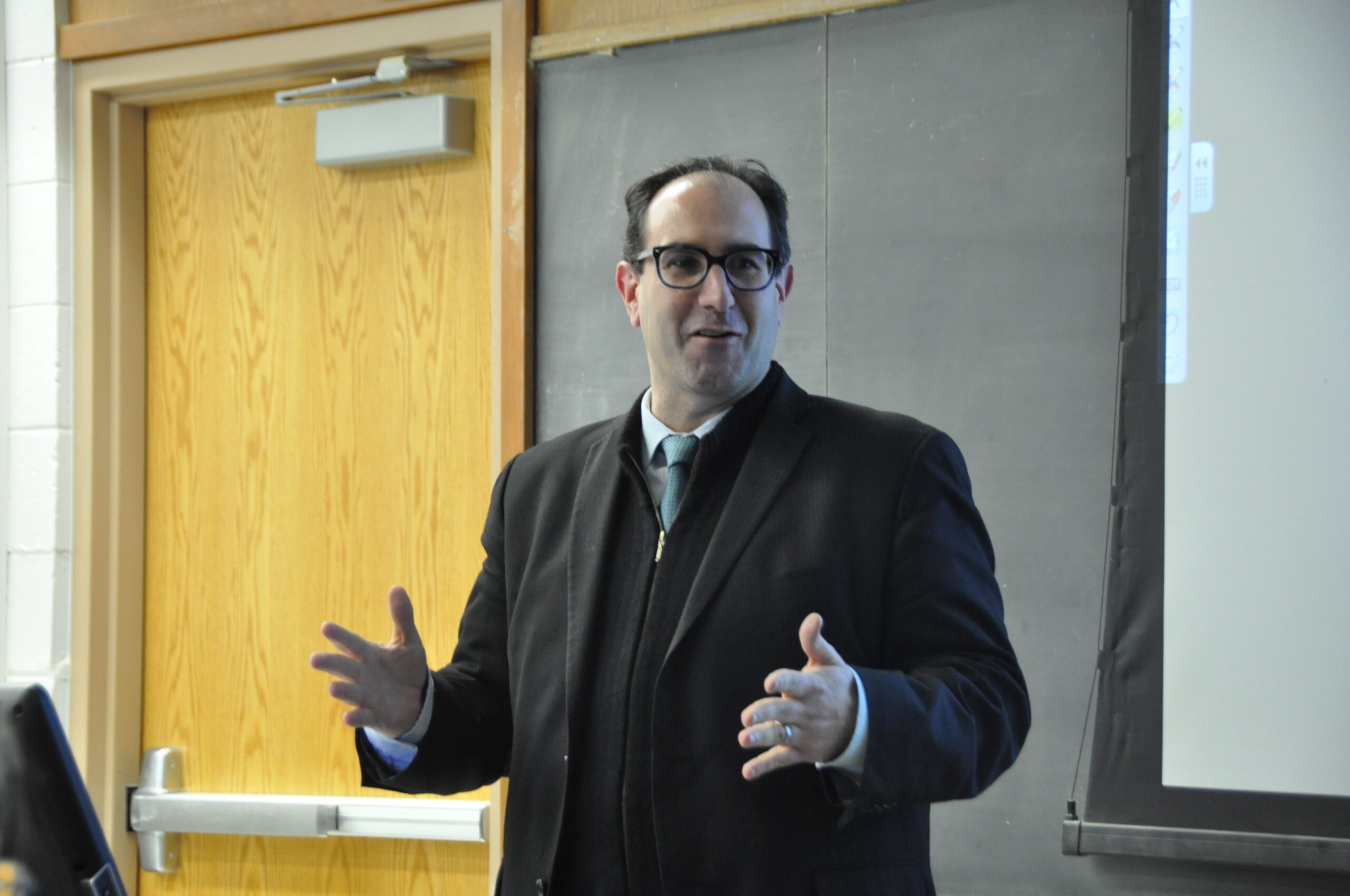
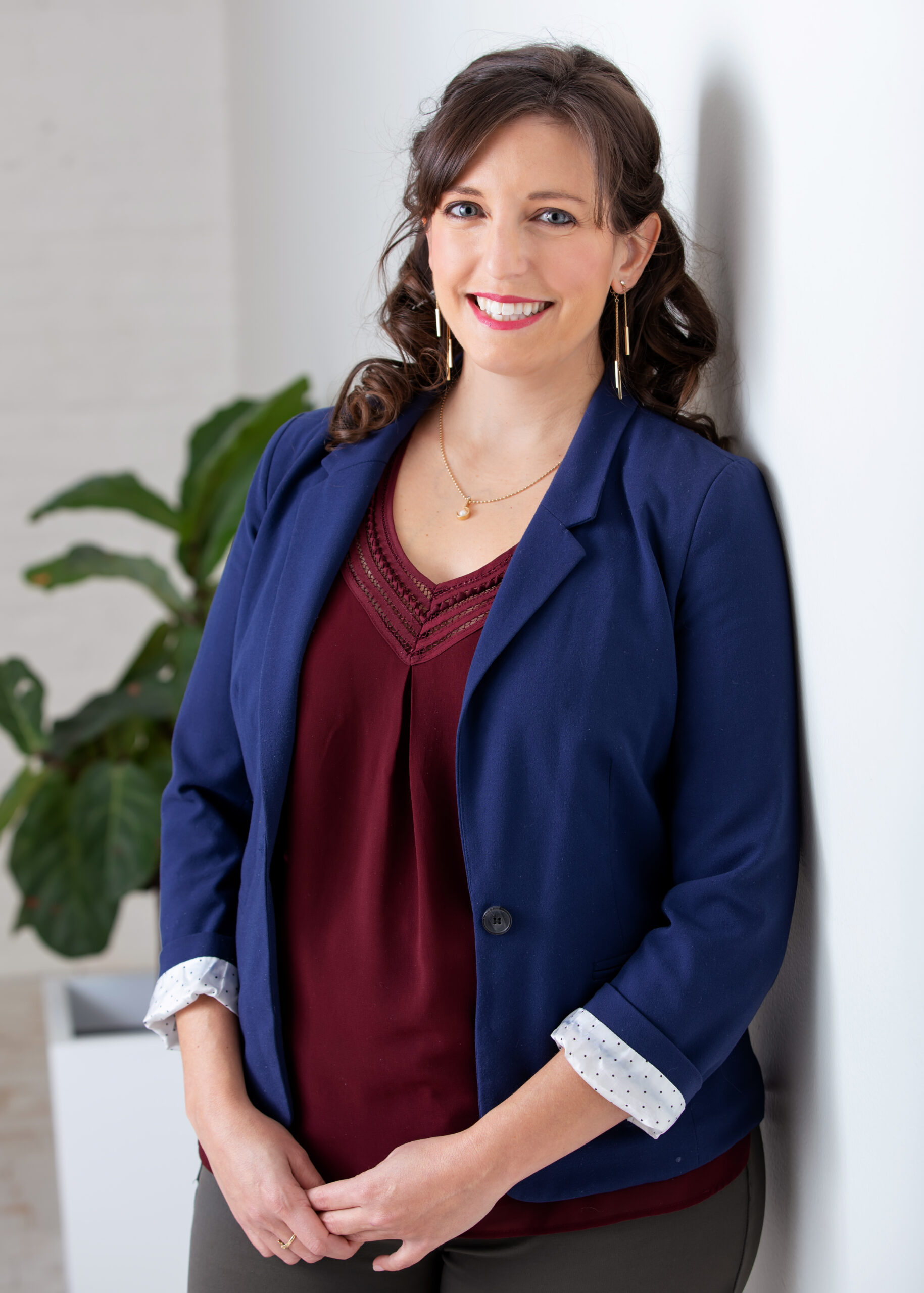
Erle Ellis. Photo by Marlayna Demond for UMBC.
“Our work shows that most areas depicted as ‘untouched,’ ‘wild,’ and ‘natural’ are actually areas with long histories of human inhabitation and use,” says UMBC’s Erle Ellis, professor of geography and environmental systems and lead author. He notes that they might be interpreted like this because in these areas, “societies used their landscapes in ways that sustained most of their native biodiversity and even increased their biodiversity, productivity, and resilience.”
Mapping 12,000 years of land use
The interdisciplinary research team includes geographers, archaeologists, anthropologists, ecologists, and conservation scientists. They represent the U.S., the Netherlands, China, Germany, Australia, and Argentina, pooling their knowledge and expertise into a large-scale study that required a highly collaborative approach. They tested the degree to which global patterns of land use and population over 12,000 years were associated statistically with contemporary global patterns of high biodiversity value within areas prioritized for conservation.
“Our global maps show that even 12,000 years ago, nearly three-quarters of terrestrial nature was inhabited, used, and shaped by people,” says Ellis. “Areas untouched by people were almost as rare 12,000 years ago as they are today.”
Global changes in anthromes and populations 10,000 BCE to 2017 CE. Map courtesy of Erle Ellis.
The cultural practices of early land users did have some impact on extinctions. However, by and large, land use by Indigenous and traditional communities sustained the vast majority of Earth’s biodiversity for millennia. This finding comes at a critical time of heightened need to develop long-term, sustainable answers to our biggest environmental problems.
“The problem is not human use per se,” explains professor and co-author Nicole Boivin, of the Max Planck Institute for the Science of Human History in Jena, Germany. “The problem is the kind of land use we see in industrialized societies—characterized by unsustainable agricultural practices and unmitigated extraction and appropriation.”
To truly understand terrestrial nature today, it is necessary to understand the deep human history of that nature. Outside of a few remote areas, “nature as we know it was shaped by human societies over thousands of years,” says Ellis. He believes that efforts to conserve and restore “won’t be successful without empowering the Indigenous, traditional, and local people who know their natures in ways that scientists are only beginning to understand.”
Supporting Indigenous land use practices
Ancient gateway in Angkor, Cambodia. Photo by Erle Ellis.
The authors argue that their findings confirm that biodiversity conservation and restoration will benefit by shifting focus from preserving land in a form imagined as “untouched” to supporting traditional and Indigenous peoples whose land use practices have helped sustain biodiversity over the long term.
“This study confirms on a scale not previously understood that Indigenous peoples have managed and impacted ecosystems for thousands of years, primarily in positive ways,” says Darren J. Ranco, associate professor of anthropology and coordinator of Native American research at the University of Maine. “These findings have particular salience for contemporary indigenous rights and self-determination.”
Ranco, a citizen of the Penobscot Indian Nation, notes that indigenous people currently exercise some level of management of about 5% of the world’s lands, upon which 80% of the world’s biodiversity exists. Even so, indigenous people have been excluded from management, access, and habitation of protected lands in places such as the U.S. National Parks.
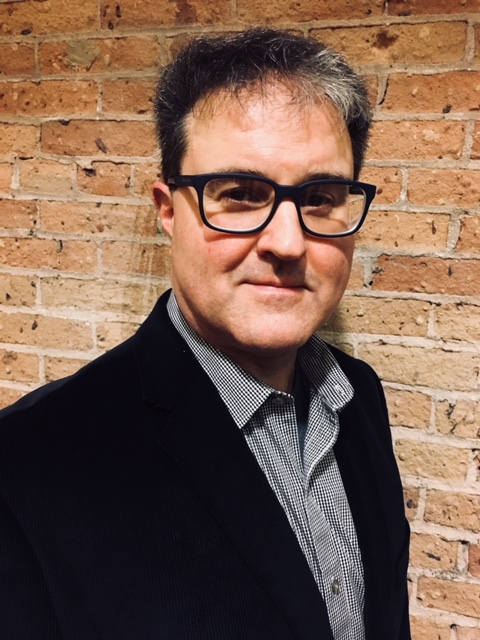
Darren J. Ranco. Photo courtesy of Ranco.
“We must also assure that new attempts to protect lands and biodiversity are not just a green-grab of indigenous lands,” says Ranco. “We cannot re-create the worst of colonial policies meant to exclude indigenous people, which would undoubtedly make the situation much worse for the environment and humanity.”
A sustainable future
“Our research demonstrates the connections between people and nature that span thousands of years,” says Torben Rick, study co-author and curator of North American Archaeology at the Smithsonian National Museum of Natural History. “These connections are essential for understanding how we arrived at the present and how to achieve a more sustainable future.”
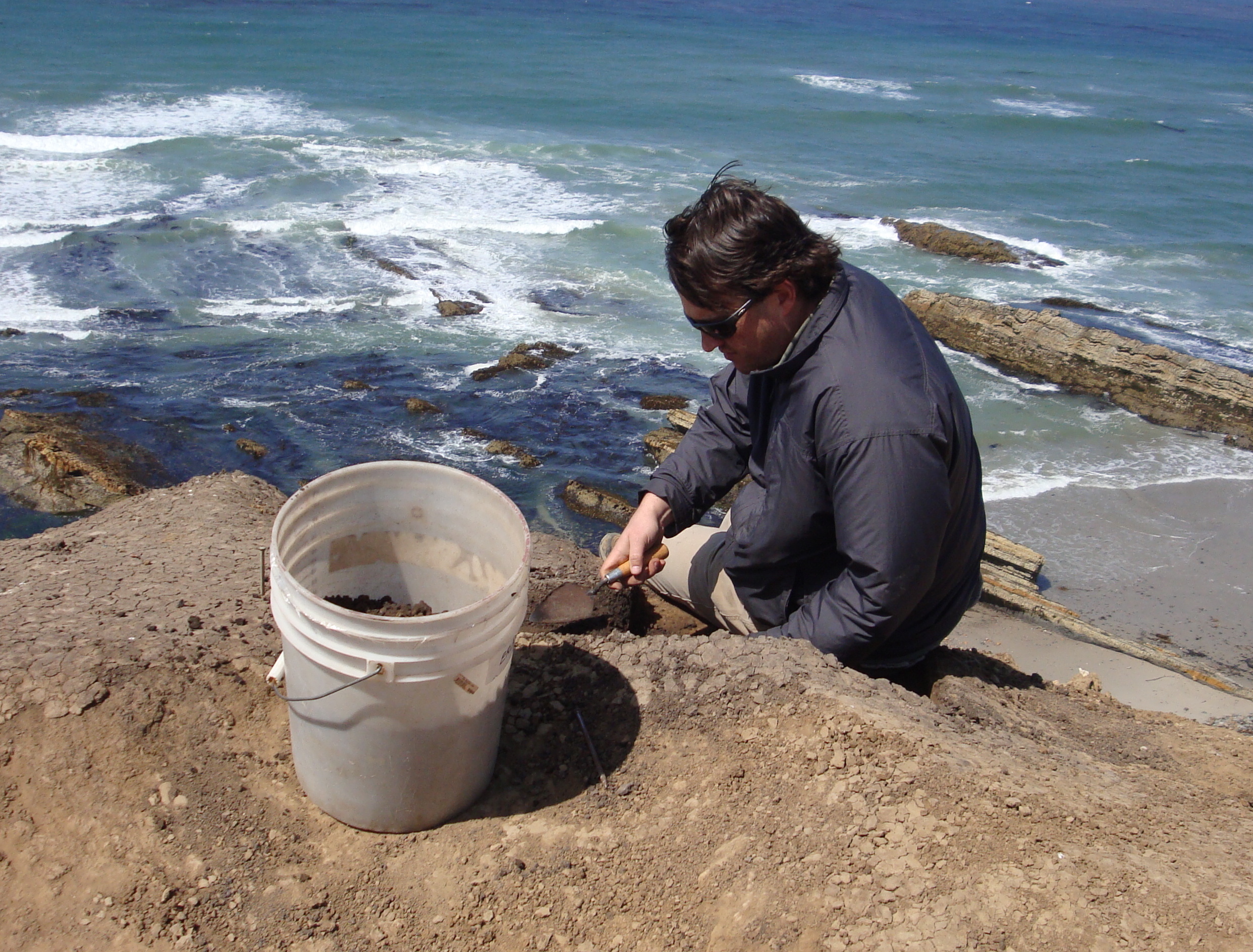
Rick excavating a roughly 11,000 year old archaeological site on Santa Rosa Island, California. Photo courtesy of Rick.
This research represents a new form of collaboration across archaeology, global change science, conservation, and scholars of Indigenous knowledge. The co-authors hope this work will open the door to increasing the use of global land use history data by natural scientists, policymakers, activists, and others. Leaders in a range of fields can use these data, they note, to better understand and collaborate with Indigenous, traditional, and local peoples to conserve biodiversity and ecosystems over the long term.
“It is clear that the perspectives of Indigenous and local peoples should be at the forefront of global negotiations to reduce biodiversity loss,” says Rebecca Shaw, chief scientist at World Wildlife Fund and another study co-author. “There is a global crisis in the way traditionally-used land has been transformed by the scale and magnitude of intensive human development. We have to change course if we are to sustain humanity over the next 12,000 years.”
Banner image: Hilltop settlement in drylands, Morocco. Photo by Erle Ellis.
In September of 2020, UMBC’s Camee Maddox-Wingfield, assistant professor of anthropology, wanted to introduce her Anthropology 211 students to the process of digital storytelling and the tools of the Smithsonian Learning Lab. She reached out to Sarah Jewett who had just launched a new digital storytelling collaboration with the Montgomery College (MC) Digital Storytelling Internship program at the Paul Peck Humanities Institute. The internship places MC students with UMBC faculty who need help with their digital story projects.
Jewett, director of innovations in transfer research and practice at UMBC, knew about MC’s long-standing partnership with the Smithsonian Center for Learning and Digital Access, of which the lab is part. She collaborated with MC’s Digital Storytelling Internship to place Mark Siegrist, who was an intern in the lab, with Maddox-Wingfield.
Camee Maddox-Wingfield.
Siegrist was the perfect fit. He produced the digital story Maddox-Wingfield needed and had the opportunity to learn about the resources UMBC offers for transfer students.
“I’ve had a really good experience working with Mark Siegrist,” shares Maddox-Wingfield. “He was so helpful. I am so grateful that this sort of collaboration was made possible between the two institutions by Sarah Jewett.”
Building relationships
This growing, humanities-centered digital stories internship is a collaboration nourished by Jewett and MC’s Jamie Gillan and Mathew Decker. The two English faculty serve as co-coordinators of MC’s Digital Stories Internship, and Gillan is also a Ph.D. student in UMBC’s language, literacy, and culture (LLC) program. Jewett and Gillan initially connected through Gillan’s doctoral research at UMBC, on story work as a way to build empathy. This storytelling project was a natural extension of that work.
Together they built the structures necessary for MC students to work alongside UMBC faculty on digital storytelling projects. MC considers these UMBC collaborations to be Level 2 internships, completed after MC students gain initial experience with digital storytelling.
Participants enroll as non-degree students at UMBC during their internships to complete a service-learning course through UMBC’s Shriver Center. This provides them with additional support and guidance in completing their collaborative projects and reflecting on their internship experiences.
“Level 2 interns are expected to bring their own ideas to the table, to be leaders as well as collaborators,” explains Gillan. These learning and teaching partnerships between students and faculty are at the core of how UMBC fosters a culture of intellectual curiosity and relationship-building.
The faculty team for the digital stories partnership in fall 2020 included: Bill Shewbridge, professor of the practice in media and communications studies; Tania Lizarazo, assistant professor in modern languages, linguistics, and intercultural communication (MLLI) and the global studies program; and Beverly Bickel, M.A. ’94, instructional development systems, Ph.D. ’05, LLC, clinical assistant professor of LLC.
Great chemistry
UMBC and MC’s strong working relationship has deep roots. Ten years ago UMBC partnered with three other community colleges in Maryland to develop and implement the STEM Transfer Student Success Initiative (t-STEM). Jewett, the executive director of this initiative, worked with community college counterparts to develop the systems necessary to better support transfer students in STEM as they transitioned to UMBC.
The seven-year initiative was a great success and inspired Jewett to extend this same model to other fields. She began with a summer environmental science research experience organized in collaboration with Howard Community College and UMBC’s departments of geography and environmental science and biological sciences.
UMBCs Kevin Omland (center), professor of biological sciences, birdwatching with students in 2019.
Rather than focus on expanding a single program, or even an array of STEM-focused programs, “We are working to scale horizontally to different disciplines,” Jewett explains. This includes the social sciences and humanities.
Finding a path
Like Mark Siegrist, MC student Ahmad Al-Olabi was also a Level 2 digital stories intern. The experience had a significant impact on his college experience.
In his Level 1 internship, Al-Olabi produced “The Journey: Swim or Die,” about his journey as a Syrian refugee fleeing to Greece. His powerful work was one of eight digital stories MC featured during UMBC’s first Digital Decameron.
“I was hesitant to share my experience,” explains Al-Olabi. But the feedback he received encouraged him to continue forward. “In the second internship,” he says, “I realized everyone empathized with my journey and valued my skills.”
As a Level 2 intern, Al-Olabi worked with Shewbridge’s digital stories class in collaboration with 20 students at Hong Kong University. He provided his fellow students with script feedback and technical support for the “Global Voices in a Time of Pandemic” project. The project fosters intercultural dialog about COVID-19.
Ahmad Al-Olabi in the atrium of UMBC’s Performing Arts and Humanities Building. Photo by Azigza Hussen, 2019
Al-Olabi appreciated working with Shewbridge, whose filmmaking career and expertise have opened a new career option for him to explore. This experience has made him feel more prepared for the next step of his academic career. “Before this program, I wasn’t sure I was ready for an American university,” explains Al-Olabi. “Now that I know Professor Shewbridge and Ms. Jewett, and having been on campus, I feel I can be successful.”
Reflection through storytelling
A third Montgomery College student, Stephanie Palencia, produced the personal story “Stand Up.” She addresses the importance of self-care while grappling with the pressures of cultural expectations and responsibilities.
Palencia worked with Lizarazo and Charlotte Keniston, an LLC doctoral student and associate director of UMBC’s Peaceworker Program, on Lizarazo’s Migration Stories project. They organized audio, text, and images to create a story map that reflects the migration stories of some of the members of Maryland’s Latinx community. Palencia also assisted Lizarazo in a digital stories workshop she facilitated at The Universities at Shady Grove.
“I’ve been grateful to have been invited to work on digital stories with Montgomery College students since 2019,” shares Lizarazo. She continued to work with these students on digital story projects through the pandemic. Of the partnership, she says, “This is truly an initiative in community-building beyond institutions.”
Building bridges to the future
Jewett notes that the internship engages students in critical thinking to refine their technical, communication, and storytelling skills. However, she explains, “The heart is about building meaningful relationships between MC students and UMBC faculty and staff as a bridge to university life.” It’s a mentoring process that reveals all that is possible at UMBC and beyond.
Mark Siegrist. Photo courtesy of Siegrist.
“These relationships are invaluable,” shares Siegrist. He notes that the UMBC internship gave him access to a network of professors. Should he transfer, he will understand and know the community, where to access resources, and whom to ask for help.
“This internship will have a big impact on my academic journey,” Siegrist says. “It showed me how I could leverage my skills to design new opportunities.”
Jewett hopes to bring more support and new opportunities to even more students. The spring internship is already underway with three new MC students.
She and Amy Froide, a professor of history, also just received matching funding from Bringing Theory to Practice. It’s an organization that works to link the engaged learning, well-being, and civic development of students. This grant will help fund a new summer experience in public history with Howard Community College.
“The impact increases for all involved,” Jewett says, “when students have learning opportunities to explore the different disciplines, networks, and resources UMBC offers, and to connect with mentors.”
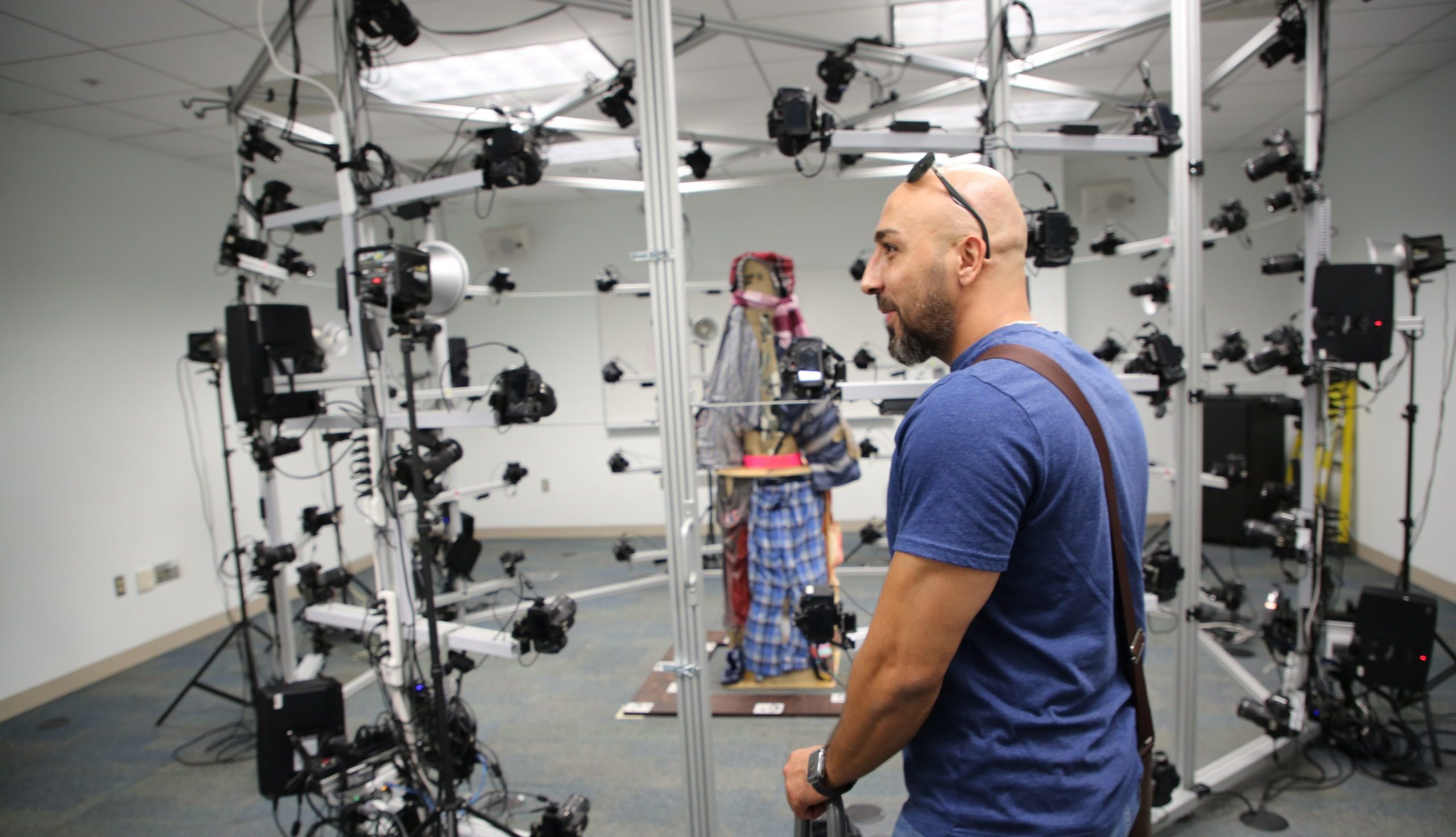
Banner image: Al-Olabi visiting UMBCs Imaging Resource Center photogrammetry 3D and motion capture scanning rig in December 2019. Photo by Azigza Hussen, a Montgomery College digital student intern visiting UMBC with Al-Olabi. All photos by Marlayna Demond unless otherwise noted.
At 43-years-old Renny DiPentima had two decades of experience at the Social Security Administration (SSA) when he enrolled in UMBC’s new public policy doctoral program in the late 1970s. He had just earned a master’s degree in public policy from George Washington University, 16 years after graduating from NYU. DiPentima commuted to UMBC two nights a week for five years, and in 1984, DiPentima became the first graduate of UMBC’s public policy doctoral program.
“I have a great deal of gratitude for UMBC,” shares DiPentima. “I felt a real connection to the school before and after graduating.”
DiPentima rose to deputy commissioner of systems and chief information officer during his 32-year career at SSA before transitioning to the private sector where he currently dedicates his time. In 2019, he pledged $100,000 to create the Renny DiPentima Fund for Advancement in Public Policy.
In addition to making annual payments on his pledge, DiPentima is providing current use gifts so that students can benefit from the award now—including much needed assistance for projects that have required to adapt to COVID-19 restrictions. The Renny DiPentima Fund supports doctoral student success at UMBC through grants of up to $1,500 for educational and research expenses related to their dissertation.
Rudy de Leon Dinglas ’23, Stephanie Blaher ’22, Nate Pritchard ’21, and Jeevan Raj Lohani ’25 are the first recipients of the fund. As current Ph.D. students in the public policy program, these awardees—like DiPentima—are using their public policy careers to develop the framework necessary to inform transformative, inclusive, just, and sustainable policies that will engage communities and policy makers.
There is a story behind every number
“In my first job as an analyst for Domino Sugar,” remembers Rudy de Leon Dinglas, “I learned the power of data to understand a greater story.” These skills prepared him to manage and analyze data for Baltimore City. His work advised the implementation of the Baltimore City Bike Share; the Safe Route to Schools; and the Mobile Integrated Health—Community Paramedicine programs.
As an immigrant from the Philippines, de Leon Dinglas is proud to give back to the city where he grew up and is now excited to be part of the next generation of public policy leaders. UMBC’s new diverse faculty excites him. “It’s refreshing to have more representation and be able to finally experience diversity, in an academic setting, for myself,” he explains.
Rudy de Leon Dinglas, center, at a February 2019 event with the late Congressman Cummings and the Baltimore City Fire Department and UMMS partnership on Community Paramedicine Program. Photo courtesy of de Leon Dinglas.
The DiPentima Scholarship helped with tuition costs allowing de Leon Dinglas to focus on his research and his work at the Johns Hopkins Center for Government Excellence where he supports mayors and local and state administrators utilize data. “Becoming a subject matter expert in public management will extend the reach and quality of my work,” he shares.
Why women leave STEM majors
Headshot courtesy of Blaher.
Stephanie Blaherearned her bachelor’s and master’s degrees in history but she began her education as a STEM major. Now, as a third year doctoral student, Blaher is researching the factors that contribute to women leaving STEM fields.
“Sometimes women realize a career in STEM is not for them or it doesn’t meet their expectations,” Blaher says. Structural, organizational, and social hurdles can also influence their decision. Sexism and lack of mentoring matter, she notes.
Blaher was expecting to begin in-person interviews for her research in fall 2020. Due to COVID, her interviews became virtual and she had to submit an IRB amendment. “My timeline shifted, access to students changed, and my questions altered,” explains Blaher.
The DiPentima Scholarship helped to fund additional participants. “Broadening my participant pool will increase the depth and quality of my research and improve the outcomes,” explains Blaher, who is a collegiate associate professor at the University of Maryland Global Campus. After graduation, she wants to continue teaching first-year courses to ensure all students succeed in a major of their choice.
Understanding affordable housing today
When Nate Pritchard visited UMBC for a doctoral program interview in urban policy, he felt welcomed as an older and non-traditional disabled student. “It’s that intangible feeling that makes you feel at home,” shares Pritchard. That feeling continues.
Headshot courtesy of Pritchard.
One notable class discussion would become the driving force behind Pritchard’s research. Pritchard was struck that affordable housing “is not just a function of money but more building materials, labor, and building units available.” He decided to research the long term self-sufficiency of rental assistance recipients. However, the present data was 12 to 15 years old. Pritchard needed to evaluate current data to identify the barriers limiting the program from helping more people faster.
The U.S. Department of Housing and Urban Development (HUD) granted Pritchard access to highly restricted data on the condition that he have a secure location to view it from. His dissertation chair, Pamela Bennett, associate professor of public policy, helped him find a private room on campus. “I felt honored for the opportunity and to have Dr. Bennett’s support,” shares Pritchard.
Unfortunately, COVID restrictions denied him access to campus. With Bennett’s guidance, Pritchard used publicly available HUD data. The new data lacked specificity so he had to focus on general questions.These unforeseeable changes extended his research and graduation date for another year, so the additional funding was invaluable, he says.
“Dr. DiPentima’s generous assistance helped me in my present circumstances, more than he can ever know,” shares Pritchard. He plans to teach in academia and return to his original research when restrictions are lifted.
A purpose-driven life
Jeevan Raj Lohani had spent a decade as a freelance global development consultant in East Africa and South Asia before joining UMBC’s public policy doctoral program. UMBC presented Lohani with the opportunity to combine program evaluation with his background in economics.
“Coming to UMBC was a calculative decision for my career,” says Lohani. He hopes his research will contribute to improving economic policies that address human needs, like labor migration, worldwide. Nepal is one of the poorest developing countries in the world, Lohani, who is Nepali, explains. Jobs are scarce, forcing Nepali workers to migrate to neighboring countries for work. “I want to investigate if migrant laborers, upon their return to Nepal, contribute to the economy by engaging in entrepreneurship,” says Lohani.
But for Lohani, informing policy makers with the resources to implement long term economic policy is one part of a greater whole. His end goal isn’t the expertise per se, but to use what he learns as one part of a much larger life mission to impact people with needs all over the world.
The DiPentima Scholarship provided the financial support Lohani needed between the end of his assistantship and the beginning of a job with the Maryland Department of Health.
The privilege of giving
DiPentima remembers that after graduating from NYU, he planned to gain some experience before moving on to the private sector. What he found in the public sector was a rewarding career with great responsibility to develop policy that would improve the lives of Americans on a daily basis. DiPentima saw the need to help broaden the research and the researchers in the field to meet the rapidly evolving needs of the United States and the world at large.
DiPentima and his wife Pat DiPentima with JD Kathuria, founder and CEO of WashingtonExec.com. Photo courtesy of DiPentima.
However, he knew that there were barriers to graduation. Sacrifices had to be made in time away from family; balancing a job and research; as well as the financial investments that have to be made to earn a Ph.D.
As the first alum of UMBC’s public policy doctoral program, DiPentima feels privileged to give a boost to students so they can complete their research and graduate. He encourages his fellow alums to do the same through scholarship and mentorship.
“Public service is a way to contribute to your country,” shares DiPentima. “It’s about being part of something bigger than yourself.”
*****
Header imager: Students walk down the staircase inside the Public Policy building in 2017. Photo by Marlayna Demond ’11.
Campus Compact Mid-Atlantic (CCMA) has recognized UMBC with its 2020 Engaged Campus Award. This award acknowledges UMBC faculty, staff, students, and community partners’ commitment to service-learning and community engagement within the greater Mid-Atlantic region.
UMBC has been selected out of 38 CCMA institutions across the Mid-Atlantic. This includes other institutions that, like UMBC, have been recognized with the Carnegie Community Engagement Classification.
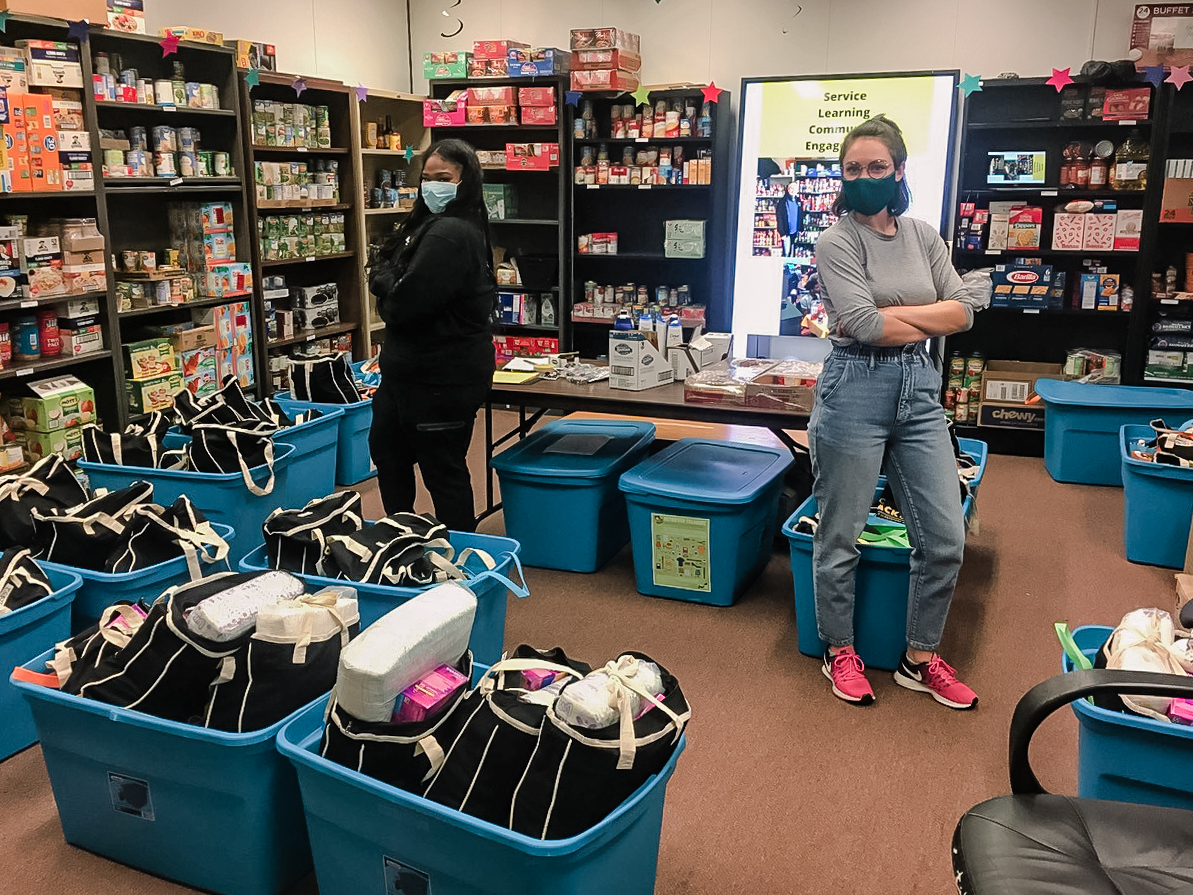
Students fill packages of healthy foods and other essential supplies for UMBC’s Retriever Essentials program. Photo courtesy of Retriever Essentials.
CCMA honors UMBC’s deep dedication in five categories:
Philosophy and mission of community engagement
Student support for and involvement in community engagement
Faculty support for involvement in community engagement
Community participation and partnerships
Institutional support for community engagement
The Engaged Campus Award reflects the UMBC community’s dedication to working in partnership with others to increase racial equity, inclusion, and social justice.
Supporting tomorrow’s college students
Kaitlynn Lilly ‘22, physics and mathematics, exemplifies this dedication to community. Lilly shares that until she came to UMBC, she did not have the mentorship and guidance to fully understand or access all the resources college could offer. At UMBC, she found support for her academic and professional goals and numerous opportunities for community engagement. This experience instilled in her a passion for working with students of all backgrounds to achieve their highest goals.
Kaitlynn Lilly. Photo courtesy of Lilly.
Lilly has served as a tutor at UMBC’s Physics Tutorial Center and a technical aide at the Johns Hopkins University Applied Physics Laboratory. She has carried what she’s learned through those roles to her work as an advisor to two teams of high school girls participating in the Society of Women Engineers Next Design Challenge.
“I want to give that mentorship and academic assistance I didn’t have growing up to those that are coming after me,” shares Lilly. “My goal is to show every student that their dreams of higher education and careers are possible.”
Community engagement hub
The Shriver Center has led UMBC’s community-engaged work for over 30 years. It has prepared and connected faculty, staff, and students from all academic programs with community partners. Its applied learning experiences have helped thousands of students to develop as community-minded agents of change. At the same time, the center has helped hundreds of partner organizations to meet their goals.
“UMBC’s community-engaged activity and the people who make this activity possible give me great hope,” shares Michele Wolff, director of the Shriver Center. “Now more than ever, our community and civic engagement can help change the current narrative and move us towards a more inclusive, equitable, and just society.”
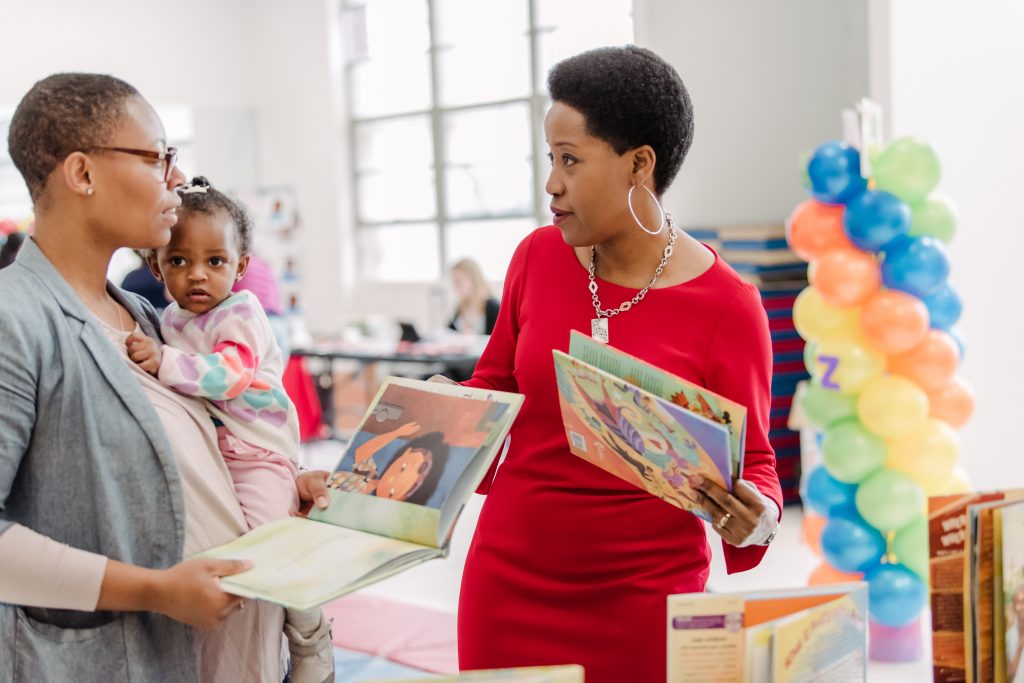
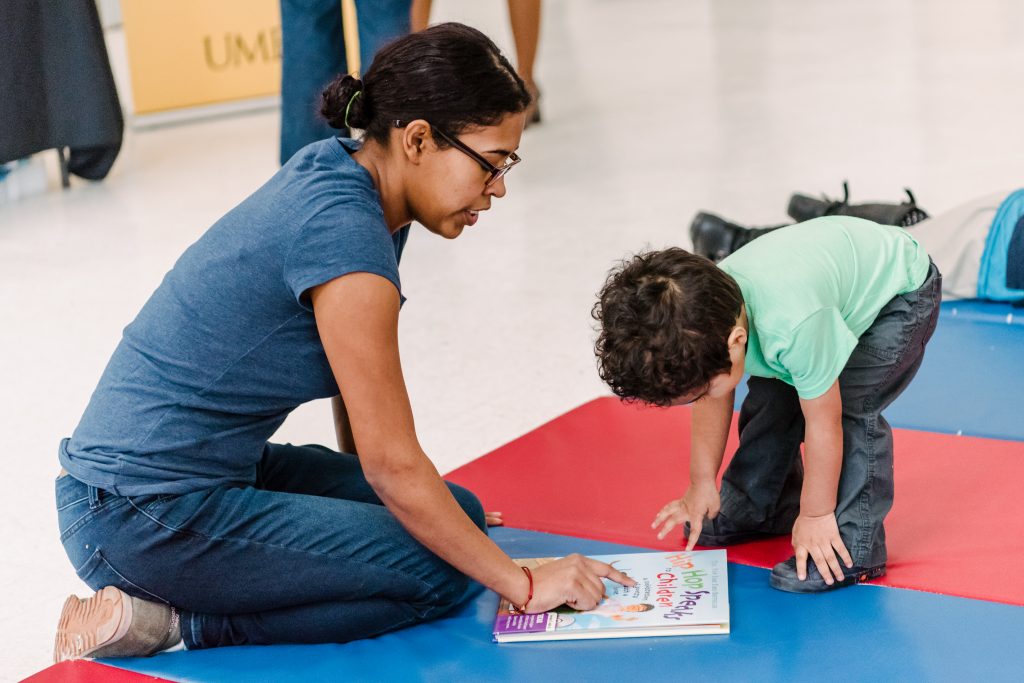
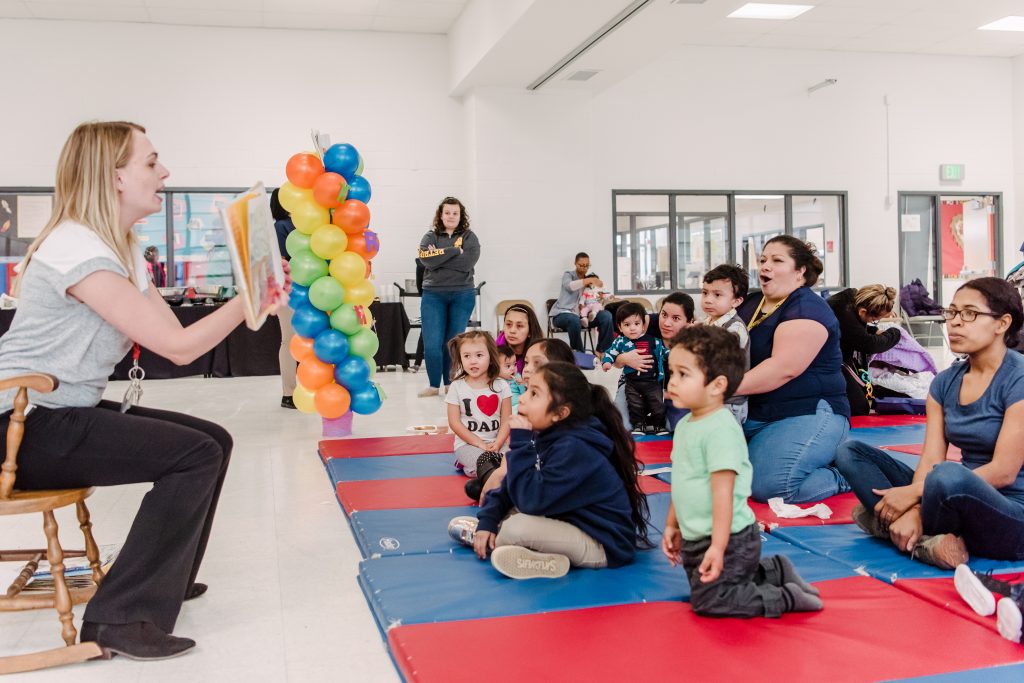
Banner image: Mavis Sanders (center), professor of education, is director of the Sherman Center for Early Learning in Urban Communities. She talks with a parent participating in the Families, Libraries, and Early Literacy Project. A center staff member (right) shows a book to a child participating in the project. Image by Marlayna Demond ’11 for UMBC.
Dana Bradley, dean of UMBC’s Erickson School of Aging Studies, recently recognized President Freeman Hrabowski with a prominent honor from the nation’s preeminent organization devoted to research, education, and practice in the field of aging.
Bradley is incoming chair of the Academy for Gerontology in Higher Education (AGHE), the educational unit of the Gerontological Society of America (GSA). The AGHE’s Administrative Leadership Honor recognizes twenty international leaders in the field of gerontology. This year there were representatives from countries like the United States, Canada, and Japan.
“The award is about helping an international audience understand the impact that our scientific researchers and educators have in the field of aging,” shares Bradley. Honorees’ outstanding work represents milestones in the history and development of gerontology.
— Gerontological Society of America (GSA) (@geronsociety) October 27, 2020
Bradley nominated Hrabowski for the award in collaboration with John Schumacher, associate professor of sociology, anthropology, and public health (SAPH), and Leslie Morgan, professor emerita of SAPH. Schumacher is the graduate program director of the gerontology Ph.D. program. This doctoral program is jointly offered by UMBC and the University of Maryland, Baltimore (UMB). These are complementary to the Erickson School’s bachelor’s and master’s degrees and certificate programs.
Bradley’s work in aging research has created avenues and networks for scientists, educators, and students to investigate, advocate, research, and innovate in the fields of aging and longevity. This, in turn, has had a positive impact on housing, health services, community wellbeing, and lifelong learning for older adults.
Bradley is a GSA and AGHE fellow. She has long served as an elected leader within the GSA and Southern Gerontological Society. She was drawn to become dean of UMBC’s Erickson School in 2018 because of its focus “on leading and being on the edge through engaged scholarship with endless possibilities.” Hrabowski, she says, has cultivated and supported the Erickson School’s leadership in the field.
Over the last three years, Bradley has collaborated with Hrabowski, faculty, campus, other universities within the University System of Maryland, and community partners on interdisciplinary initiatives to broaden and diversify UMBC’s research in the field of aging services. Last year she and Hrabowski served on a steering committee to support UMBC joining the Age-Friendly University Global Network.
The “age-friendly” designation is a commitment to innovate advances in gerontology, health research, and community initiatives to support older adults in higher education. The group, led by Dublin City University in Ireland, includes fifty-eight institutions worldwide.
Today I was pleased to join @UMBaltimore Pres. @JayPerman & @UMBC Pres. Freeman Hrabowski to kick-off the Age Friendly University Initiative. As the U.S. median age is increasing, universities should promote intergenerational learning & focus research on needs of an aging society pic.twitter.com/S6V9vBZoGP
“Dr. Hrabowski has been at the forefront of creating and promoting a vision of how we think and talk about aging and longevity,” shares Bradley. And the inclusive, forward-looking vision that he and the Erickson School emphasize has had notable impacts, including on the student experience.
At the same time, Hrabowski shares that he sees his AGHE honor as “a reflection of the Erickson School’s innovative approach to teaching, learning, and research.” He shares, “I’m so proud of the work being done at the school. It has had great success preparing alumni who are now leaders in the field of aging.”
Erickson School alumni likeLauren Mortimer ‘19, and Malgorzata Bondyra ‘20, management of aging services, exemplify the type of innovation that UMBC fosters, in their work to reach older adults in creative ways. Mortimer designed a comfort book that provides tools for people with dementia to soothe themselves during periods of confusion and irritability. Bondyra’s internship in senior housing inspired her to create a virtual cooking class for the older members of her Polish community senior center.
Bondyra cooking pierogi for Seven Oaks Senior Center’s online cooking class. Photo courtesy of Bondyra.
The Erickson School has become a place where students equip themselves with the skills and knowledge to address issues in longevity care. Students are then able to enter the workforce with skills that are inclusive and holistic.
The school is now developing a certificate in inclusion and diversity in aging services. Says Bradley, “Dr. Hrabowski inspires me to continue to envision possibilities for what the future of aging services can look like.”
Banner image: UMBC students gather at the sculpture “Forum” by Thomas Sayre in 2016. Photo by Marlayna Demond ’11 for UMBC.
Laura Girling, director of UMBC’s Center for Aging Studies, breaks down stereotypes of people living with dementia through innovative research. Since 2019, the NIH’s National Institute of Aging (NIA) has awarded her more than $750,000. The funding helped her examine how people with dementia live alone in community settings. This includes research focused on how COVID-19 social distancing guidelines impact this vulnerable population and how to ethically include people living with dementia as research participants.
“Persons with dementia are often portrayed as bedridden,” shares Girling, Ph.D. ’15, gerontology. “When I show clips of people living with dementia leading active lives, there is a realization that people with dementia can do many of the same activities others can.”
In-home assessment
Girling began studying people living alone with dementia two years ago. The project launched under the title Aging at Home Alone with Alzheimer’s and Related Dementias. She began to assess how people experiencing dementia manage their day to day living. Girling noted their interactions with their caregivers and community, and how they navigate and negotiate their physical and social environments.
To gather such detailed information Girling completes in-home neuropsychometric assessments and in-depth in-person interviews. These in-person interviews have helped her observe the cognition and behavior of people with dementia who live alone in community settings in Maryland.
As COVID-19 spread and in-home visits became impossible, the project had to pause. Virtual visits didn’t allow for the same kind of assessment, Girling explains. But the situation did draw her attention to important new research questions.
Living with dementia during a crisis
As social distancing guidelines were implemented, Girling wanted to know how community-dwelling persons with dementia and their informal and formal supports were managing during a pandemic.
She began a new research project, Exploring COVID-19’s Impact on the Care and Well-being of Community Dwelling Persons with Dementia, with supplemental funding from her main NIA grant. This research evaluates the impact of social distancing guidelines on the health and wellbeing of community-dwelling persons with dementia.
Mary Nemec. Photo courtesy of Nemec.
Girling’s local COVID-19 research team includes research assistant Amber Zurn ‘21, sociology; Michael Allison, assistant director of the Adult Intensive Care Unit at Saint Agnes Hospital; and Mary Nemec, geriatric social worker and senior ethnographer. Nemec worked at UMBC’s Center for Aging Studies for more than 20 years and came out of retirement to lend her expertise to this project.
“Working with Dr. Girling I have learned how to code and systematically sort through research narratives,” shares Zurn. She is enrolled in UMBC’s health and public policy program and holds a certificate in social dimensions of health. “This has been an insightful process. It shows the nuances of qualitative data collection, a skillset I will be able to use in future career fields.”
Preliminary findings, from virtual and phone interviews, indicate that community-dwelling persons with dementia are experiencing more periods of isolation. This is due to the disruption in the supports and structures that allow them to successfully engage in daily living activities. And it puts their health and ongoing independence at risk.
Creating inclusive research
Girling notes that there is still so much that is unknown about improving the health and wellbeing of people with dementia in times of crisis and daily living. Expanding who is included in dementia research will help improve our understanding of the early stages of dementia. It will also give us insight on how to support people experiencing it.
One obstacle in pursuing dementia research, she explains, is the frequent exclusion of people with dementia in human subject research broadly. She is working with Nancy Berlinger, a bioethics research scholar at the Hastings Center, as well as Kate de Medeiros from Miami University, to address this issue.
Berlinger researches health care ethics and social ethics in aging societies. Girling has received supplemental NIA funding to research the bioethical implications of including people with dementia as participants in dementia research. Together, they will develop best practices relating to logistical and other challenges of working with this vulnerable population.
“These guidelines will help the research community support inclusion of people with dementia in future social research,” says Girling.
Banner image: Laura Girling. Photo courtesy of Girling.
UMBC’s Chris Rakes and Michele Stites and colleagues have received a $3 million grant from the National Science Foundation to strengthen undergraduate secondary mathematics teacher preparation programs.
Rakes is an assistant professor of secondary mathematics education and Stites is an assistant professor of early childhood education. The grant will fund their study of the PrimeD framework in collaboration with Berea College, the University of Central Florida, and the University of Kentucky. They will examine the use of PrimeD to structure the training of over 150 undergraduate students per year for four years.
PrimeD framework
Chris Rakes. Photo courtesy Rakes.
PrimeD stands for Professional Development: Research, Implementation, and Evaluation, an innovative approach to undergraduate secondary mathematics teacher preparation programs. Where traditional approaches to teacher preparation focus on learning how to teach specific mathematical skills, PrimeD structures teacher preparation as professional development. It creates an overarching system of learning, data collection, implementation, and evaluation based on a math teacher’s needs.
This structure supports teacher candidates with a mechanism to re-envision mathematics education as a scientific inquiry process—one that provides a unique and robust lens to examine diverse ideas and perspectives in math. PrimeD also addresses the systemic and individual challenges found in teacher preparation by incorporating culturally aware and equitable teaching practices. The PrimeD teacher preparation framework engages students as professional teacher leaders.
“I want educators to understand how mathematical ideas have meaning, and those meanings lead to procedures and skills,” says Rakes, the principal investigator. He wants everyone to learn to see mathematics as more than a set of skills and algorithms.
Secondary education students working with math strips. Photo courtesy of Rakes.
Transforming classroom practice
Rakes is the coordinator of UMBC’s undergraduate secondary mathematics education program. Six years ago he collaborated with at team of secondary math education researchers. They evaluated a statewide math and science professional development program for secondary math teachers in Florida.
Their evaluation revealed that teachers were not implementing the strategies, tools, and activities learned through the professional development in their classroom. There was no unifying structure to connect professional development with classroom implementation and evaluation.
“We realized that what was missing was a coherent framework that was guiding the work, “ explains Rakes. “There was no common vision and nothing explicit that would help the teachers take it to the classroom. There was nothing that said, ‘This has been fun. Now, how are you going to do this?”
PrimeD, they hypothesized, could meet this need.
Secondary mathematics students presenting their student-teacher experiences. Photo courtesy of Rakes.
Teachers as researchers
PrimeD creates this link by equipping student-teachers, including aspiring math teachers, with the skills to conduct research on their teaching practices. They can then adjust their teaching based on their findings.
To assist teacher candidates with implementing what they’ve learned, PrimeD includes network “improvement communities.” Professors, mentor-teachers, and alumni guide aspiring teachers through the process. Research has shown this kind of peer and mentor support to be essential for teacher success and persistence in the first three years of teaching.
Secondary math education students complete an exercise. Photo courtesy of Rakes.
Math as a change agent
Rakes will implement PrimeD at UMBC with student-teachers from the Sherman STEM Teacher Scholars Program. Stites, the co-principal investigator, will evaluate the implementation of the program at UMBC.
At the same time, researchers from partner universities will also study the implementation of PrimeD in their undergraduate secondary math teacher preparation programs. The participating researchers will gather, share, and evaluate fundamental data providing insights into PrimeD implementation in different contexts.
Michele Stites. Photo courtesy of Stites.
If the research proves successful, Stites, who specializes in early childhood math and special education, plans to implement PrimeD in UMBC’s early childhood and elementary mathematics program in the future. She wants early childhood mathematics education candidates to learn how to teach about finding mathematics everywhere.
“Mathematics isn’t a skill. It’s a way of thinking about a problem,” says Stites. “It has to do with how we function in society.”
Both Rakes and Stites know there is much work to do, but they have a mission and a team of collaborators excited for the evolution of undergraduate mathematics teacher preparation programs. “I want the mathematics classroom to be a vibrant place,” says Rakes, “where students have the opportunity to put all the things they’ve learned together into a coherent web of knowledge, connected through mathematical thinking and understanding.”
Michelle Scott reminisces about her grandmother’s tradition to call her grandchildren when they turned 18. “She’d call, wish us a happy birthday, and then ask if we had registered to vote.” If they hadn’t, they were asked to call back after registering.
“My grandmother knew the power of the vote,” remembers Scott, associate professor of history, and affiliate in the departments of Africana Studies and Gender, Women’s, and Sexuality Studies. “She understood voting was not just about having the privilege to vote for the president but also about voting on local issues.”
“Not the beginning or the end”
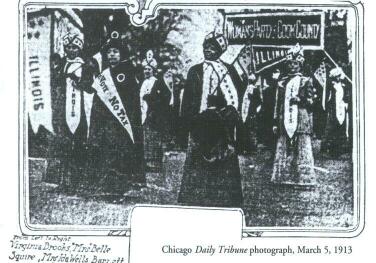
The Alpha Suffrage Club sent Wells-Barnett to the national suffrage parade in DC in 1913. Image from the Chicago Daily Tribune.
The year 2020 marks the centennial of the 19th Amendment which enfranchised women. “It’s important to remember that suffrage was a push for that more perfect equality for women; it wasn’t the beginning or the end,” explains Amy Froide, professor and chair of UMBC’s history department.
Voting was almost not included in the Seneca Falls Convention of 1848, the nation’s first women’s rights conference, explains Froide. Most salient to women were the right to access higher education, hold property, manage their own wages, and be able to get a divorce, and retain custody of their children. “It wasn’t until the late 1800s that women realized the vote would help them attain these rights,” says Froide.
Another thing not included at the convention were the voices of Black women. With the exception of Frederick Douglass, only white people were invited. Scott, an expert in Black women’s history; Froide, an expert in British history and European women’s history; and Susan Sterett, professor of public policy, acknowledge how systemic racism plagued the women’s rights movement from its inauguration.
Sharing lived experiences
“Even today, celebrations about the 19th Amendment disregard the Black women who contributed to enfranchisement,” explains Scott. “Ida B. Wells-Barnett,” says Scott, who researches her anti-lynching work, “founded the Alpha Suffrage Club for African-American women in 1913.” Some of the other Black women are Frances Ellen Watkins Harper whose speech “We Are All Bound Up Together” was delivered at the Eleventh National Women’s Rights Convention of 1866. And Mary Church Terrell delivered her address “The Progress of Colored Women” at the 1898 National American Woman Suffrage Association.
To help students gain a greater perspective of what these women were up against Scott uses storytelling as a strategy. “My grandmother was an excellent storyteller,” shares Scott. “I learned a lot about her life through her stories.” Her grandmother, Marion Vincent, was born in Baton Rouge in 1919. When she was of legal age to vote Vincent was prevented from voting due to voter suppression tactics. She moved to California where she was eventually able to vote, almost 70 years after the 19th amendment was ratified.
“There was massive disenfranchisement of African Americans before the 1965 Voting Rights Act,” explains Sterett. Sharing lived experiences like Scott’s grandmother’s helps students understand the complexity of implementing constitutional law.
All three see a great need for scholarship on the contributions of Black, brown, and indigenous women leaders in the suffrage movement. The centennial can be an opportunity for this work.
Shaping the future
Maureen Evans Arthurs ’13, gender and women’s studies, agrees. Recounting her matriarchal lineage, Evans Arthurs names her family members that laid the foundation for her unique position today. Her great-grandmother, Pearl Johnson, was born to sharecroppers in 1887. Her grandmother, Irene Shepard, was born in 1918. Evans Arthurs’ mom, Renee Smith Guelce, was born in 1956. “I was born in 1986. My sister was born in 1982. We are the first people in my family to grow up with the birth right to vote.”
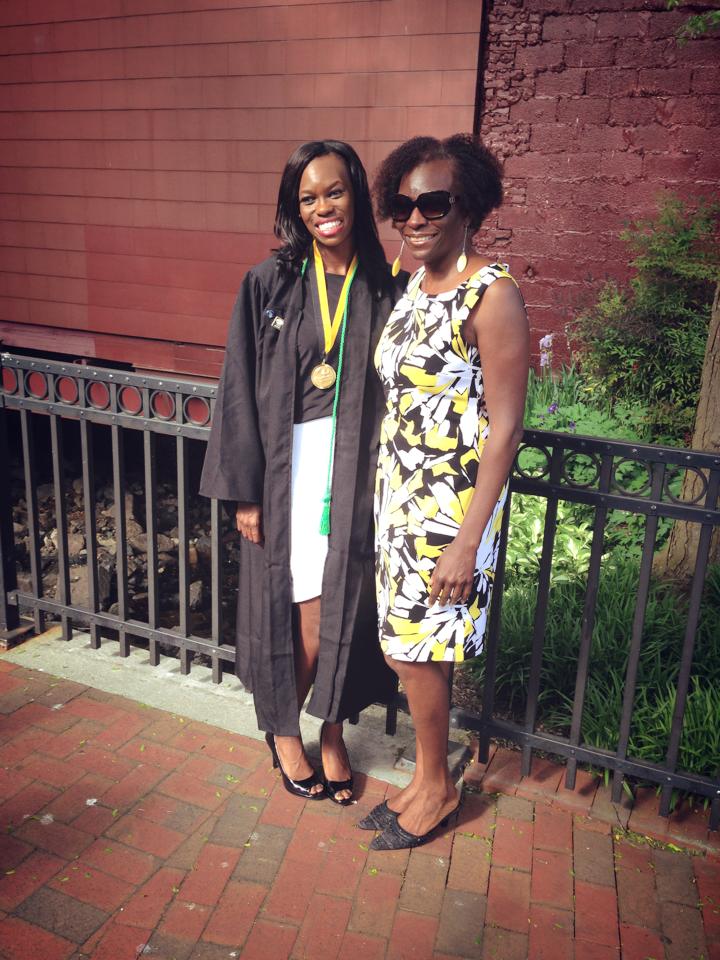
Evans Arthurs poses with her mom Renee Smith Guelce on the day of her UMBC graduation. Photo courtesy of Evans Arthurs.
Evans Arthurs voted for the first time in 2004, 84 years after the 19th Amendment was ratified. Today, she is the director of government affairs for Howard County Government, helping shape the future for the next generation.
*****
Header image: Five women officers of the Women’s League in Newport, Rhode Island, c. 1899. Source: National Women’s History Museum.
Graduating seniors Anthony Cano, Renato Zanelli, and Maya Scheirer came to UMBC with pride and hunger instilled by their immigrant parents’ work ethic. They brought rich cultures, languages, and hearts full of dreams and aspirations with the goal of forging futures of their own.
At UMBC they found faculty and staff who nurtured their curiosity, and a campus committed to learning from and working with local and international communities. Most importantly, they were embraced by a community who welcomed and celebrated them wholeheartedly for who they are and who they wanted to be.
Cano, Zanelli, and Scheirer lean on their friendships and faculty mentors as they end their time at UMBC, under an unprecedented global pandemic, via a virtual commencement ceremony. Together they face a changing world, knowing that their transformative years at UMBC have given them a solid foundation to hope, dream, and achieve.
Global citizen
Anthony Cano fondly recalls walking with his mom to school in the mornings. “We would part ways at the bus stop as she headed to work as a janitor,” a job she had to take after the market crash of 2008. “I would continue walking to my school,” shares Cano.
He watched his family lose everything and then rebuild their lives by working seven days a week. “They learned everything and anything to make ends meet,” explains Cano. “That work ethic—that unbreakable faith—is my moral structure. I connect it to everything I do.”
Cano wants to make sure everyone knows the real story behind his success. “My story does not begin with what I have achieved or my research,” he shares. “When I tell my story I want it to start and end by honoring my struggle as a student and as an immigrant. It is what made and continues to make my success happen.”
Mapping an interdisciplinary future
As a first-generation college student, Cano did not take his opportunities for granted. Instead, he invested time in and out of class to explore his wide interests in journalism, photography, and business. He also found ways to help his community, which he defines as global. “I think everything is connected,” shares Cano. “I identify as a global citizen more than any other identity.”
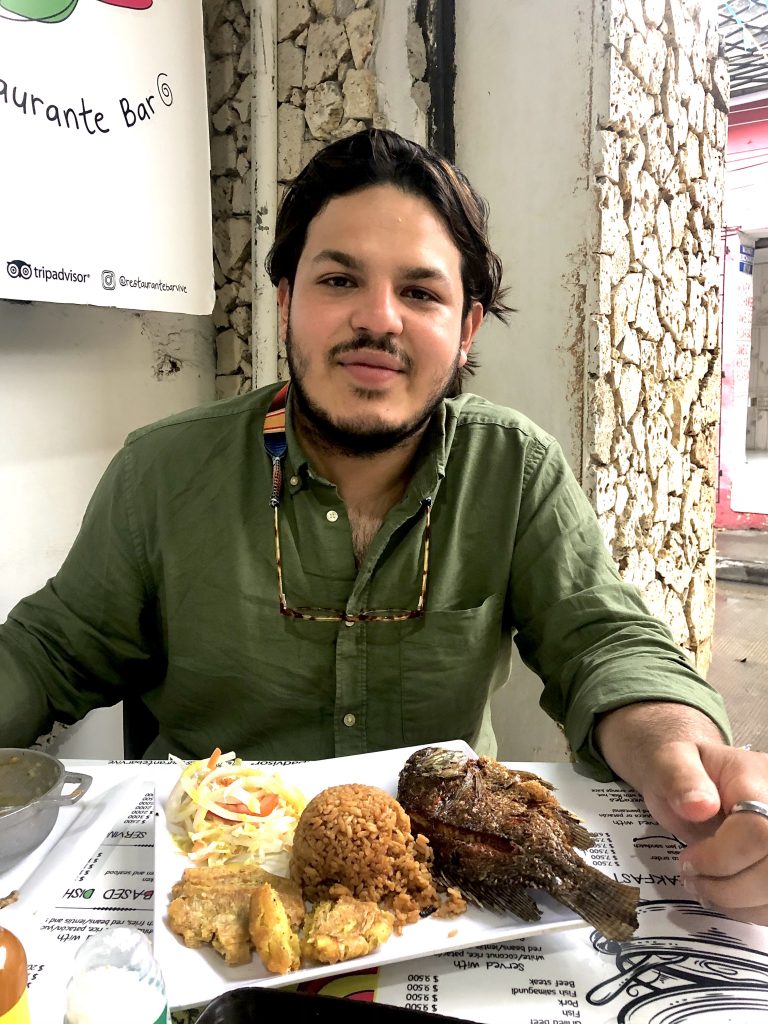
Cano eating a typical Cartagenian dish. Photo courtesy of Cano.
Eager to learn, Cano transferred to UMBC immediately after earning an associate’s degree in broadcast and media production from Montgomery Community College. He planned to add a bachelor’s in computer science to facilitate his pathway to entrepreneurship. Cano began his general computer science courses while also enrolling in political science and human geography classes.
After learning about global political systems and internally displaced people (IDP), Cano immediately felt a sense of responsibility. He wanted to bring awareness to the political and social forces that displace people from their homes into dangerous and precarious living conditions.
“In some ways, my life was like a bubble,” explains Cano. These classes introduced him to the complexities of migration. “I have people in my social network that have experienced similar situations, but not to the extent that I learned about,” he shares. He decided to follow his interests and declared a double major in media and communications studies and political science.
Cano in Cartagena. Photo courtesy of Cano.
Afro-Colombian stories
Felipe Filomeno, associate professor of political science, became his mentor and advisor. With his support, Cano developed strong skills in mixed research methods. He used social science, humanities, and visual research methods to continue to understand IDP.
“Tony is a unique and truly interdisciplinary student,” says Filomeno. “I advised his research on internally displaced people and urban development in Cartagena, Colombia. It combined oral history and visual research methods.”
Cano received a 2019-2020 Undergraduate Research Award to conduct field research in South America. His project focused on the relationship between internally displaced people as a result of violence and urban development in Cartagena.
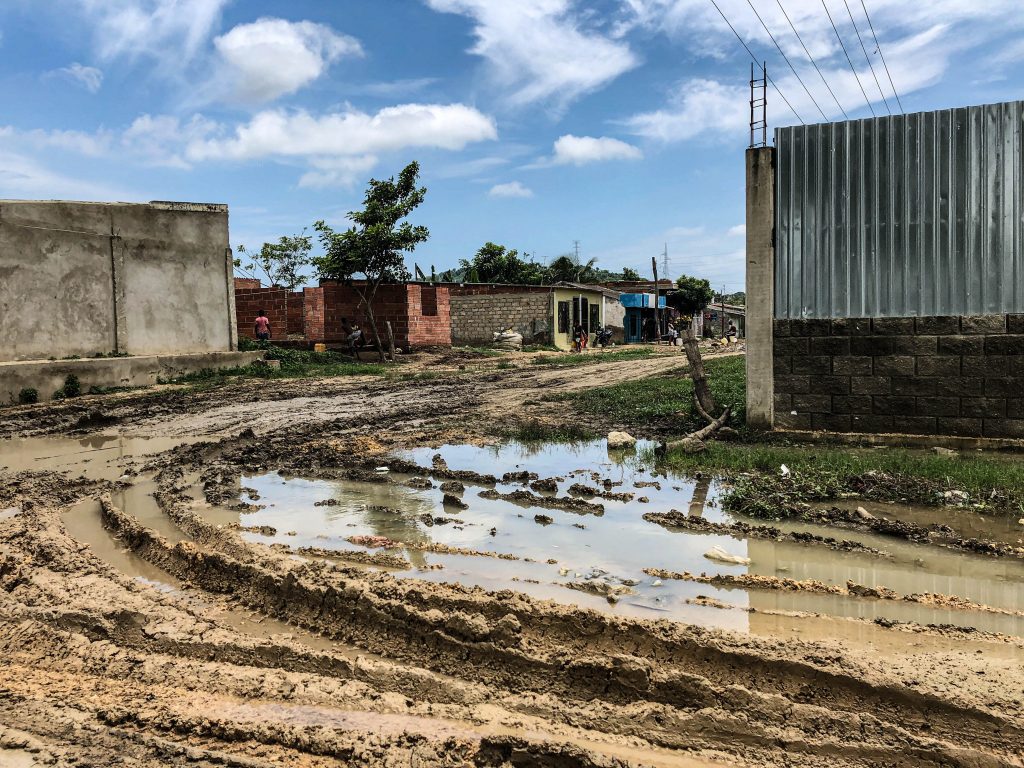
Cano drew on his background in journalism and his fluent Spanish language skills to better understand the experiences of Afro-Colombians in a neighborhood named after Nelson Mandela. It’s located only a few minutes from a walled-in, tourism-focused urban center.
Nelson Mandela neighborhood. Photo courtesy of Cano.
“Tony wanted his project to result not only in an academic paper. He also wanted to create a short virtual reality film to document the living conditions in Nelson Mandela,” shares Filomeno. Cano was careful and curious while analyzing data. Filomeno advised him on how to verify different sources of data and how to ensure his work reflected the community respectfully.
Two Afro-Colombian women wearing bright long colorful skirts, shirts, and head coverings sit with two bowls of fruit next to them as they lean on the orange wall of a building.
Cano also served as a fellow in the Partnerships for Listening and Action by Communities (PLACE) program, an affiliate of UMBC’s Center for Democracy and Civic Life. There he received additional training in humanities methods and community organizing to support residents of Baltimore City’s Brooklyn neighborhood in building greater community cohesion and providing enriching opportunities for young people.
Cano walking in downtown Baltimore. Photo courtesy of Cano.
In January, Cano will begin working at Morgan Stanley as an operations analyst. The multinational investment bank and financial services company found his humanities background invaluable to creating a strong finance team.
“I am a learner. My family always said there is nothing wrong with constantly wanting to learn,” shares Cano. “They taught me to set goals, and that through a lot of hard work, sacrifice, deep faith, and positivity, you can achieve your goals and break barriers.”
A home away from home
Renato Zanelli remembers how hard his mother worked and how much she sacrificed when she moved to the United States from Peru. “There are times I feel like giving up because some people assume that if you are Hispanic, you cannot do something,” shares Zanelli. “I want to prove that Hispanics can do anything. I want to make sure everything my mom sacrificed was not in vain.”
Like Cano, family and culture are also the founding blocks of Zanelli’s undergraduate life. He came to the United States from Peru when he was ten. He was raised in Anne Arundel County by his mom and grandparents. While he did well in school, it was at times isolating because of the lack of diversity. After a year in Anne Arundel Community College, he realized that what he was seeking the most was a community that embraced his language, culture, and interests.
Life-long friendships
Zanelli transferred to UMBC and was delighted to find a welcoming community. “One day, I saw a flyer for the Hispanic Latino Student Union. I went,” he remembers. Even though most of the people were not from Peru, he felt at home. “I was finally meeting people with similar immigration journeys and who spoke Spanish. It was amazing,” explains Zanelli. The HLSU members became his best friends.
Although most of the students he met in HSLU were years ahead of him, they guided him in understanding college life and included him in campus events. He had been worried about missing out on these experiences as a commuter, but their generous spirit made him feel like he belonged. “Instead of going straight home, I participated more in student activities,” shares Zanelli.
The HLSU also provided comfort and support when his cousin, who is like a brother, passed away and he could not travel to Peru. Later, Renato became part of the HLSU executive board, supporting the next generation of HLSU members.
Building confianza (trust)
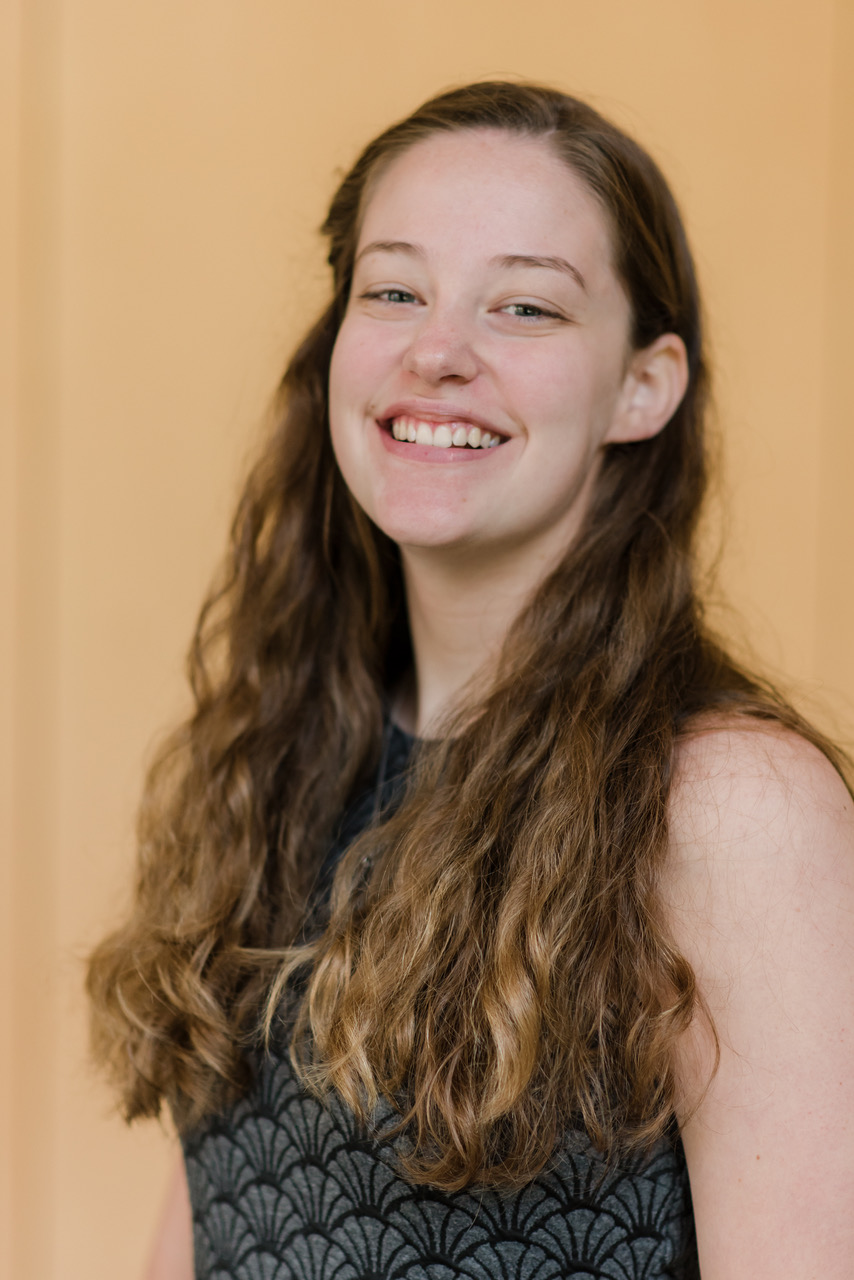
Ana Maria Schwartz Caballero. Photo by Marlayna Demond.
Zanelli also found joy and support from UMBC’s faculty. His schedule included STEM and humanities classes, including a Spanish class for heritage Spanish speakers. The class helped him be more comfortable in a predominantly English environment and learn more about his first language. He met Ana Maria Schwartz Caballero, associate professor in modern languages, linguistics, and intercultural communication (MLLI), who teaches the course. Similar to his experience with HSLU, meeting professor Schwartz Caballero became one of the most important moments at UMBC.
“She advocated for me and encouraged me,” says Zanelli. Schwartz Caballero inspired him to take higher-level Spanish courses. They opened up an entirely new way to engage with his language, literature, and culture. He also began working as a Spanish language translator in the local hospitals, revealing a professional opportunity made possible with an MLLI major.
Professor Schwartz Caballero became his advisor and mentor. Regularly meeting with her created the structure and focus he needed. She also provided support on a personal level, checking how he was doing and asking about his mom and grandparents. “I have a huge amount of respect and love for her. We have a lot of confianza (trust),” explains Zanelli. “She understands who I am.”
Soccer love
Grounded in who he was and what he wanted out of his undergraduate experience, Zanelli had confidence to pursue an outside interest. He is a soccer aficionado both on the field and in the world of soccer gaming where he is better known as Renatogz05. In 2019, Zanelli became D.C. United’s first-ever official professional eEports athlete to play Electronic Arts SPORTS FIFA and compete in the 2019 Electronic MLS League Series. He came in second place in the last chance qualifier bracket at the Eastern Conference finals.
Zanelli’s experience at UMBC has been life-changing. “This isn’t just about me,” he explains. “As a first-generation college student, I can now be a role model for my younger cousins. I can help and inspire them. They will not have to do it alone.”
“100% me”
“I grew up in Kensington, Maryland, surrounded by people from all over the world,” says Maya Isabella Peiris Scheirer. “As a first-generation Sri Lankan American and a second-generation German American, I am proud of my immigrant roots.”
Her parents encouraged her to be curious about everything, she says. “They taught me to ask questions and find creative solutions when challenges arose.”
Scheirer first saw UMBC when her cousin Hashani Hettiarachchi ’14, biological sciences, invited her to campus events. When it came time to pick a college, she found UMBC an obvious fit thanks to its diversity, proximity to home, and biology program. She immediately moved onto campus and jumped into her science classes. Like Cano and Zanelli, Scheirer also chose to explore courses outside of her major.
A global state of mind
Scheirer found her global studies classes to be particularly fascinating, but fitting them into her biology-heavy course schedule proved challenging. She decided to explore new possibilities, including majors where she could use her French, Sinhala, and German language skills.
“I researched interdisciplinary majors. I attended the Career Center workshops and filled out career interest questionnaires,” remembers Scheirer. While searching for a different academic path, she gained insight into the skills and interests she had been developing most of her life. She was an avid reader, making her a strong writer, and she loved multilingual and multicultural communities.
“When I found global studies, it seemed 100% me,” shares Scheirer. “The study abroad requirement as well as the writing component and interdisciplinary research were what I had been looking for.”
Opening doors
In the spring of 2020, Scheirer traveled to Germany to study German at Leuphana University of Lüneburg. The language study program also gave her a deeper understanding of her father’s German culture. Unfortunately, like many students studying abroad this spring, Scheirer had to fly back home early due to COVID-19. She hopes to return soon.
Scheirer in Germany during her study abroad. Photo courtesy of Scheirer.
Scheirer also chose to minor in gender, women’s, and sexuality studies after taking courses that expanded her perspective. “I was a feminist, but I had not viewed feminism through these theories,” she explains. “It opened a door for me.” Scheirer analyzed different feminists’ points of view through her writing while learning about how people occupy spaces differently.
Beyond her coursework, Scheirer put her writing skills to work covering arts and culture for The Retriever. She also found a community of close friends from different backgrounds through UMBC’s Equestrian Club, serving two terms as president. “Being president of the Equestrian Club taught me a lot about responsibility, collaboration, and motivating people,” she says, and it “gave me a sense of community.”
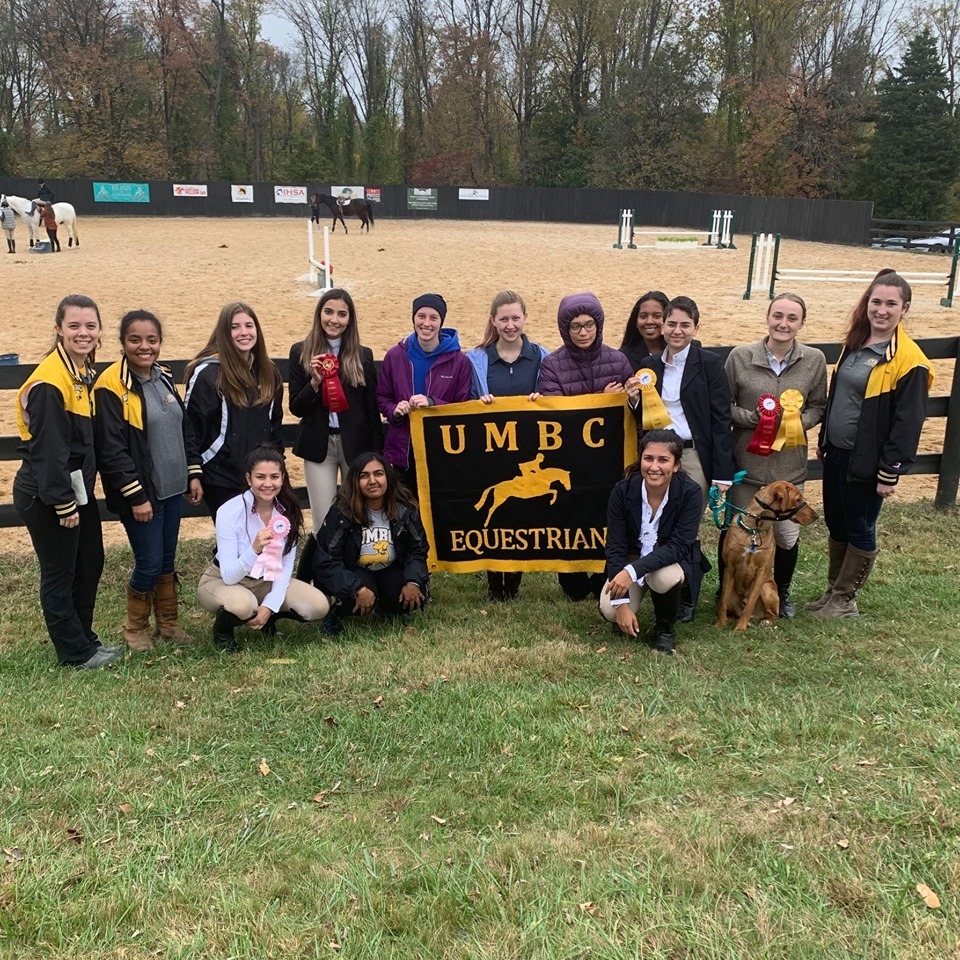
Scheirer (kneeling from the right) with UMBC’s equestrian club. Photo courtesy of Scheirer.
Be Your Best Self
Scheirer is waiting to find out what her next global adventure will be. She hopes to be an English teaching assistant in Andorra through the Fulbright U.S. Student Program. If accepted, Scheirer will move to Andorra, where her French skills will come in handy, in the fall of 2021.
As she looks back on her last four years, she is grateful for making UMBC the place where she has not just earned her degree, but also learned more about herself. Scheirer remembers receiving a UMBC t-shirt with the phrase, “Be Your Best Self.” “I know it’s on a t-shirt, but it’s true,” she laughs. She says her peers were all working hard to become their best selves regardless of the field they were studying.
“UMBC allowed me to stop worrying about what I ‘should’ be doing,” says Scheirer. “Being a Retriever gave me the confidence to know that what I ‘should’ be doing is being myself.”
Banner image: Maya Scheirer visiting Barcelona, Spain while studying abroad in Lüneburg, Germany.
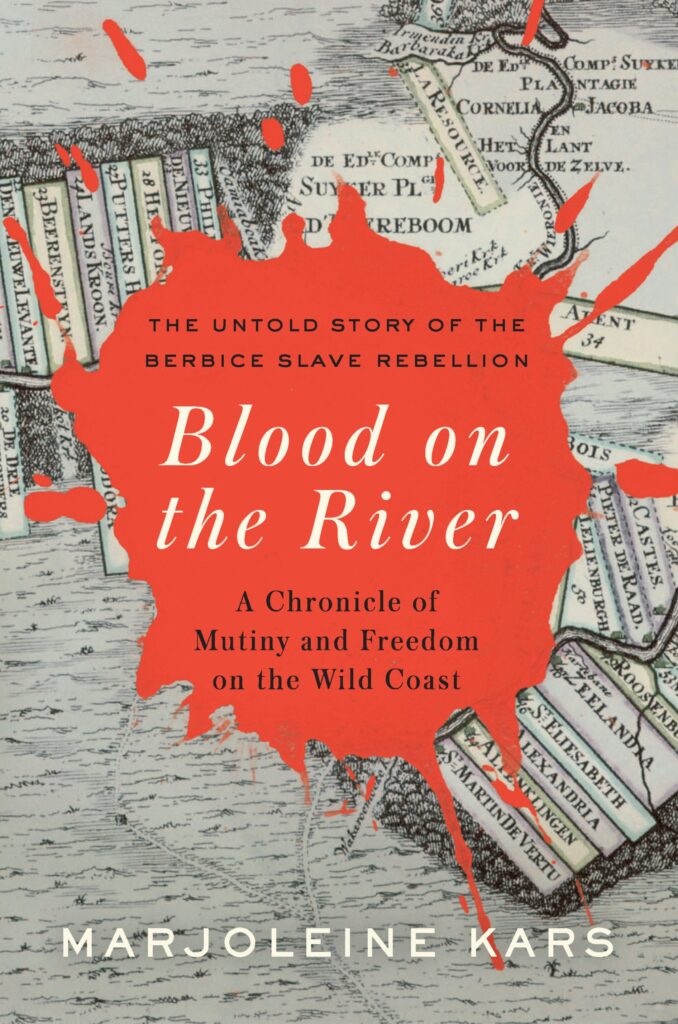
UMBC’s Marjoleine Kars has published a new book examining accounts of a nearly successful rebellion of enslaved people just over 250 years ago. Blood on the River: A Chronicle of Mutiny and Freedom on the Wild Coast (The New Press, 2020) chronicles a rebellion by enslaved people in the Dutch colony of Berbice, 1763 – 1764. This uprising took place thirty years before Toussaint L’Ouverture led a successful rebellion by enslaved people in Haiti against French colonizers.
“It is important that people know that there is a long history of African people, people of African descent, and in the African diaspora, fighting against oppression and putting their lives on the line like they are today,” says Kars, associate professor of history. “There is also a long tradition of people having different ideas about how to fight oppression and what life should look like at the other side.”
Unexpected archival find
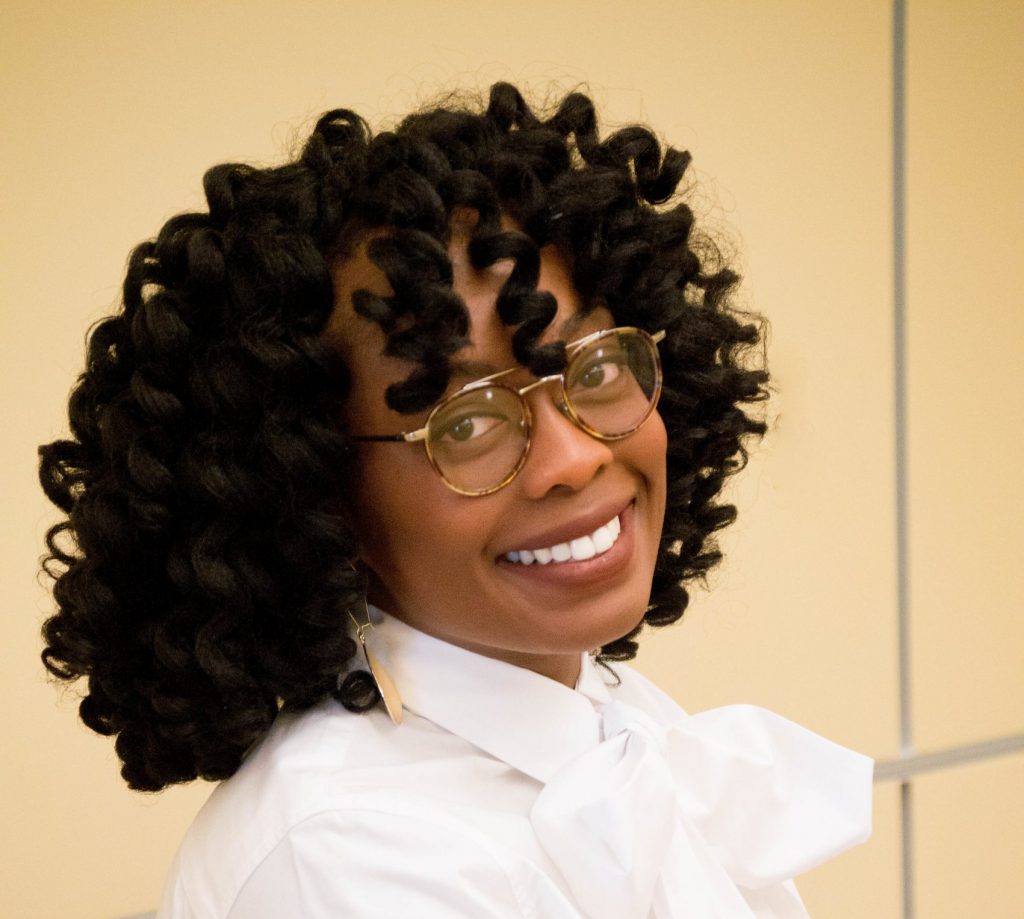
Marjoleine Kars. Photo by Tim Ford.
Kars traveled to the National Archives of the Netherlands in the Hague many times to study primary documents about the uprising that had not been researched before. The archives house colonial documents about the rebellion, including the journals of the governor, military reports, and correspondence between officials in Berbice and the government in the Netherlands. She also came across a rare find in colonial research that became the basis for her book: first-hand accounts by enslaved people.
The archive stores 500 pages of personal accounts from judicial investigations of people who were enslaved when the rebellion was suppressed. While these first-hand accounts are unique and essential to the book, Kars acknowledges their limitations.
The fifteen-month rebellion
“These accounts are problematic records because they were obtained under duress, translated from Creole to Dutch, summarized by the clerk, and done in third person,” shares Kars. “However, they still provide a unique and important perspective that breaks from the racist accounts of the colonial government.”
Kars uses these documents to weave an untold story about the uprising led by Coffij against the colonial government of Berbice. Like many enslaved people in the European colonies, Coffij was captured in his home of West Africa as a child and enslaved to work in the sugar plantations of the Dutch colony.
A decade before the rebellion, Berbice suffered from drought, crop failure, and the Seven Years War, which slowed the shipment of food. Enslaved people fought to stave off starvation and to survive raging epidemics, while also experiencing torture at the hands of Dutch slaveholders. As deaths rose, surviving enslaved people were at even greater risk of death through overwork.
Coffij led 4,500 enslaved African and people of African descent and 350 enslaved indigenous people in rebelling against 350 Europeans spread over five plantations. While he was leading a fight for independence from the Dutch, he was not fighting to create a democracy. Rather, Coffij sought to found a similar authoritarian government led by him and dependent on the plantation system. The rebellion lasted fifteen months.
Ideas of freedom
Cover of Blood on the River.
Kars also examines the motivations and experiences of the many people she describes as remaining neutral in the conflict. “Rebellions are suicidal. And neither side was offering a life free from slavery,” she explains. In this way, enslaved people who wanted to be independent subsistence farmers, and be free on their own terms, faced painful choices in the rebellion.
“Blood on the River is a story about the complex political internal dynamics of a rebellion and this anticolonial fight between former slaves and former masters,” Kars shares. It’s also about “the many ideas of what freedom means.”
Award-winning scholarship
Kars’s first writing on this research topic was an article focusing on the women of the rebellion. It was published in the American Historical Review in 2016. “Dodging Rebellion: Politics and Gender in the Berbice Slave Uprising of 1763” earned four prizes in 2017. She received the Vanderwood Prize, which is awarded for a distinguished article on Latin American history. She also earned the Kimberly S. Hanger Article Prize for the quality and originality of research and writing.
The Carol Gold Best Article Award seeks to promote women’s history and to support women in the historical profession. Kars received the prize in 2017, which acknowledged her article as the best peer-reviewed journal article of the year.
The Forum on European Expansion and Global Interaction, affiliated with the American Historical Association, also gave Kars their biennial article prize. This prize recognizes “outstanding and path-breaking scholarship that furthers historical understanding of the circumstances, causes, and consequences of increased global interaction, worldwide exchanges, and cross-cultural connections in the early modern period.”
Funding for research
Research for the book spanned over a decade. During this time Kars received major funding from various organizations. Kars was a Huntington Library Fellow in 2018 – 2019. She was a Fernand Braudel Senior Fellow at the European Institute in Florence, Italy between 2016 and 2017. She also received a Franklin Research Grant from the American Philosophical Society, an NEH Fellowship for College Teachers, and a Mellon InterAmericas Fellowship from the John Carter Brown Library over the course of five years.
UMBC also supported Kars’s research for this book. Kars received a College of Arts, Humanities, and Social Sciences Research Fellowship. She also received a Dresher Center for the Humanities Residential Faculty Fellowship and a Dresher Center for the Humanities Summer Fellowship, and a UMBC summer fellowship.
Jasmine A. Lee, director of inclusive excellence in UMBC’s Division of Student Affairs, is now also leading UMBC’s Initiatives for Identity, Inclusion and Belonging (i3B). The new i3B brings together UMBC’s Mosaic Center, Interfaith Center, and Pride Center to create “opportunities for students to build their awareness and knowledge of diverse people, cultures and belief systems.”
In a recent conversation with UMBC News, Lee discussed the intention and goals of i3B, and the support and guidance her team offers to students and staff across campus. As the featured speaker at UMBC’s recent Hill-Robinson McNair Lecture, she also shared the impact of her experience with the McNair Scholars Program. The national program, which has supported 392 students at UMBC since 1992, prepares talented college students who are first-generation, low-income, or from underrepresented minority groups, for doctoral study.
Event introduction is at 5:47. Lee’s lecture begins at 21:00.
UMBC News: What was the intention in creating i3B?
Lee: The intention was to elevate and amplify diversity and inclusion work, focusing on students. The work has been happening, but i3B gives this work a distinct space within the Division of Student Affairs.
In our work we are thinking about how to support students in their identity development, how to help them find belonging, while they also cultivate a sense of belonging for others, and how to see themselves and one another. We also do the same with faculty and staff. We support them in doing this work within the context of their social identities specifically as it relates race, ethnicity, gender and sexuality, spirituality, and religion.
i3B is equipping folks with the awareness, skills and knowledge—through dialogue, workshops, educational programming and training—to become the type of person who knows how to cultivate and create inclusive excellence at an institution. For me, what inclusive excellence means is a daily recommitment, a daily walk. I don’t think it is ever something we arrive at. I think it is something we have to be committed to and actively engage in. The work that we do in i3B is about how we get there.
UMBC News: How can students engage in social justice work when they are juggling so many responsibilities?
Lee: For folks who want to be engaged and can’t see how, it is important to start with self. Critical self-reflection is required. How do I show up? It’s important to think about the identities you represent. Pay attention to what privileges these identities provide or take away. Be aware of the access you have. How do they intersect to create my unique lived story? How does that impact how I interact with others and how others interact with me? Starting with themselves leverages their most immediate sphere of influence.
Jasmine Lee. Photo courtesy of Lee.
I think sometimes it is easy to hop in a protest—to be engaged in an abstract vocalization of what needs to happen. I think that is easy. It is really hard to talk to your friends, parents, and co-workers about something that they did or said that was racist, homophobic, or problematic. Think of ways you can drop breadcrumbs. Plant seeds that create an environment. Even if it’s just at home. Talk about and question together. Critically reflect on the things that you are hearing. Pay attention to the way you are talking, and what you are seeing in the media.
For people who have been doing it for far too long, it is OK to take a rest. I now recognize that rest and prioritizing you matters. Audre Lorde says, “Caring for myself is not self-indulgence, it is self-preservation, and that is an act of political warfare.” If I don’t fight another day my existence is the resistance. The fact that I take up space in areas that are literally places that were not created for me—that is the resistance.
This is why I believe dialogue is so important. It is asking us to love justice more than we hate oppression or the people that are enacting it. It is really predicated on radical love, humanity, and the inherent dignity we all have as humans.
UMBC News: You were the keynote speaker at this year’s annual Hill-Robinson McNair Lecture. How did your experience as a McNair Scholar shape your work in diversity, equity, and inclusion?
Lee: I am a first-generation college student. My parents went to college after my brother and I began college. We had to figure out the college process on our own. I was never a good high school student because traditional K-12 education did not fit me as a learner. I started at community college and then transferred a couple of times to different universities for family reasons. After exploring a variety of majors over the years, I found social work. It was about connecting with people through a dialogue process. It was me. I graduated from Eastern Michigan University with a bachelor’s degree in social work.
Lee, in the middle, with her and mentor, Betty Brown-Chapell. Photo courtesy of Lee.
Before graduating, one of my professors, Betty Brown-Chapell, emerita professor of the School of Social Work at Eastern Michigan University, noted my research skills. She suggested I join the McNair Program and pursue a Ph.D. I didn’t want to do the work. After she asked for the fifth time, I agreed. She became my mentor and my entire life changed. As a McNair, I became a nationally certified dialogue facilitator. I also published and presented my research, and worked at a center similar to i3B. The McNair Program helped me realize that exactly the way that I think and the way that I view the world is valuable and it is missing.
After completing a master’s in social work from the University of Michigan, I pursued a Ph.D. in higher, adult, and lifelong education at Michigan State University (MSU). The program shifted my understanding of what was possible for my future. Every single aspect of the life I have now is a direct result of the McNair Program.
Lee with her mother at her doctoral commencement ceremony. Photo courtesy of Lee.
At MSU, I also led development of the Madison Academic Diversity Initiative (MADI). It connected students with mentors and other supports to increase their sense of belonging and connection and boost student retention. What I learned in the development of the program and from the students themselves continues to show up in my work.
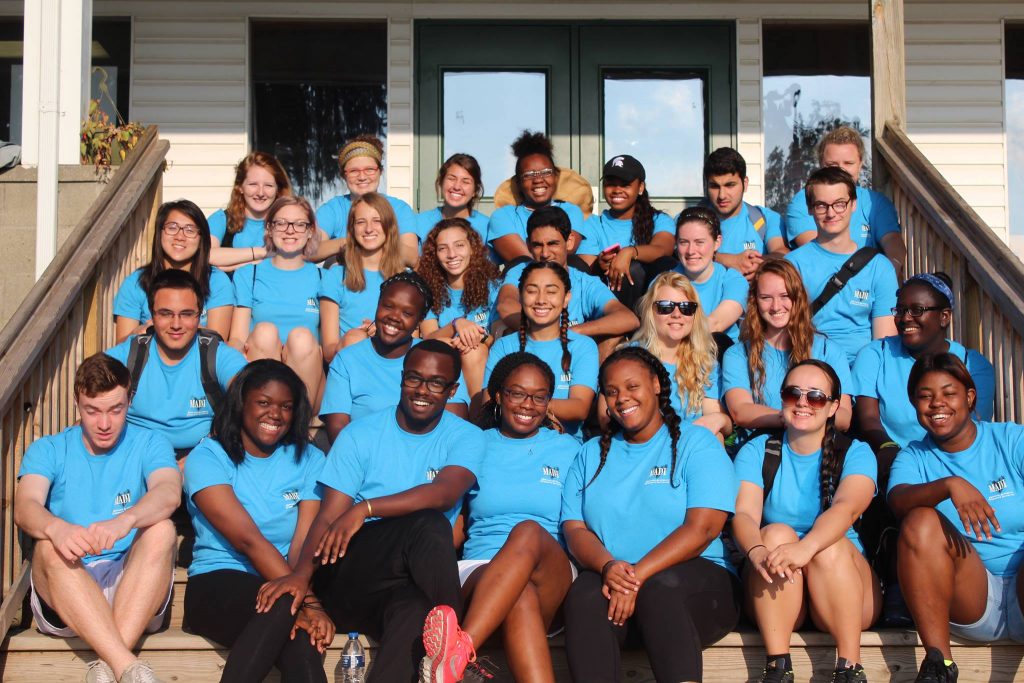
Lee, fourth from the left in the first row, with the second cohort of the Madison Academic Diversity Initiative. Photo courtesy of Lee.
UMBC News: What advice would you give other McNair Scholars, at UMBC or across the country?
Lee: I would want them to know that sometimes, and maybe most of the time, what might feel like a setback is a setup for something that is supposed to happen. I think it is important to understand that when things don’t happen the way you want them to, it is not inherently a “no” even if the door is shut. Perhaps that door shut so that another could open, even if it is a year later. It is also a reminder that no matter what happens—Ph.D. or E.D.D., or no terminal degree—you are still enough.
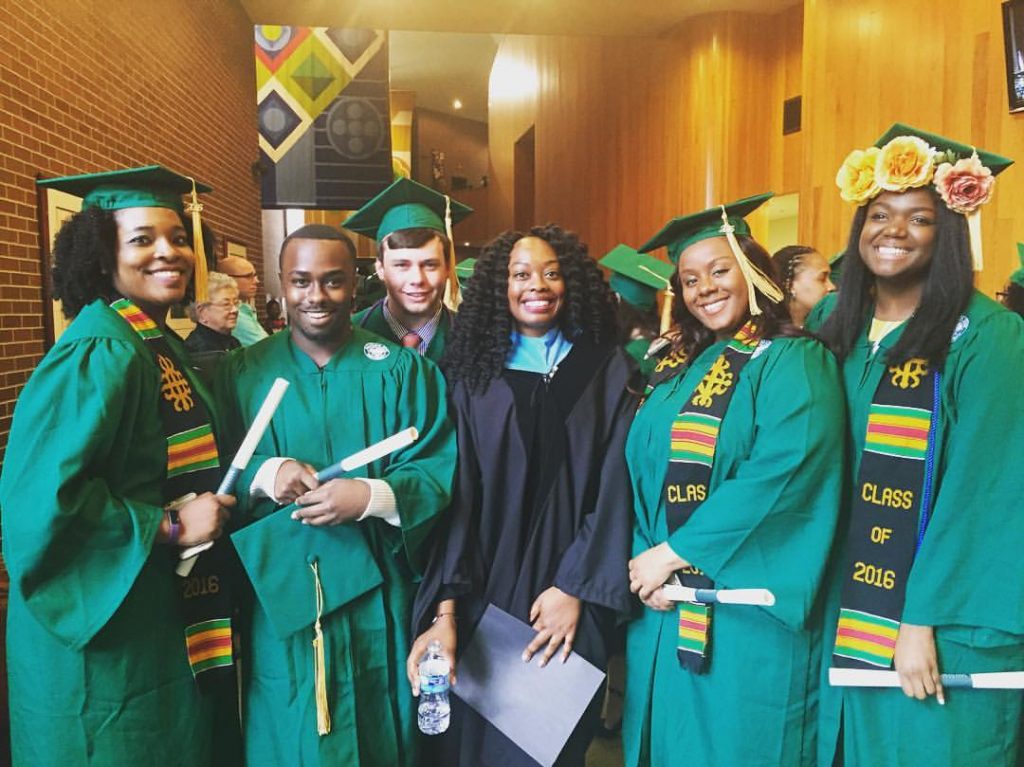
Lee, in the middle, at her doctoral commencement with a group of undergraduate students who began their degree at the same time as Lee. Photo courtesy of Lee.
I would also say to remain humble. Be aware that your terminal degree is privileged. People who have lived experiences beyond yours are often overlooked or their voices and stories and expertise are undervalued. Always, always, always accept the privilege and responsibility that comes with having a seat at the table. Create spaces for other people. Bring other chairs or drag that table to them.
UMBC’s Sherman Center for Early Learning in Urban Communities is now in its third year of strengthening and expanding early childhood education in Maryland. The center was founded with the support of a $6 million grant from the George and Betsy Sherman Family Foundation in 2017. It has developed a series of research-based initiatives to address the needs of children from birth to eight years old in Maryland, and the workforce dedicated to educating them.
(L to R) Betsy Sherman, Mavis Sanders, Louise Corwin, and Meredith Callanan. Photo by Chris Ferenzi for UMBC.
The initial grant founding the center helped establish the Maryland Early Childhood Leadership Program (MECLP), a faculty research fellowship, and an innovative literacy program. All three elements create a body of work that is transforming early childhood education—on campus, in Baltimore City, and across the state.
Strong partnerships with researchers, schools, and families are the foundation of this work. “We never say, ‘This is what we are going to do.’ We engage our partners in conversation about what they need,” shares Mavis Sanders, professor of education and director of the Sherman Center.
“We try not to be reactive or directive, but responsive,” she says. “It is about listening. We can’t do our work without our partnerships.”
Sanders (on the right) speaking with a parent at one of the Sherman Center’s Families, Libraries, and Early Literacy Project events at Lakeland.
Investing in early childhood research
The Sherman Center’s faculty research fellowships support faculty and their doctoral students. The funding helps them undertake research that expands knowledge about policies and practices related to early childhood education. The program encourages collaborations within and across departments, fields, and institutions. Awards range from $50,000 to $100,000.
Kindel Nash andlanguage, literacy, and culture (LLC) doctoral student Josh Michael ‘10, political science and education, were the inaugural research fellows in 2017-2018. Nash is an associate professor of education and Michael is the assistant director of UMBC’s Sherman STEM Teachers Scholars Program. Their multi-year study, in collaboration with Maree G. Farring Elementary/Middle School, examines the effects of using the Read Two Impress intervention with struggling third-grade readers.
(L to R) Josh Michael, Kindel Nash, and Olivia Grimes’s ‘19, individualized study, discuss Grimes’s science lesson guide at the 2019 Summer Teacher Institute.
Two additional faculty received the award in 2018 – 2019. Susan Sonnenschein, professor of psychology, and Claudia Galindo, associate professor of education policy, University of Maryland, and former associate professor of LLC at UMBC. The team is working with Bay-Brook Elementary/Middle School and Curtis Bay Elementary/Middle School. They are studying the outcomes of the Sherman Center’s Literacy Fellows program, a collaboration with UMBC’s Shriver Center.
The program provides teachers additional classroom support from UMBC student volunteers from all majors. Sherman Center Literacy fellows volunteered for nearly 300 hours in 2018 – 2019 and more than 500 hours in 2019 – 2020.
Nihira Mugamba ‘21, political science and Africana studies at Bay-Brook Elementary/Middle School as Shriver Literacy Fellow. Photo courtesy of Mugamba.
“Dr. Sonneschein and I have been working collaboratively for ten years. We take an interdisciplinary approach to examine family and school mechanisms. This helps to improve the educational experiences and outcomes of Black and Brown students,” explains Galindo. “We have witnessed the potential and impact of the Literacy Fellows program on students and teachers in Baltimore City.”
Latest research awards focus on Judy Centers
Research awards for 2020 – 2021 were given to two research teams. The first team includes Patricia A. Young, associate professor of education, and Deborah Kabura Kariuki, clinical instructor of computer science education. Young and Kariuki are working on a year-long study, “Infusing a Culture-based Computational Thinking Curriculum in Urban Preschools.” They will partner with the Judith P. Hoyer Center Early Learning Hub at Lakeland Elementary/Middle School. Judy Centers help prepare children from age birth through kindergarten for school readiness.
Patricia Young. Photo courtesy of Young.
“It is imperative that disenfranchised students and communities have opportunities to explore computational thinking, to be active participants in this technological revolution,” shares Young. “Our research provides an introduction into the practices of computational thinking for preschoolers and the pedagogy for preschool teachers.”
The team will create an e-learning module and computational thinking instructional materials to help children at the Judy Center learn these concepts.
Judy Center staff members provide free books to early readers at a 2019 Sherman Center Families, Libraries, and Early Literacy Project event at Lakeland.
The second team includes Jane Lincove, associate professor of public policy; Lieny Jeon, assistant professor at the Johns Hopkins School of Education; and Sarah Bollard, citywide coordinator for Judy Centers. They are working on a three-year study, “Judy Centers in Baltimore: Improving Data-Informed Decisions.”
Diverse books anchor literacy
The cornerstone of the Sherman Center is its focus on improving literacy experiences and outcomes for young learners in Baltimore City. “Literacy is a gateway to knowledge across all curriculum areas,” says Sanders. The Sherman Center has implemented four literacy interventions: the Diverse Books Project; Teacher Summer Institute; Literacy Fellows; and Families, Libraries, and Early Literacy Project.
The “Integrated Learning: Science Through Diverse Books” unit developed by UMBC alumna Olivia Grimes.
The Center implements these literacy programs through close partnerships with five Baltimore City Public Schools and 50 early childhood educators. Together, they reach about 1,250 children. They also work with approximately 30 families annually who have children ages birth to three, through the Judy Centers at Lakeland Elementary/Middle School and Curtis Bay Elementary/Middle School.
A parent reads to her toddler at a 2019 Sherman Center event.
The Diverse Books Project is a growing library of books housed at the Sherman Center. It reflects the lives and cultures of children and families of color. The books are used by UMBC teaching interns, graduate students, volunteers, and faculty, and by early childhood educators. They use the books to introduce and reinforce literacy across all subjects.
Lakeland teachers deliver school supplies to a student’s home in summer 2020. Photo courtesy of Sanders.
Teaching with diverse books
During the Sherman Center’s Teacher Summer Institute teachers partner schools learn to use these books as tools to support literacy. They also explore how research-based strategies like translanguaging can support more inclusive, high-achieving classrooms.
Jennifer McMahon, associate professor of education, working with early childhood educators from Baltimore City Public Schools during the 2019 Teacher Summer Institute.
In 2019, 49 educators across the state requested 250 diverse books after working with the Sherman Center. The Institute went virtual this summer. It provided 50 early childhood educators from partner schools with nearly $15,000 worth of supplies for their students and to set up virtual classrooms.
A student from one of the Sherman Center’s partner schools unpacks new supplies for the 2020 – 2021 school year. Photo courtesy of Sanders.
Working directly with families
In addition to working with teachers, the Sherman Center also works directly with families. They are invited to attend quarterly Families, Libraries, and Early Literacy Project events at Lakeland and Curtis Bay Elementary/Middle Schools. The events provide families a safe space in their neighborhoods to meet other families. They also learn strategies to promote their children’s kindergarten readiness, and create materials to support learning at home.
In addition to these activities, a librarian from the Enoch Pratt Free Library leads a story time session for the families at the events. Families also have a chance to select and take home diverse books for their children. In 2019, UMBC distributed 178 multicultural books to families at Curtis Bay and Lakeland Judy Centers.
An Enoch Pratt librarian leads a story time at the 2019 Sherman Center’s Families, Libraries, and Early Literacy Project event at Lakeland.
Creating a new system
As the world copes with COVID-19, the Sherman Center’s literacy, professional development, and research programs will continue to adapt. The center will support the literacy needs of children throughout Maryland in the current virtual environment.
“We are not preparing teachers, administrators, public servants, and students to adapt strategies to work within the status quo of early childhood,” notes Sanders. Instead, the Sherman Center is preparing education professionals to be innovators. She says, “We will create a new early childhood education system that reflects and serves the diversity of today and tomorrow.”
Banner image: Sanders (in the middle, in red) surrounded by Sherman Center, Judy Center, and Enoch Pratt Free Library staff at the Families, Libraries, and Early Literacy Project event at Lakeland in February 2019. All photos by Marlayna Demond ’11 for UMBC unless otherwise noted.