All posts by: Catalina Sofia Dansberger Duque


UMBC School of Public Policy and APPAM work to diversify the field through outreach to students

Frances Carter-Johnson, M.S. ’07, applied physics, and Ph.D. ’11, public policy, is used to getting questions about why she jumped from physics to public policy and explaining how, in her career path, it’s really all connected.

Frances-Carter leading an interview and listening skills excercise.

“I thought I was going to go to law school but I found physics and fell in love,” says the UMBC triple alumna. Carter-Johnson earned bachelor’s degrees in physics and engineering, then a master’s degree in physics. “During that time, I also realized I enjoyed working in the community,” she says. Her mentors, President Freeman Hrabowski, Associate Vice Provost Renetta Tull, and Dean Janet Rutledge, pointed her in the direction of a Ph.D. in public policy. Today, she combines her love of analytics, physics, and math as an education data scientist at the National Science Foundation.

Learning from stories like Carter-Johnson’s, the UMBC School of Public Policy is working to create more opportunities for diverse students to see future careers for themselves in the field.

Reaching out

To move this work forward, the UMBC School of Public Policy is partnering with the Association of Public Policy Analysis and Management (APPAM), a national organization that fosters excellence in research, analysis, and education in public policy. On March 12, the partners hosted a day-long public policy camp to connect with undergraduate and graduate students, particularly from underrepresented groups, who may not be exposed to public policy as a field of study.

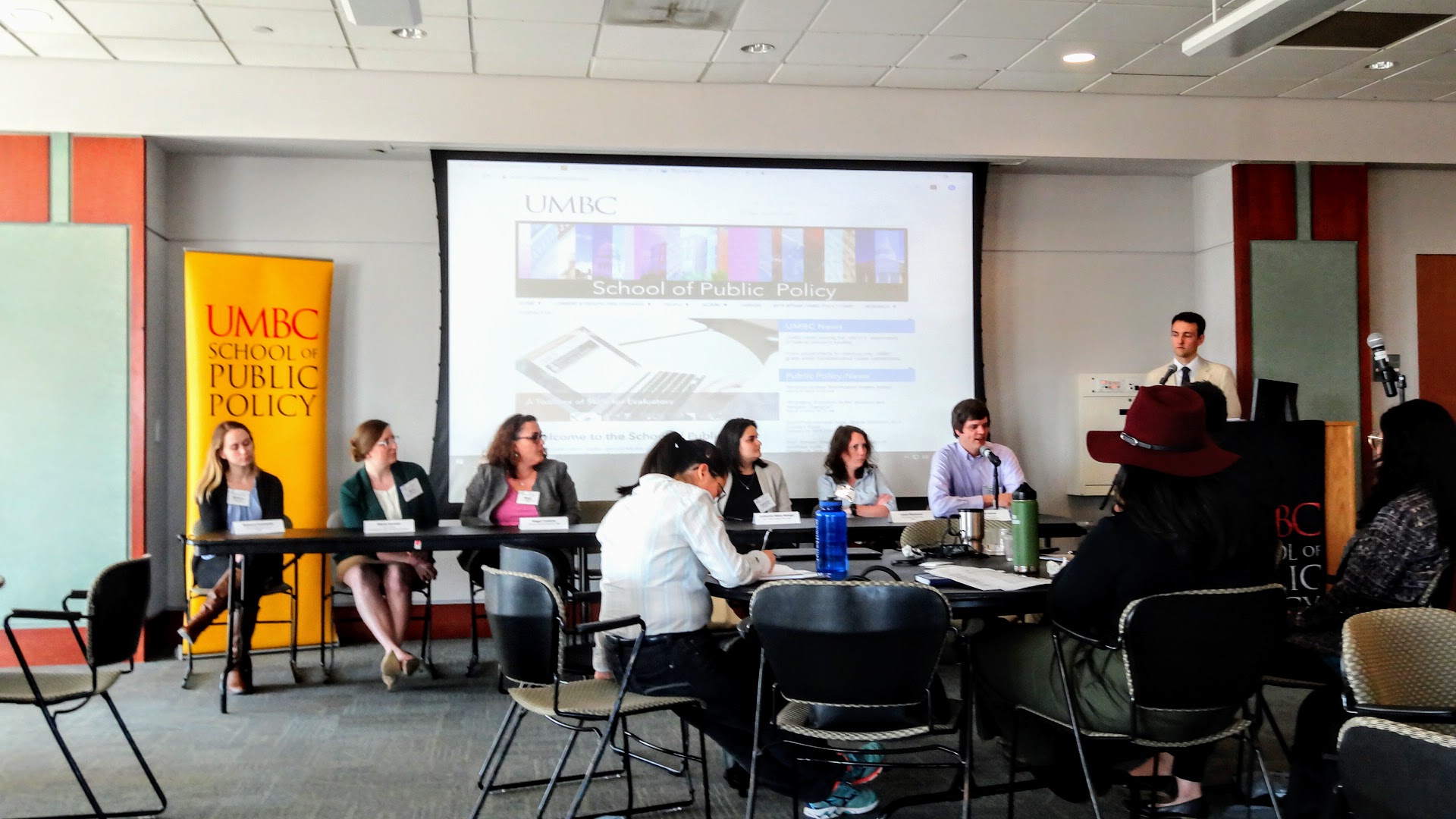
Public policy professionals and students discuss current policy issues in Baltimore City.

Susan Sterett, director of the School of Public Policy, and Jane Lincove, associate professor of public policy, envisioned the event and proposed it to APPAM. Their goal was to draw diverse students from across UMBC and the broader mid-Atlantic region.

“We felt that UMBC was uniquely positioned to meet APPAM’s goals in helping to diversify the field because of UMBC’s strong, diverse student scholars, many of whom are first-generation or come from underrepresented groups,” shares Lincove. UMBC’s proximity to Washington D.C., Pennsylvania, Virginia, and New York also provided an opportunity to connect with a large number of students about professional possibilities that exist in the field.

Sterett and Lincove worked with UMBC’s College of Engineering and Information Technology and the College of Natural and Mathematical Sciences to reach students usually not exposed to public policy. They also drew participants from other University System of Maryland schools, area HBCUs, local community colleges, and additional private universities, such as Johns Hopkins, Temple, American, Virginia Commonwealth, and Columbia.

Alumni share their perspectives

Several public policy alumni, as well as faculty and current doctoral public policy students, participated in the event, to share how they have applied their skills in the field in a broad range of ways. They shared their experiences through both small group conversations and a panel discussion.

Chris Curran (right), assistant professor of public policy, introduces the panel.

Understanding the practical value of a diverse team was an important message for Steve Sharkey, M.P.P. ’06, public policy, who serves as director of Baltimore’s Department of General Services. “We need more women and people of different races [in the policy field]. That is the future,” explained Sharkey. “Different perspectives are important for creating policy and to understanding community impact.”

Other participants focused on the need to develop policy through a more holistic, systems approach. This approach allows Margarita Cardona, a UMBC doctoral student in education policy, to implement rules and regulations for research with human subjects in her work as assistant provost of sponsored research at the University of Baltimore. “I manage a review board that depends on implementing policy to ensure the best practices in research,” explains Cardona. “Having real-world conversations about policy-driven solutions to community problems helps demystify what public policy is and can do.”

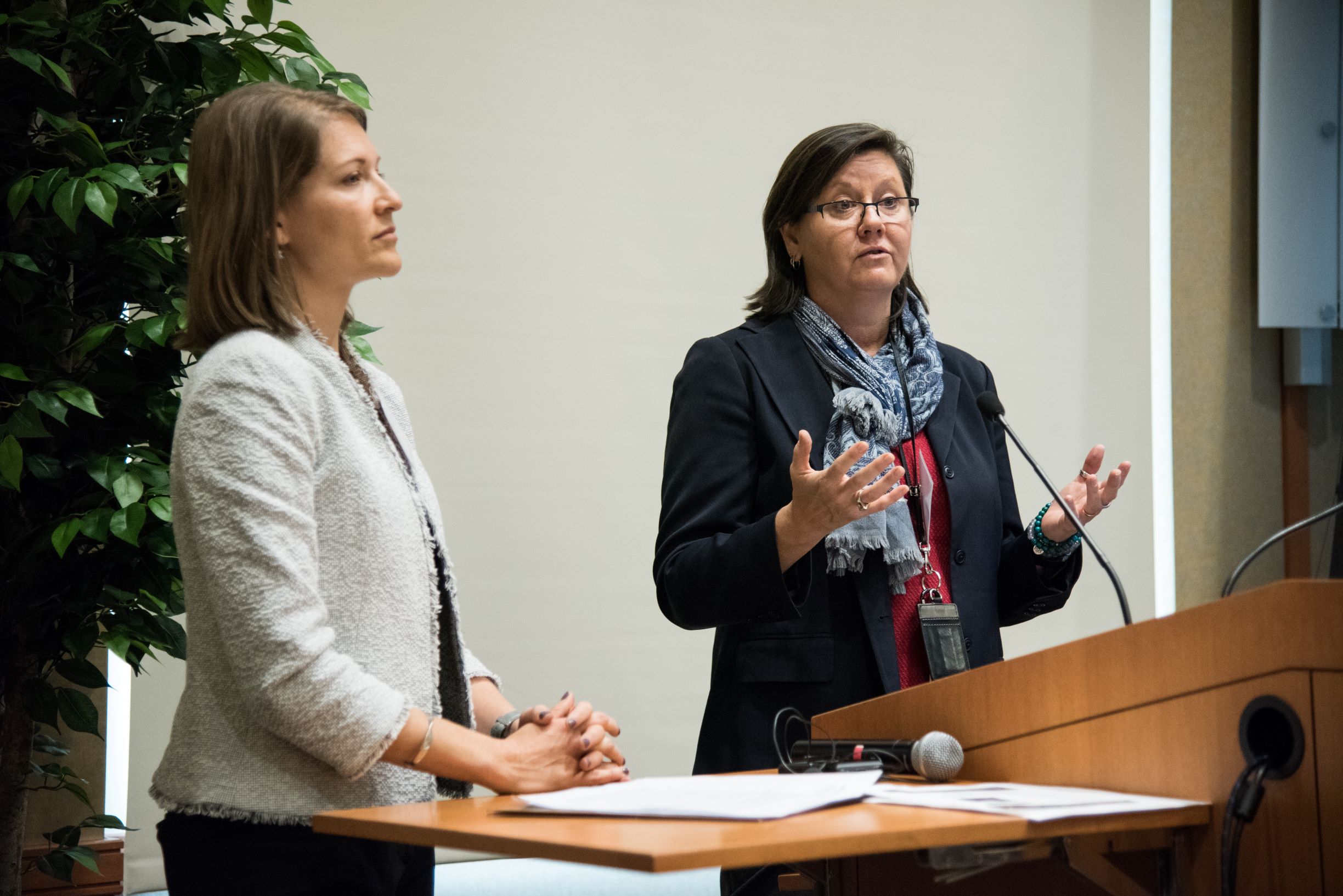
Huddleston leading a discussion on what defines public policy.

Qubilah Huddleston, M.P.P. ’17, education policy, a program manager for Code in the Schools, agrees. Huddleston is avid about sharing the realities of policy implementation at the local level. “There are only four Baltimore City schools that provide computer science education,” she explains. “Managing a program that fills that need means understanding government and education policy. We have to be intentional about making decisions for long-term positive impact.”

Hands-on learning

Throughout the day, students also focused on interactive activities led by alumni and other professionals in the field. Groups practiced foundational public policy skills like interviewing and active listening. They also practiced conducting research and implementing policy on two current Baltimore City issues: food deserts and lack of reliable heating in public schools. The second half of the camp focused on an interactive game to understand budget and fiscal policy.

Incoming freshman Shriya Samala ‘23, who has been interested in public policy and political science, appreciated the opportunity to network with professionals and peers who are in different stages of their journey. She compared notes with Emmanuel Caintic, a CCBC student interested in constitutional law, and Daniel Kozlowski ‘19, mechanical engineering and a Sondheim Public Affairs Scholar, who, like Carter-Johnson, is combining his love of a STEM field with public service. Together, they were excited about the many future paths open to them in public policy.

“The public policy camp was a great opportunity to meet UMBC’s public policy faculty and professionals in different areas,” explains Samala. “I have been working in local politics in Virginia throughout high school. I want to run for office someday,” she says. “Today was a step towards meeting my goal.”

Banner image: Amanda Latimore (left), assistant scientist at Johns Hopkins Bloomberg School of Public Health, leads a table discussion with students. All photos courtesy of UMBC’s School of Public Policy.

UMBC’s Jonathan Singer supports South Korean science teachers through Howard County partnership

UMBC’s education department has built strong, lasting partnerships across Maryland’s public school districts, from Baltimore County and Baltimore City to Howard County and Anne Arundel County. This winter an exciting new partnership has developed to support even more teachers through professional development, and it’s having an international impact.

The Howard County Public School System (HCPSS), in partnership with the South Korean Iksan District Office of Education, recently invited Jonathan Singer, associate professor and chair of education, to provide professional development to visiting secondary science teachers from South Korea.

Singer’s training utilized a curriculum designed by UMBC researchers, called INSPIRES, for Increasing Student Participation, Interest, and Recruitment in Engineering and Science. INSPIRES was previously developed and tested, with National Science Foundation support, by Julie Ross, former dean of the college of engineering and information technology, principal investigator; and co-principal investigators John Singer and Christopher Rakes, assistant professor of education. Jacqueline Krikorian, project coordinator for INSPIRES, joined Singer in presenting the material to the South Korean teachers during their time in Howard County.

The Howard County professional development began by showing the teachers how to integrate three key ideas into instruction: content, context, and the design process,” explains Singer. “It was important to provide a conceptual understanding and strategies to show how this practice is a shift from traditional teaching.”

Building partnerships, sharing ideas

HCPSS has played a unique role in connecting South Korean teachers with educational resources in Maryland. Over the last seven years, several K-12 teachers have traveled to Howard County to shadow public school teachers, with support from their district and state government. During each visit, teachers pair with a Howard County educator in a similar grade level and subject area to share ideas, professional learning opportunities, and best practices.


“The goal and purpose of this program is for teachers from Korea to gain a U.S. perspective on teaching science in innovative and creative ways,” says Min Woo, international student and family services specialist for Howard County Public Schools.

This is where UMBC comes in. Historically, the group has traveled to New York for additional professional development at Teachers College, Columbia University, following their time in Howard County. But HCPSS leaders who had experienced the positive results of the INSPIRES curriculum for local teachers thought it could be a great fit for the South Korean teachers as well. Mamie Perkins, former deputy superintendent, and Carl Perkins, former principal of Centennial High School, encouraged partnership coordinator Sunghwa Jung to reach out to Jonathan Singer to explore the possibilities.

Planning ahead

“Working with Dr. Singer was a great start. His research and the tasks he prepared benefited the Korean science teachers greatly, helping them to reflect on their own teaching practices,” said Jung. “I hope to improve our professional development through our partnership with Dr. Singer and his team.”

The partners have found the INSPIRES pilot to be successful, and they expect it will be part of future visits. UMBC’s work with teachers of the Iksan District represents the university’s second partnership with a South Korean academic institution. UMBC also has a student exchange program with Seoul National University.

Banner image: President Freeman Hrabowski with Jonathan Singer at the 2018 Celebration of Teaching event. Photo by Marlayna Demond ’11 for UMBC.

UMBC’s Susan McDonough receives NEH fellowship for more inclusive research on medieval women

“The term ‘medieval’ is used to mean something bad and backward—a period where travel was mostly viewed through the exploits of male merchants, pirates, sailors, soldiers, and clergy, not a period to help us gain insight into restrictive laws and gender roles,” explains UMBC’s Susan McDonough, associate professor of history. She’s just earned a 2019-20 National Endowment for the Humanities fellowship to further research that is more inclusive of women’s experiences in the medieval Mediterranean.

“I want to look into the lives of medieval prostitutes to help us understand the gendered and political influences that fostered their roles as businesswomen and community members,” says McDonough.

McDonough initially learned about the important role of female prostitution, a legal practice in the medieval Mediterranean, while researching her first book about witness testimony and civil court records in late medieval Marseille, France. “There aren’t many criminal court records that are still left from that period,” she notes. “I have one court record from 1380 and almost twenty percent of the cases deal with prostitution.”

McDonough explains, “Prostitutes are not twenty percent of the criminals or of the population, yet they’re overrepresented.” This fact piqued her curiosity about the benefits prostitutes might have gained by using the court system.

Defying municipal statutes

As she continued to investigate, McDonough found that prostitutes were going to court not because men had accused them of stealing or “respectable” women charged them with wrongdoing, but because of accusations and slander by other prostitutes. Beyond protecting their reputation, it seems they were using the court system as a way to access barred spaces.

“In Marseille, the criminal courts are outside and are next to an important church,” describes McDonough. “The statues for the city of Marseille say that prostitutes aren’t allowed to be in the spaces near churches. By going to criminal courts they are defying municipal statutes.”

Understanding migration

Beyond the deliberate choice of using the court system to maneuver around restrictive laws, there is also a question of migration. McDonough noted that despite the fact that most prostitutes were working in port cities around the Mediterranean Sea, they were not locals but had migrated from other places.

“The notion of migration inspired more questions about the reasons these women move. Is it out of choice or because they don’t have strong family ties? Are they going to port cities because they feel there is an economic benefit to being in a port city?,” asks McDonough. “I want to know more about what it means to travel in a body that is gendered female in the middle Mediterranean.”

Connecting the medieval Mediterranean to the classroom

The fellowship will give McDonough an opportunity to complete a year of archival research in Barcelona, Marseille, and other Mediterranean port cities, which will be the foundation for a book.

McDonough is also equally excited about bringing the research back to the classroom. “It is hard for me to leave for a year because I love teaching,” she says. “But this story will resonate with students because of how it informs us about how reputation and stereotypes affect the way people move through society and bear challenges and burdens because of them.”

Banner Image: Archive Latin manuscript about a case of a prostitute named Moneta de Nicia, from Archives Départementales du Bouches-du-Rhône 3B96 fol. 32r. Photo by Susan McDonough.

UMBC students Anna Gifty Opoku-Agyeman and Olusayo Adeleye co-create 1st U.S. conference for Black women economists

“I am privileged to receive strong support in my pursuit of a career in math and economics,” says Anna Gifty Opoku-Agyeman, M26, ‘19, mathematics, co-founder of the Sadie Tanner Mossell Alexander Conference for Economics and Related Fields. “I am an anomaly. There has never existed a formal space for Black women in economics to convene and benefit from the resources of a supportive network. I co-created one.”
On February 23, the Sadie Collective launched the first Sadie T.M. Alexander Conference for Economics and Related Fields. The event was held at the Washington D.C. office of Mathematica, a policy research organization.
The Sadie Collective is made up of undergraduate, graduate, and post-baccalaureate students from across the country, including student leaders from UMBC. Along with Opoku-Agyeman, the group includes conference co-organizer and head of logistics Olusayo Adeleye ’20, M28, economics and mathematics. Yasmin Graham ’19, mechanical engineering, served as event photographer. Bethany Woosen ’19, economics and mathematics, participated in the conference, along with other Black women in math, economics, and related fields from across the country.
“There weren’t many people like me in math and economics, which was frustrating. Through the Sadie Collective, I have the community and support I was seeking,” explains Adeleye. “Now, I am part of a network and platform that promotes Black women economists and provides access to high-level opportunities for future Black women economists.”
The conference received support from donors worldwide, including prominent economists. The UMBC delegation also received funding for accommodations from the UMBC economics department through an Alfred P. Sloan Foundation grant. This $1.3 million dollar grant program, announced in November 2017, works to increase the number of students from underrepresented racial and ethnic groups who complete highly competitive doctoral programs in economics.

Did I mention that we have a private Q&A session with the former chair of the @federalreserve, Janet Yellen? Thank you @BrookingsInst and @davidmwessel for this amazing opportunity. #SACE2019 pic.twitter.com/nqCfgPgAoc

— Anna (@itsafronomics) February 22, 2019

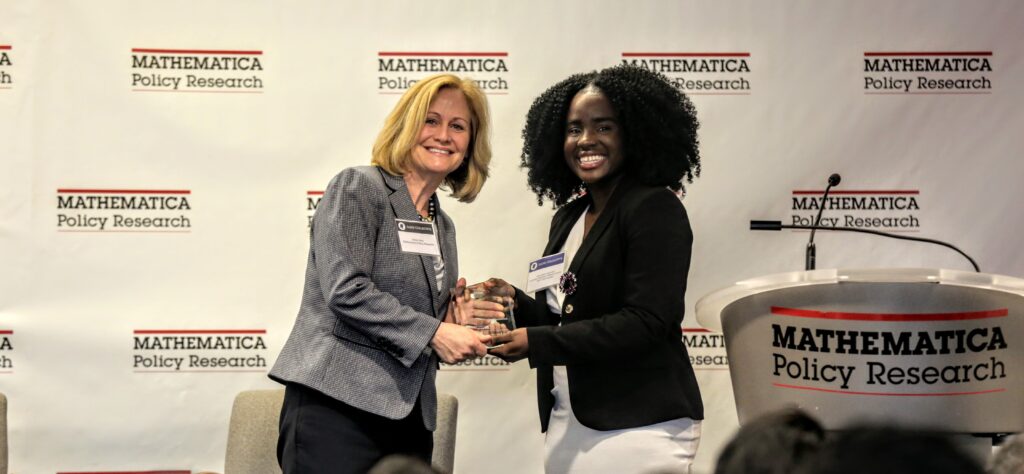
Anna receiving an award.

Finding a circle of support
Opoku-Agyeman came to UMBC with an interest in understanding health inequalities in Black and African diaspora communities. She found unwavering support for her questions and research in three women on campus: Jacqueline King, Nandita Dasgupta, and Gloria Chuku.
Jacqueline King, Ph.D. ‘09, psychology, met Opoku-Agyeman when she applied to the MARC U*Star program. King is assistant director of the program, which supports students from historically underrepresented groups in the biomedical sciences, with the goal that they go on to complete advanced degrees.
“I’ve witnessed Anna’s metamorphosis from a student who was unsure of her academic capabilities to a young woman who is positioning herself to impact the economic and public policy field,” King remembers. “Her superpower is her ability to foster connections and collaborations to make a difference.”

Panelists Sandile Hlatshwayo (first on left), International Monetary Fund, and Kehinde F. Ajayi (second from right back row), World Bank, pose with participants from University of California, Berkeley.

Opoku-Agyeman explains that Dasgupta, adjunct professor of economics, and Chuku, chair, and professor of Africana studies, have also been intrinsic to her success. “Dr. Dasgupta gave me an economic framework to understand a developing Africa,” she says, “and Dr. Chuku has provided the historical context for the structural inequalities in the African Diaspora.”
With their support, Opoku-Agyeman realized math and economics were priceless tools in understanding health inequalities which helped to eventually chose to major in mathematics and minor in economics.
Inspiration from Sadie T. M. Alexander
As Opoku-Agyeman began to look for other Black women economists to connect with, she was stunned to find so few. Seeking inspiration, she found the story of Sadie T. M. Alexander, the first African American woman to earn a Ph.D. in economics.

Participants celebrate Alexander’s legacy.

Between 1919 and 1923 Alexander served as the first national president of Delta Sigma Theta sorority, which focused on service to the African American community. She earned her Ph.D. in 1921 from the Wharton School of the University of Pennsylvania, at a time when the economics field did not allow Black women to practice. Undeterred, Alexander completed a dissertation that called for a change in economic models to include the economic lives of the Black community. She continued to be a pioneer and in 1929 become the first African American woman to earn a law degree from University of Pennsylvania Law School and the first African American woman to practice law in Pennsylvania.

The Indicator Podcast today on Sadie Alexander! Very fitting on the day of the inaugural Sadie Alexander Conference #SACE2019https://t.co/IqmGqdBw4Opic.twitter.com/OFOpG8suGR — Dina D. Pomeranz (@DinaPomeranz) February 23, 2019

When Opoku-Agyeman learned that there was no global or U.S. professional organization for Black women economists, she drew inspiration from Alexander’s pioneering spirit and decided to take action.
Legacy of Black women economists
The inaugural Sadie Tanner Mossell Alexander Conference for Economics and Related Fields drew over eighty Black women undergraduate and graduate students, and PhDs in economics, from across the United States and Canada. Notable economists Julianne Malveaux and Willene A. Johnson discussed the implications of Alexander’s dissertation research and speeches for current economic theory and future research. Malveaux, former president of Bennett College, and Johnson, president of Komaza, Inc., a development finance and peacebuilding firm, have both written extensively on the role of economics in Alexander’s life. Alexander’s daughter, Rae Alexander-Minter, and her grandchildren attended as guests of honor.

Panel on navigating the professional space as a Black woman (L to R): Linda Loubert, interim chair of economics at Morgan State University; Valerie Wilson, Economic Policy Institute; Sandile Hlatshwayo, International Monetary Fund; and Kehinde F. Ajayi, The World Bank.

Three expert panels during the event provided participants insight on how to help Black women succeed in economics, opportunities for Black women in economics beyond the undergraduate years, and navigating professional spaces as a Black woman. These panels included Black women economists from the International Monetary Fund; Women’s Institute for Science, Equity, and Race; American Economic Association; Harvard Research Scholar Initiative;  Joint Center for Political and Economic Studies; Federal Reserve Board; Africa Gender Innovation Lab at The World Bank; Economic Policy Institute; and multiple universities.
Recruiters from doctoral programs as well as prestigious financial and government institutions also attended to take advantage of this unique opportunity to reach out to top talent from across the United States.
Future of Black women economists
Opoku-Agyeman and her co-organizers see an ongoing need for a thriving network of Black women economists beyond the annual conference. They have founded the Sadie Collective to not just organize the conference, but also to connect, empower, equip, and educate Black women in economics and public policy more broadly, for years to come.

Participants celebrate the future of Black women economists.

The group has already drawn wide public interest. Recently, Congresswoman Maxine Waters mentioned the Sadie Collective in her testimony in a financial and monetary policy hearing with the Federal Reserve. NPR’s Planet Money and Forbes Magazine have also noted the importance of the conference for increasing diversity in economics.
“Similar to Dr. Alexander, people have projected their limitations onto me, often focusing on what I could not do because of my race/ethnicity, gender, socioeconomic background, age, or all of the above,” says Opoku-Agyeman. “She taught me that there is absolutely nothing that I cannot do. If want to reach a goal, all I have to do is run towards it.”
Banner image: Opoku-Agyeman presenting Diane Herz, vice president, director of human services, and chief diversity officer of Mathematica Policy Research, with a plaque of appreciation for hosting the first Sadie T.M. Alexander Conference.
All photos courtesy of the Sadie Collective.

UMBC mentors support a record number of Fulbright student award semifinalists

The Fulbright U.S. Student Program, funded by the U.S. Department of State, is now more than 70 years old. In that time, the distinguished program has selected nearly 400,000 college seniors and recent graduates to represent the United States in study, research, and teaching abroad, including over 50 recipients from UMBC in just the past decade. This year UMBC has produced thirty applicants and twenty-two semifinalists—a record number for the university.

These semifinalists have been selected for their vision to create solutions and serve as leaders around the world. They and the mentors who have supported their journeys—faculty, staff, peers, and family—await with anticipation the final decisions that will launch the next class of Fulbright visionaries.

Finding a niche in field biology

Matthew Kane ‘19, biological sciences, and member of the Honors College, came to UMBC with a laser focus on biology and track. Kevin Omland, professor of biological sciences, and Matt Gitterman, head cross country coach, offered him guidance throughout the years, as he grew his skills and explored his next steps, including applying for a Fulbright U.S. Student Award.

Omland met Kane in Biology 142, Ecology and Evolution. “Matthew was one of the most engaged students. He was a super hard and positive worker,” remembers Omland. Gitterman also recognized Kane’s high level of focus. He coached him on identifying what was important and finding the next logical step. Gitterman explains, “We worked on transferring these skills and habits to more meaningful experiences beyond college.”

Matthew Kane running cross country for UMBC. Photo courtesy of UMBC athletics.

Kane eventually combined both passions through international fieldwork as part of Omland’s Bahama Oriole research group—an experience that gave him his first plane ride. “Mathew’s natural interest and extraordinary background knowledge of field biology and wildlife, along with his physical and mental strength made him ideal for fieldwork,” says Omland.

Omland also connected Kane to a researcher at the National Taiwan Normal University (NTNU). He hopes to soon join NTNU researchers studying native bird species in Taiwan’s mountains.

Being capable of big things

Creating opportunities to discover new paths is a key way mentors support students and defines how Jamie Trevitt, assistant professor of health administration and policy, has supported Jessica Linus ‘19, health administration and policy.

“I would not be here if it wasn’t for Jamie Trevitt,” shares Linus. “At first I wanted to be pre-med and pursue a career in obstetrics and gynecology to help with African women’s health,” remembers Linus. But that changed during a trip to Nigeria, where she shadowed doctors in a hospital. There she saw structural, staffing, and management needs that kept the hospital from being a greater benefit to the community.
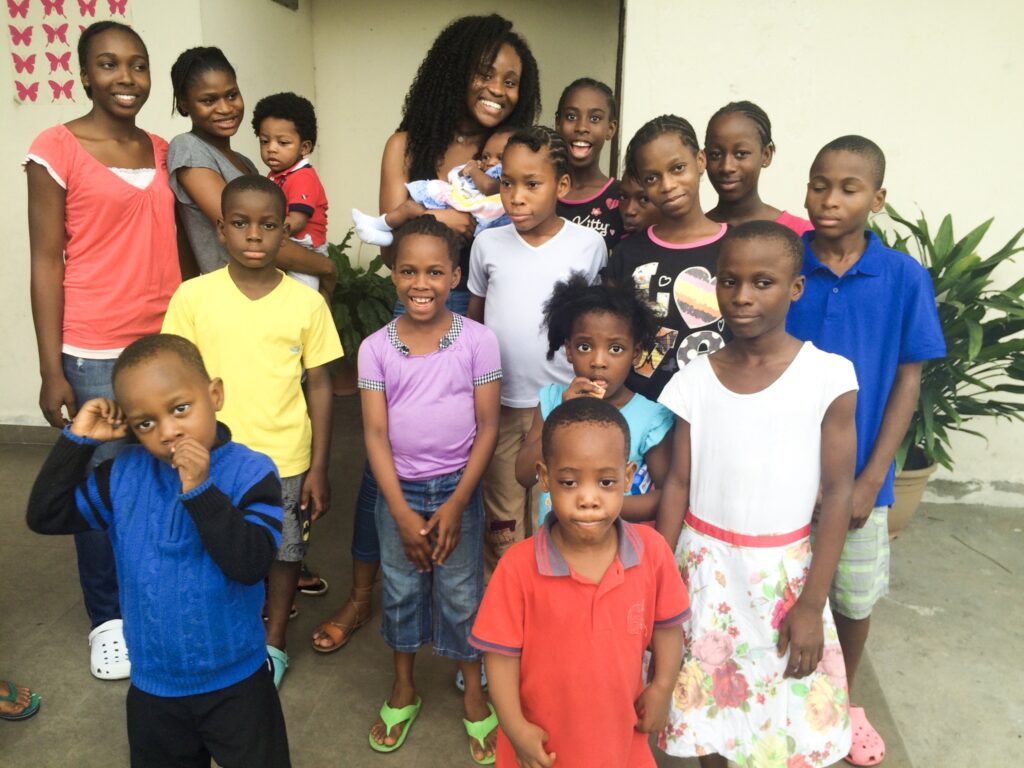
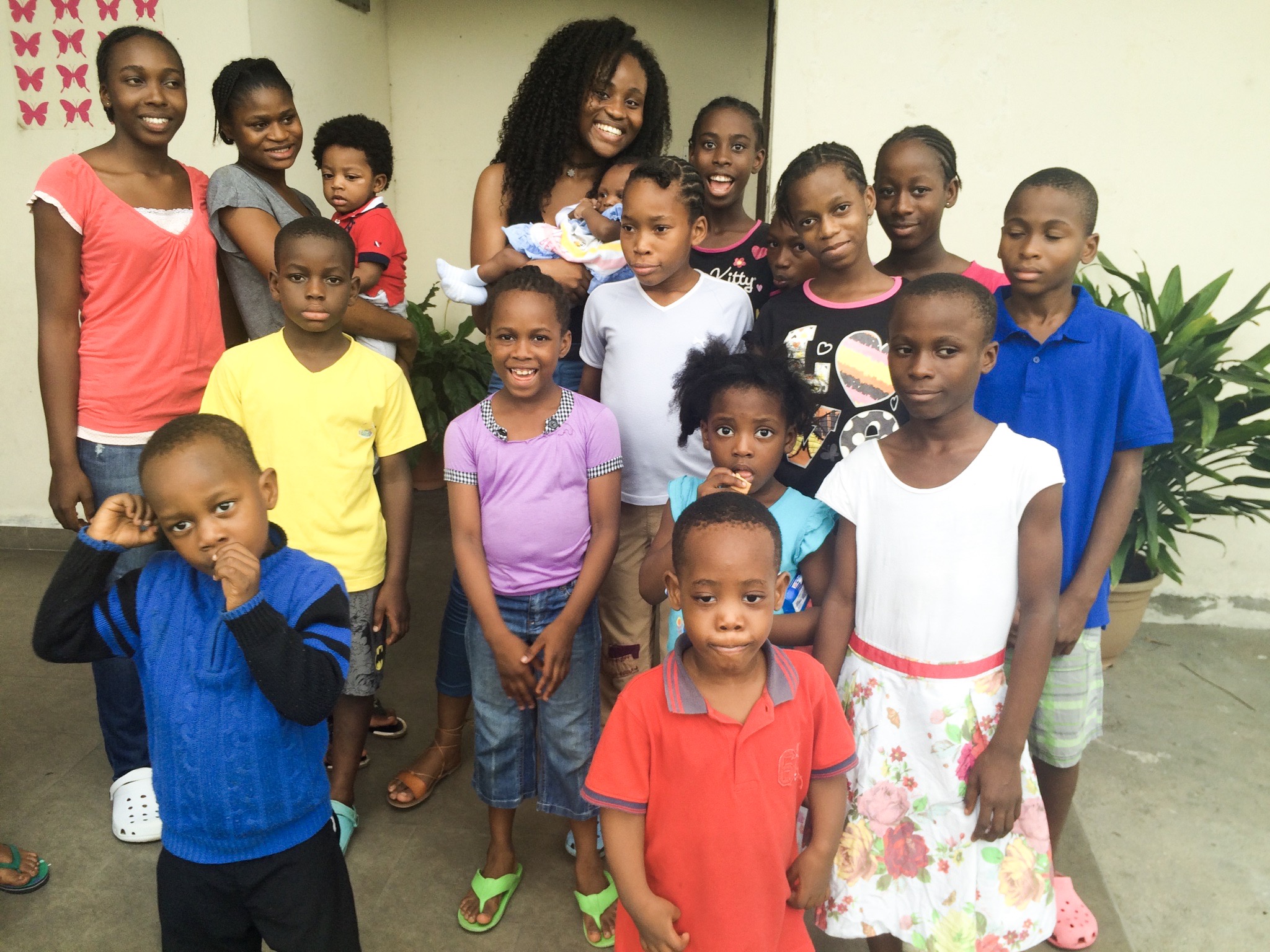
Jessica Linus at an orphanage during a service trip to Port Harcourt, Nigeria. Photo courtesy of Linus.

Following that experience, Trevitt helped Linus secure an internship in reproductive health in Rwanda through a National Science Foundation program. “The best part of my job as a professor and educator is helping students find their passion within the public health field,” says Trevitt.

The internship gave Linus first-hand experience conducting interviews, doing qualitative research, using data analysis software, working with Rwandan professors, and shadowing doctors in a hospital. She was amazed to find a thriving health system only twenty-five years after the Rwandan genocide. But she was also perplexed by the contrast she saw to Nigeria’s many economic and health care struggles.

“I had big questions,” explains Linus. “I needed to understand what made this Rwandan hospital thrive and find ways I could help the hospital in Nigeria do the same.”

Trevitt sees in Linus an emerging leader in international public health, and she knows that asking big questions and taking advantage of opportunities like a possible Fulbright research award in Rwanda will help her get there. “As a professor,” Trevitt explains, “there is no better reward than helping a student realize they are capable of big things and then watching them grow into a confident and knowledgeable expert that’s ready to make a difference in our global society.”

A new framework for understanding gender

When Sarah Chard met Robert Barrett ‘15—majoring in cultural anthropology as well as biochemistry and molecular biology—she was struck by the clarity of his interests. “Robert knew very early on that he wanted to find a research experience in biomedicine and anthropology, and study abroad in India,” remembers Chard, associate professor of sociology, anthropology, and health administration and policy. “The challenge was to determine how the pieces could fit together over several years.”

Robert Barrett receives a shiro vasti treatment during an Ayurvedic medicine class in India. Photo courtesy of Barrett.

Together Chard and Barrett explored what his unique path could look like. “There are many pathways. Validating them affirms the importance of ideas and recognizes students as scholars who bring new and exciting work to the discipline,” says Chard. “It’s important during conversations with students to help them foresee roadblocks and alternatives, and develop a flexible mindset.”

These conversations prepared Barrett to make the most of his study abroad experience in South India at Manipal University. “My research in India required me to learn a completely new framework for understanding gender, sexuality, and associated stigma,” he explains. “It tested my ability to use research methods across a language barrier, and provided concrete examples of the social determinants of health.”

Mural in India. Photo courtesy of Barrett.

The experience in India, as well as his work as a medical scribe in the U.S., have shaped his understanding of homophobia and anti-queer views as largely based on negative views of femininity. In his position as a scribe, he notes, “I observed derogatory comments and misgendering of transgender patients, revealing the lack of LGBT-specific training within healthcare.”

Next, Barrett wants to ground himself in feminist and queer theory in another cross-cultural context to better prepare himself to serve the health needs of LGBT people. The Fulbright U.S. Student Award would allow him to earn a master’s degree in gender studies at Tampere University in Finland before enrolling in an M.D./Ph.D. program.

Jodi Kelber-Kaye, associate director of the Honors College, has enjoyed exciting and fascinating conversations with Barrett, a member of the Honors College, as a mentor. “Robert is willing to ask the ‘what if’ questions that become real possibilities for social change work,” shares Kelber-Kaye. “It is a creative process. He throws out ideas, listens to my thoughts about those ideas, and refines them. He is not afraid to take intellectual risks.”

Kelber-Kaye also reflects, “Mentoring is a combination of practical and personal. This is an academic pursuit for Robert that is also founded in his own identity.” She shares, “He has often remarked that living my life as openly lesbian has helped him see what it looks like to have a rich life that is open and honest.”

Engineering possibilities

“If you are not comfortable being out of your comfort zone then you are closing the door to amazing opportunities,” is a saying that Marc Zupan, associate professor of mechanical engineering, avidly shares with his Global Engineering students. It’s an idea Jacob Schubbe ‘18, mechanical engineering, has taken to heart.

STEM students are sometimes unsure about whether they have time to study abroad while working to complete required courses, but Schubbe knew early on that he wanted an international experience. Schubbe chose to study engineering in Ireland, and used the opportunity to travel more across Europe, from Moscow to London. Gaining experience living outside of his comfort zone proved an asset upon graduation when he was hired as an engineer by a multinational engineering company.

Jacob Schubbe in Ireland at the Cliffs of Moher. Photo courtesy of Schubbe.

“I want to design green energy and help solve world problems through mechatronic engineering,” a combination of mechanical and electrical engineering, explains Schubbe. “I have a plan A, a plan B, and a plan C and they all end with me earning a Mechatronic System Design master’s program degree at Lappeenranta-Lahti University of Technology in Finland.”

But determination is only half of the formula. Schubbe didn’t know anyone in Finland or how to present all of his experiences in a compelling way in the Fulbright application. Zupan helped point him in the right direction.

“A lot of what I do in terms of mentoring is simply being available. I answer questions, connect students with other faculty, set guidelines, and provide examples,” explains Zupan.

Zupan is particularly proud that this year’s UMBC Fulbright semifinalists include three students from mechanical engineering—Scubbe, as well as Rebekah Kempske ‘19, mechanical engineering, and Lucas McCullum ‘19, mechanical engineering and mathematics. Zupan shares, “I love being there for students as they see the world open up because they were willing to step out of their comfort zone.”

For the love of teaching

“When I transferred to UMBC from Howard Community College I was surrounded with people who supported me in pursuing unfamiliar opportunities,” remembers Liam Connor ‘18, information systems, an audio-visual technician at Good Samaritan Hospital.

At UMBC, Connor learned that the Vietnam Medical Assistance Program, a student organization, needed help with managing information and data. He didn’t speak Vietnamese and didn’t have experience in the healthcare field, but he had a passion for data management and for service. Connor has now taken two service trips to Vietnam with the group, and currently serves as operations volunteer.

Liam Connor with colleagues in Vietnam. Photo courtesy of Connor and the Vietnam Medical Assistance Program.

In between trips, Connor worked at UMBC’s English Language Institute (ELI), where he first began to consider teaching as a possible career. “We watched Liam go from being a reserved student to an engaged purposeful teacher,” recalls Ryan Sheldon, academic director of ELI. Connor sought Sheldon’s expertise to understand ESOL theory and worked with Cara Aaron, an ELI instructor, to learn how theory is applied in the classroom. Connor hopes to return to Vietnam as an English Teaching Assistant via the Fulbright U.S. Student Award.

Beyond the lab

Cynthia Wagner, senior lecturer in biological sciences, advises 50 students each semester. With some of them, she focuses on selecting the right courses, but for “very organized students” like Manneha Qazi ‘18, biological sciences, and member of the Honors College, she says, “we have time to discuss life plans.”

Wagner discussed with Qazi her desire to pursue an M.D./Ph.D., to combine her interests in medicine and teaching. She also connected her with valuable research experience in the lab of developmental biologist Rachel Brewster. “MD/Ph.D. programs are very competitive and it is important to be aware of the range of experiences you bring,” says Wagner. “Manneha was diligent in broadening her skills beyond the lab.”

Qazi sought opportunities to expand her skills as a biology tutor, an undergraduate teaching assistant, a volunteer at the Esperanza Center teaching English to immigrant children, and as a teaching fellow for the McNair Scholars Program. The biology faculty recognized her commitment and impact through a Sandoz Undergraduate Teaching Award in 2017.

Next, Qazi wants to apply her teaching skills internationally in a predominantly Muslim setting. “In high school, my family moved to Pakistan for two years,” she shares. “The education system was very different from the U.S. system. It sparked a curiosity of how students learn in other educational systems.” Qazi is now a semifinalist for an English Teaching Assistant in Uzbekistan.

Manneha Qazi (front row, fourth from left) with students from her discussion section of Biology 141. Photo courtesy of Qazi.

Thinking about her conversations with Qazi, Wagner focuses on the importance of “small moments to stop and listen.” Mentors can truly make a difference, she says, by being mindful of “how each moment can impact another person”—by listening closely to students and responding to their needs.

The peer mentor

Sometimes mentors are classmates. For Leah Ginty ‘14, modern languages, linguistics and intercultural communication, and ‘19 M.A., TESOL, a classmate in her TESOL master’s program was the catalyst to pursuing a Fulbright U.S. Student Award. That classmate was Brian Souders, Ph.D. ’09, language, literacy and culture, UMBC’s Fulbright U.S. Student Award advisor.

“Even when I am in the role of student and not working, I am always happy to share and promote the Fulbright experience wherever I go,” says Souders. “I have seen first-hand how it catapults students’ success in a way they never thought possible.”

Brian Souders with UMBC’s 2018 Fulbright class. Photo by Marlayna Demond ‘11 for UMBC.

Ginty knew she wanted to work in Benin since she visited her brother during his Peace Corps experience there. She fell in love with the people and the culture of the French-speaking West African nation and decided to pursue a master’s degree in French at Boston College after graduating from UMBC. She then became a teaching assistant on the Caribbean French-speaking island of Guadeloupe, where she found she also loved teaching English to speakers of other languages and decided to pursue teaching languages as a career.

“I wanted to return to UMBC and enroll in the TESOL master’s program in hopes of returning to Benin with all the formal qualifications to succeed,” says Ginty. The opportunity arrived quicker than she expected. Souders, upon hearing her desire to return to Benin, shared with her that Fulbright U.S. Student Award program had just opened an English Teaching Assistant program in Benin.

“I am dedicated to promoting this amazing opportunity for UMBC students, as well as mentoring them throughout the process,” shares Souders. He offers every student encouragement and skills-based support to guide them through the challenges of completing a highly competitive Fulbright application. And students share that he is integral to their success in the long but worthwhile Fulbright journey.

“Every call, every meeting, has one purpose,” Souders says, “to help students believe they have the personal and academic skills to be selected for this prestigious award.”

Two of last year’s Fulbright recipients are sharing updates on their work through social media. Morgan Chadderton ’18, modern languages, linguistics, and intercultural communication, did an Instagram takeover from Kyrgyzstan where she’s teaching English. Flora Kirk ’18, ancient studies, will share the work she’s accomplished studying ancient coins in Romania on Instagram on March 7.

This year’s semi-finalists hope to research, teach, and study in 13 countries across Asia, Europe, Africa, and South America:

Research Assistant Semifinalist

  • Mathew Kane ’19, biological sciences, Taiwan
  • Jessica Linus ’19, health administration and policy, Rwanda
  • Lucan McCullum ’19, mechanical engineering, mathematics, Switzerland
  • Gabriela Salas ’10, global studies, gender, women’s and sexuality studies, Mexico

English Teaching Assistant Semifinalists

  • Jennifer Bohlman ’19, M.A., ESOL, Germany
  • Dymond Elliot ’19, psychology, modern languages, linguistics, and intercultural
    studies
  • Chanler Harris ’19, anthropology, Taiwan
  • Bryce Moore ’19, modern languages, linguistics and intercultural communication,
    Kazakhstan
  • Michael Schapiro ’19, M.A., TESOL, Colombia
  • Savannah Steinley ’19, computer engineering and English, Uzbekistan
  • Liam Connor ’19, information systems, Vietnam
  • Kelly Wan ’18, global studies, financial economics, Korea
  • Michael Tomitz ’17, business technology administration, Germany,
  • Leah Ginty ’14, modern languages, linguistics and intercultural communication, and
    ’19, M.A., TESOL, Benin
  • Manneha Qazi ’18, biological sciences, Uzbekistan

M.A./M.S. Study Semifinalists

  • Stefan Gehrman ’19, anthropology, Iceland
  • Rebekah Kempske ’19, mechanical engineering, Netherlands
  • Julian Tash ’19, Asian studies, history, Taiwan

Banner image: (L to R) Matthew Kane, Kevin Omland, and Briana Yancy ’19, environmental science and geography. Photo by Marlayna Demond ’11 for UMBC.

UMBC Mock Trial takes top prize at Georgetown’s Hilltop Invitational as competition season kicks into high gear

UMBC Mock Trial took first in late January at Georgetown University’s 8th annual Hilltop Invitational Tournament, with UMBC’s A team finishing undefeated at 8-0. On the path to tournament victory, UMBC bested teams from George Washington University, Fordham University, and Hamilton College. The team scored over 100 points above competitors, including former national champions Yale and UVA, who scored second and fourth place respectively.

The winning team is made up of students from a broad range of majors and levels of competitive experience. They include Linnea Collins ’21, global studies; Kaitlyn Kauffman ’20, political science, Sydney Gaskins ’21, political science; Thomas Kiley ’19, chemistry; Ethan Hudson ’21, English; Natalie Murray ’21, biological sciences; and Nihir Nanavaty ’19, political science.

In addition to taking the number one spot, UMBC Mock Trial’s A-Team received two high-level individual awards. Sydney Gaskins earned Outstanding Attorney awards for both sides of the case, representing both plaintiff and defendant. Gaskins is still in her sophomore year, but has already earned several Mock Trial awards, and she is a finalist for Trial by Combat, an elite one-on-one Mock Trial national championship competition co-hosted by UCLA and Drexel University. Nihir Nanavaty received an Outstanding Witness award. (Above: first on the right.)

Sydney Gaskins wins two trophys at Georgetown Mock Trial.

“The Georgetown University Tournament became the first time that UMBC Mock Trial ever maintained an undefeated record at a tournament. It was also the first time that an attorney from this program received two Outstanding Attorney Awards in one tournament,” explains Gaskins. “I am honored and grateful to have the opportunity to be a part of history in the making for UMBC Mock Trial. I hope it inspires my team to continue to dream big and believe in ourselves. Anything is possible if you work hard.”

While UMBC Team A was in Washington, D.C., UMBC Teams B and C competed at the Blue Jay Invitational at Johns Hopkins University. These teams are composed primarily of students in their first year of college mock trial, and they performed well against tough competitors. Thomas Azari ’22, individualized study, won Outstanding Attorney. Zachary Linkins ’20, computer science, competing in his first tournament, won Outstanding Witness (pictured below).

In addition to Azari and Linkins, UMBC Team B also includes Lauren Wotring ’22, political science; Fernando Silva ’21, political science; Wendy Zhang ’22, economics and psychology; Amrita Sarma ’22, psychology; and Hannah Thomas ’22, computer science. UMBC Team C includes Amanda Hampton ’22, biological sciences; Alexis Stevenson ’21, history and political science; Tyler Pollock ’21, English; Flora Jeon ’21, biological sciences; Tumee Agogbuo ’22, media and communication studies; Brandon Henry ’20, computer science and interdisciplinary studies; Matthew Brown; Rocio Marquez ’22, mechanical engineering and social work; and Joselle Royer ’21, sociology.

UMBC Mock Trial teams B and C at Johns Hopkins University.

Head coach Ben Garmoe ’13, political science, a litigation attorney in Baltimore, is extremely proud of UMBC’s three mock trial teams. For him, UMBC’s first-place finish at the Hilltop Invitational has special meaning. “I came as a transfer student to UMBC and co-founded the mock trial team with Travis Bell in 2011,” remembers Garmoe. “We competed at the tournament in 2013 and also won an award, so now we have come full circle.” Bell ’14, psychology and political science, is now a public defender in Alabama. Garmoe credits the success of UMBC Mock Trial to UMBC’s leadership in creating a rigorous and diverse academic environment where students from all backgrounds and all fields value critical thinking, rigor, and teamwork.

Along with a strong student commitment, UMBC Mock Trial’s success is also a result of dedicated coaches from the legal field, including several alumni. They include Summer Akhtar ’18, financial economics and political science; Travis Bell; Dylan Elliott ’17, history; Zachary Garmoe ’17, environmental studies; Cheyenne Smith ’16, biological sciences and psychology; and Kayla Smith ’17, interdisciplinary studies.

“Our culture is outstanding. We even draw coaches not directly connected to UMBC,” says Garmoe. “Whitney Wilder, a former competitor at the College of Charleston and now an attorney at Bodie, Dolina, Hobbs, Friddell & Grenzer, P.C., brings important expertise and guidance to the team.”

“As someone who was a four-year competitor for the program and was the program’s president as a senior, I find weekends like this past one to be both rewarding and exciting,” says Dylan Rogers Elliott ’17, history. “I came through the program and have been able to come back and coach while in law school, and nothing makes me happier than seeing both the success and potential of the UMBC Mock Trial Program continue to grow.”

Elliott shares, “We have so much young talent now, throughout the program, and it really feels like we’re getting the foundation set for a really terrific run over the next few years. This past weekend really shows us the potential of our program and underscores just how bright the future is.”

Up next for the focused team is the Owings Mills Regional Tournament, which UMBC is co-hosting with Stevenson University. This will help the teams refine their approach and prepare for the Opening Round Championship Series (ORCS), a national semifinal event hosted by the American Mock Trial Association where the nations 700 teams will compete. From there, they hope to advance to the national championship tournament in Philadelphia.

Fans can follow the team on their path to nationals through @UMBCmocktrial on Twitter, Instagram, and Facebook.

Banner Image: UMBC Mock Trial trophies by Marlayna Demond ’11 for UMBC.  All other images are courtesy of UMBC Mock Trial.

Dean Scott Casper continues UMBC’s strong partnership with Maryland Humanities and the Greater Baltimore Cultural Alliance as a new board member

Two leading advocates for the arts and humanities in Maryland have elected Scott Casper, dean of UMBC’s College of Arts, Humanities, and Social Sciences, to their boards of directors. Casper is now beginning three-year terms with Maryland Humanities and the Greater Baltimore Cultural Alliance (GBCA), continuing UMBC’s strong tradition of partnership with the two organizations.

Strong collaboration in the humanities

Maryland Humanities has long been a champion for UMBC’s humanities scholarship. Numerous UMBC faculty have received Maryland Humanities grants over the years. Most recently Felipe Filomeno, assistant professor of political science, and Tania Lizarazo, assistant professor of modern languages, linguistics, and intercultural communication, received support for their project “Honest Conversation: Faith Community Dialogues on Immigration and Race.” Additionally, Maryland Humanities has worked closely with the Dresher Center for the Humanities at UMBC to highlight humanities scholarship through the regular audio segment Humanities Connection, aired on WYPR.

Both institutions have also partnered for the annual Maryland History Day, which is sponsored by Maryland Humanities and hosted at UMBC (this year on May 11). This program engages 27,000 middle and high school students across the state in historical research projects each year, to help them develop skills in research, critical thinking, writing, and public speaking.

In the spring of 2018, when Maryland Humanities celebrated its 45th anniversary, the organization also honored UMBC President Freeman Hrabowski for his dedication to the organization and his service as a former board member.

“We’re delighted to welcome Dr. Casper to our Board of Directors,” says Phoebe Stein, executive director of Maryland Humanities. “His belief in the value and power of the humanities in our everyday lives, his extensive knowledge of the humanities in Maryland, and his work as a scholar and vast experience as a nonprofit administrator will be immensely valuable.”

A unique arts partnership

The GBCA has partnered with and supported UMBC’s arts community throughout its seventeen years as a vital arts organization for Baltimore artists. Several UMBC arts faculty have received GBCA awards to support their work, including Tim Nohe, professor of visual arts and director of the  Center for Innovation, Research, and Creativity in the Arts (CIRCA); Lee Boot, director of the Imaging Research Center; and Kathy O’Dell, associate professor visual arts and special assistant to the dean for education and arts partnerships.

Numerous UMBC faculty, staff, and alumni have received GBCA Baker Artist Awards. Most recently, celebrated jazz pianist and composer Lafayette Gilchrist ‘92, Africana studies, received a Baker Artist Award to help him continue to compose, perform, and record as a soloist and leader of two genre-defying bands.

UMBC faculty have also supported the GBCA through service and professional development work, honoring the institutions’ shared commitment to innovation and leadership in the arts. O’Dell served for many years on the GBCA Board of Directors, and continues to serve as co-chair of its Equity and Inclusion committee. Additionally, UMBC’s CIRCA partnered with GBCA in professional development intensives for faculty and students.

“It is tremendously meaningful to have Scott on our board with his expertise in the Walters, Civil War monuments, and his humanities perspective,” says Jeannie L. Howe, Executive Director of the GBCA. “We are extremely excited to have his enthusiasm and balance to make great contributions and strengthen [our work] with Maryland Humanities and UMBC as cultural partners in the region, state, and country.”

“Both Maryland Humanities and the Greater Baltimore Cultural Alliance immeasurably enrich our communities, region, and state,” says Scott Casper. “They nurture our collective humanity, our creativity, and our understanding of contemporary and historical contexts for our challenges and endeavors.”

He shares, “I am honored to continue UMBC’s long partnerships with them and excited to participate in their essential work.”

Banner image: Scott Casper with colleagues. By Marlayna Demond ’11 for UMBC.

Q&A: Robert Provine and the Science of Laughter

Have you ever tried to make yourself laugh – or make yourself stop laughing? According to Robert Provine, professor emeritus of psychology, these two actions are out of our control because laughter is all about our innate ability to connect with one another.

In Time magazine’s special edition The Science of Laughter: Our Bodies. Our Minds. Our Souls., Provine’s groundbreaking research is front and center as the basis for inspiration for laughter research across the country.

“Dr. Provine’s laughter research is revealing, engaging and original. It gave our book excellent context,” shares Kostya Kennedy, editorial director of Time books. The book covers research about laughter as medicine, as a health remedy, as well as how the timing of jokes affects laughter. “Including Dr. Provine’s work helped connect our readers more closely to the subject. Seriously. This is not a joke.”

Provine’s 2000 book  Laughter: A Scientific Investigation shares his findings of over thirty years of work in his laughter lab at UMBC in collaboration with many graduate students over the years. Since retiring, he continues to teach part-time, do a bit of research and writing, and remain engaged in “the practice of science in the public arena” – providing popular accounts of his research to print and broadcast media. He also has more time to devoted to his long-neglected hobbies, including telescope building and star-gazing.

UMBC Magazine caught up with Provine to get some insight into his research, the Laughter Lab, and the undergraduate researchers who helped make it happen.

Why did you decide to study laughter?

I trained as a neuroscientist, coming to UMBC after doing electrophysiology and neurochemistry in the lab of my mentor, Nobelist Rita Levi-Montalcini. Growing tired of the tedious work of neurochemistry and putting electrodes in brain cells, I sought an approach to brain and behavior based on the ongoing activity of normal human beings. Just as molecular approaches provide insights into complex problems in biology, I reasoned that simple instinctive acts could yield a rigorous approach to complex behavioral problems.

Laughter provides an ideal topic – contrast the simplicity of ‘ha-ha’ to the complexity and variety of language and speech. Laughter is so simple that I may even able to understand it. It’s a bonus that laughter is also contagious, providing a means of understanding the neurological basis of social behavior.

What was your path in writing the book Laughter: A Scientific Investigation (2000)?

I considered research strategies and read the literature about laughter for decades before the research actually got under way. The laughter research project started around 1990 and continues to the present. The book published in 2000 summarized the research and established laughter as a scientific problem. More recent developments are described in my wider ranging 2012 book, “Curious Behavior: Yawning, Laughing, Hiccupping, and Beyond.”

What did you enjoy most about mentoring and working with students in the lab?

All of my students are real partners in serious research, a prospect daunting to some. Some are intimidated when asked for opinions about research planning, especially when I remind them that, by virtue of their work, they are now one of the world’s experts. Scary!

My research on laughter and other human instincts was selected, in part, because the topics were neglected, the frontiers near at hand, and we could get started almost immediately – no complicated methods to learn, equipment to buy, or grants to write.

Do you remember the alumni who worked with you in the lab?

This is an elite crew of undergraduates who first distinguished themselves in my classes. I was very picky because my research students are treated more as scientific colleagues than assistants, with some appearing as co-authors. Notable research students include: Yvonne Yong ’90, Kenneth Fischer ’91,  Amanda Fernandez ’11, Marcello Cabrera ’12, Jessica Nave-Blodgett ’12, and Heidi Hamernik ’86, Lisa Greisman ’91, Iman Kennedy ’12, and Tina Runyan ’92. Some kept in touch. I recently spoke to Tina congratulating her on her promotion to full professor at UMASS Medical school. Jessica also went on to graduate school at the University of Nevada to study psychology. Iman is an Arthur Ashe  scholar/athlete at UNC graduate school. Amanda went on to medical school at University of Maryland.

Did you know your work would have so much impact?

My research topics, including laughter, yawning, and other human instincts were selected because of their unique properties as scientific problems, not for their potential media impact. However, I believe that good science is guided by a good story. If you can’t tell the story you may not clearly understand what you are doing. My research students are constantly challenged to “tell the story” about what they are doing, and why they are doing it.

* * * * *

Read more about Provine’s work in “Curious About Us,” in UMBC Magazine.

UMBC’s newest grads leave a legacy of community-building and support

Hulon Morgan ’18, graduating from UMBC this month with a degree in psychology, remembers growing up seeing his mother’s commitment to helping her congregation. He learned how to reach behind him, in front of him, and to the side to help as many people as possible. And he carried those values of service and connection when he enlisted in the Air Force and throughout his college career.

Morgan is one of many UMBC students graduating this December who exemplifies the Retriever spirit of building connections and community by offering a compassionate ear, a helping hand, and a voice of support when it is most needed. Together, these students have created a more inclusive, accessible, and supportive UMBC for everyone, and they continue to reach together to help UMBC grow.

Who I am

After attending Howard Community College, Morgan came to UMBC with a sense of possibility, but also uncertainty. “I didn’t know what I was going to do,” the psychology major recalls. “UMBC had a lot of freedom. It was a culture shock for me.”

To find his grounding, Morgan turned to a meaningful constant in his life: building a supportive community. He focused on helping peers in crisis, offering education and intervention on mental health issues, and becoming a leading advocate for suicide prevention.

Morgan volunteers as a crisis counselor for Crisis Line, a nationwide text hotline, and has already managed over 100 crisis texts this year. He also planned and led UMBC’s 2018 Out of the Darkness Campus Walk for suicide awareness and prevention. Organizers started with a goal of raising $2,000 and getting 50 participants. Ultimately, says Morgan, “We raised over $5,000 with the American Foundation of Suicide Prevention and had over 100 people attend.”

Student in UMBC t-shirt speaks in front of a class, while other students take notes.

Hulon Morgan provides a peer health educator training for fellow UMBC students. Photo by Marlayna Demond ’11 for UMBC.

While at UMBC, Morgan has also worked as a peer health educator, leading workshops and providing resources on sexual and mental health for peers across campus. When he began this work, Morgan didn’t realize service would help him find a passion for health education and promotion. He says, “I just knew that I wanted my time at UMBC to count.”

Jasmine Abrams, assistant professor of psychology, has seen Morgan’s drive first-hand, through his time in her lab. “He always showed up to his community work with passion, enthusiasm, and thoughtful curiosity,” she says. “I have no doubt that he will be a strong contributor to health promotion and equity in the coming years.”

Morgan, an Honors College student, has also taken the time to connect with prospective and incoming transfer students, sharing his experience at university events and one on one. “I want other students to know that they don’t have to go through the same culture shock,” he says. “UMBC has a lot of resources for them.”

Small group of college students chats in a classroom.

Hulon Morgan (left) speaks with fellow peer health educators after a training that he led. Photo by Marlayna Demond ’11 for UMBC.

Soon, Morgan will return to full-time status in the Air Force as an education and training manager. Like his fellow Retrievers, he expects to continue reaching out and building community beyond UMBC. “If someone needs help, I’ll be there,” he says. “Sign me up. It is who I am.”

“Why not?”

If you ask Shannon Cole ’18, biological sciences, why she has focused so much time and energy on community work for nearly a decade, she will smile shyly, shrug her shoulders, and ask you, “Why not?” After a pause, the Sondheim Public Affairs Scholar and Honors College member shares, “I am drawn to building relationships and understanding others. Volunteering is not something I plan.”

Beyond her academic work, Cole has participated in the Global Brigades student organization and in the College Journey Upward Mentoring Program (College JUMP), which is a partnership between the Refugee Youth Project and UMBC’s Shriver Center.

With Global Brigades, Cole traveled to rural Nicaragua and helped set up medical clinics, drawing on her rigorous attention to detail, organization, planning, and research skills. The experience had a profound impact on how she understands disparities in access to medical care. “It gave me a new perspective on healthcare access,” she says, “serving people who walked 30 miles to reach our clinic because there was no regular access to healthcare.”

Two young women pose for a portrait, one holding a gift back and achievement certificate.

Shannon Cole (l) with one of her College JUMP mentees. Photo courtesy of Cole.

Through College JUMP, which supports refugee youth in Baltimore, Cole mentored two young women from Burma as they prepared to apply for college. “I enjoyed connecting with them and learning about their culture and getting a different perspective,” she shares. “I remember struggling when I applied to college. I am glad I could help.” The young women were both successful in their applications, earning admission to the University of Baltimore and Community College of Baltimore County.

College JUMP also offered Cole an opportunity to continue working with the program as a fundraising specialist in her last semester. “She has truly helped College JUMP, which is only in its fourth year, grow stronger,” says Eloise Grose, assistant director of applied learning and community engagement in the Shriver Center.

After graduation, Cole will continue research and data analysis work at the Food and Drug Administration.

Meaningful connections

For economics major Charra Wudtee ’18, coming to UMBC was an opportunity to grow in new directions, and building community became a big part of that. “I wanted my college experience to be drastically different from my high school experience,” she explains, “I wanted to connect with as many people as possible.”

Charra Wudtee (center) takes a selfie with Honors College staff and friends. Photo courtesy of Wudtee.

Wudtee, a member of the Honors College, has built a vast network of peers, faculty, and staff members all committed to growing supportive communities, both on and off campus. Her desire to make meaningful connections led her to teach English and literacy to immigrants through Baltimore’s Esperanza Center, serve as an eco-ambassador for UMBC sustainability programs, and establish a day of service for freshman in the Honors College, in partnership with Civic Works.

A group of UMBC students in gold t-shirts poses in front of campus.

Charra Wudtee and fellow volunteers. Photo courtesy of Wudtee.

Two young women smile in a selfie, wearing

Charra Wudtee with a fellow RA. Photo courtesy of Wudtee.

Wudtee has also felt connected and inspired through relationships she has built as an orientation peer advisor and resident assistant. She shares that deep, meaningful, and difficult conversations with others have helped her feel successful and supported, even when coping with challenges or failures along her journey. She has channeled this feeling into supporting incoming Retrievers, saying, “I wanted students new to campus to know that someone remembers, knows, and supports them.”

Wudtee will next join Morgan Stanley as an operations analyst.

Legacy

Daniel Willey ’18, a third-generation Retriever, is a leading advocate for helping all students feel included and supported in being their authentic selves at UMBC. But just six years ago, they couldn’t have imagined the path they’d take to get here.

“I never met a gay or trans person before UMBC. Where I come from if you were gay you didn’t tell people,” says Willey. “My first year at UMBC was my first time living as an out person. I was in the process of forming my identity and choosing my pronouns. It was terrifying but I had to do it.”

Two people sit, talking and smiling, on steps in the UMBC Commons.

Daniel Willey (l) with Jess Myers (r) of the UMBC Women’s Center.

Willey found a supportive community that welcomed their voice through their work as part of the executive board of the Freedom Alliance, QUMBC, and serving on the Queer Leadership Council and the Campus Climate Workgroup. Through those leadership roles, they identified opportunities for the university to improve inclusion and support for transgender and non-binary students, such as through improving access to all-gender bathrooms.

“When you are worried about how people are going to perceive you, the safety of the situation, how comfortable you will be, using the bathroom becomes something you worry about,” explains Willey. “If I go into the women’s bathroom, are they going to tell me I’m in the wrong bathroom? If I go into the men’s bathroom, am I going to be unsafe?”

Eight people in their 20s and 30s, of diverse identities, stand in two rows in front of a brick wall.

Daniel Willey (second from left) with spring 2017 Women’s Center staff and student staff members. Photo courtesy of the Women’s Center.

As an intern at the Women’s Center, Willey helped facilitate Rebuilding Manhood, a group for men to explore ideas about manhood and to analyze cisgender privilege. They also facilitated Spectrum, a group for transgender and non-binary students.

“I wholeheartedly believe the Women’s Center would not be the community space it is today without Daniel’s legacy of courage and accountability,” says Jess Myers, director of the Women’s Center. “Daniel constantly embraces courage, authenticity, and accountability in themselves, and it’s impossible not to embrace those same qualities after working with them.”

Two people -- one in gray sweater and patterned scarf and one in light brown sweater -- pose in front of the UMBC Womens Center.

Jess Myers (l) and Daniel Willey (r) in front of the Women’s Center. Photo by Marlayna Demond ’11 for UMBC.

Beyond community groups, Willey, a gender, sexuality and women’s studies major and a member of the Honors College, also encourages students to take the time to explore these issues in the classroom. “I tell everyone I meet to take gender and women’s studies class before graduating. You can’t walk away from that class the same person you were when you walked in.”

Willey who looks forward to continuing a career as an early childhood educator. “I take with me the support of a community that helped raise me,” they say, “and the skills it equipped me with to continue to create change in any community I am part of.”

December commencement ceremonies will be livestreamed through both the UMBC Commencement website and UMBC Facebook page. Share well wishes for our grads using #UMBCgrad and #UMBCproud.

Banner image: Hulon Morgan talks with peer health educators at a UMBC workshop. Photo by Marlayna Demond ’11 for UMBC.
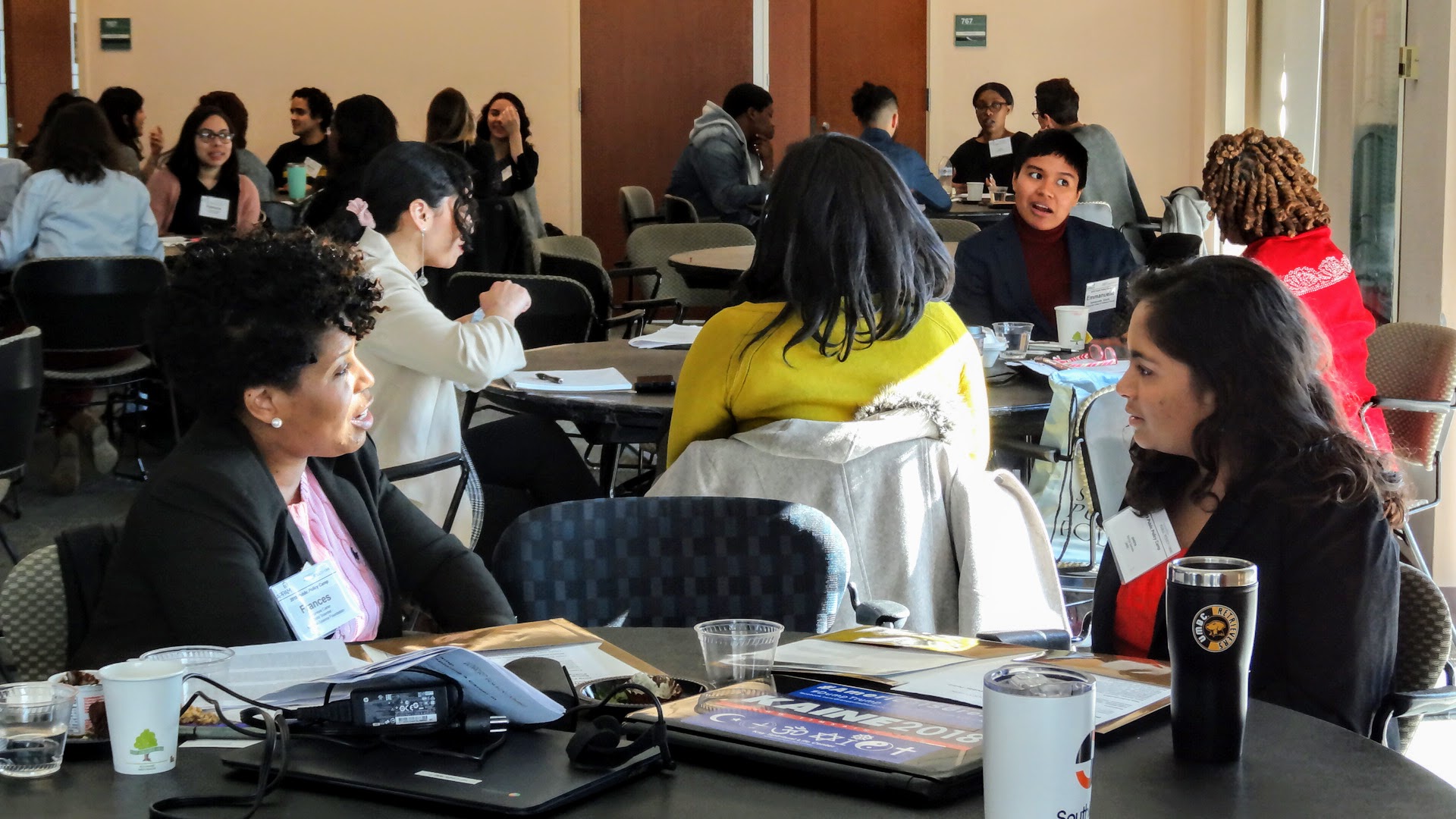
Learning to Listen – Lola Akinmade Akerstrom ’98, M.S. ’02

As an award-winning travel photographer and writer, Lola Akinmade Akerstrom ‘98, M.S. ‘02, information systems, uses her keen sense of sight to show her readers the wonders of the world. But it was at UMBC that she learned another valuable skill that has touched every aspect of her life, from career to parenting: listening.

Her trip to UMBC was an unexpected one, but a welcome opportunity when the universities in her hometown of Lagos, Nigeria shut down due to strikes in the mid-1990s. With extended family in Maryland, Akinmade Akerstrom had traveled extensively growing up but had not been an international student on a U.S. campus before.

As she settled into her new life in Maryland, she began to notice some differences between the cultures. People attempted to frame her story for her instead of listening to her, she said. Culture shock set in.

“For the first time in my life I encountered the American idea of Blackness,” shares Akinmade Akerstrom, a contributor for National Geographic, BBC, Lonely Planet and other media outfits. “In Nigeria, I was used to understanding people based on their cultural and ethnic differences, not their race, and we saw those differences as positive. That is how I saw the world, as well, and how people had seen me.”

In the U.S., she said, people made assumptions based on her skin color and accent. Unsure of her place in this new world, she stopped trying to explain through the noise and began, instead, to listen. This meant not reacting to people’s judgments, assumptions, and misconceptions – and letting go of hers, as well.

“I began to see what people were doing to me and I had to learn to not do the same. I learned not to frame or define someone upon initial meetings. I let go of all assumptions or predetermined narratives,” she said. It was not easy, but it was important to her to understand this new culture and build her own new community.

“Nigerians make the best of any situation. We don’t quietly fade into the background. We must show that we are here, that we exist,” she said. Akinmade Akerstrom immersed herself in the UMBC campus culture by joining the African Student Association, Intervarsity Christian Fellowship, and the Intervarsity Rugby team. She also enrolled in art and guitar lessons to develop hobbies that provided her balance. “My experience in college was culturally rich because I specifically sought out those sub-communities. It taught me to not allow others to define me.”

A year after graduation, Akinmade Akerstrom was hired as an information systems architect and programmer in Dayton, Ohio. She loved the position, but Dayton, devoid of the international vibe and extended family she had enjoyed in Maryland, was a true testing ground for the skills she had developed while on campus.

In need of an international community, Akinmade Akerstrom took a chance and approached Denton’s then-male-only rugby team with an idea.

“I walked onto the field and said, ‘I’m here to help you start a women’s rugby team.’ Their expressions were priceless,” remembers Akinmade Akerstrom. She was right. International women came from across Ohio to play and the team went on to win their division and develop some of the best rugby players in Ohio.

Over the next decade, she developed a thriving career and a strong community, which made it easier for her to take more risks. On a whim, she volunteered for Mark Burnett’s Eco-Challenge- Fiji, an international physical endurance team race. Her task was to travel to Fiji and listen to the athletes, the locals, the experts and document the impact of the race within a host country. The work also required her to post daily articles and pictures. Up until then, she had only taken pictures during her travels to inspire her paintings. But soon, the world of travel photography and writing became a viable career option and a true passion.

After four years of practice and confidence building, Akinmade Akerstrom decided to leave her twelve-year career as a geography information systems architect and programmer to become a full-time freelance travel photographer and writer in Stockholm, Sweden.

She was excited. Her family was terrified. Up to this point in her life, she had followed her parent’s advice by pursuing an approved traditional career. Having a minor in geography, the major she would have chosen for herself, was a compromise. This time, she listened to their concerns respectfully, but knew she could not be defined by limitations others wanted to place on her – even if they had the greatest intentions.

“My parents had a cultural mindset that felt being a doctor, lawyer, engineer, or having tech experience was the most lucrative career choices,” says Akinmade Akerstrom. “My mom was deeply worried about me when I decided to freelance full time. Ultimately they both wanted me to be happy. Initially, she wanted me to tell people my degrees when I introduced myself as a travel photographer and writer. Now my mom is my biggest fan.”

Akinmade Akerstrom’s ability to go into unfamiliar places and listen continues to be the foundation of a path that keeps evolving. Today as a Nigerian woman married to a Swede, being trilingual, and raising a family in Sweden, she is focused on leading the way for creatives of color to not be limited to working within their own cultural context, but to be accepted as authorities in other cultural contexts of which they are a part of.

“Just because I am African, I don’t always have to write about Africa. I can write about Swedish culture and write about it with authority,” says Akinmade Akerstrom.

“Above all, listen to people tell their own story the way they want to tell it,” she says. It is a skill she is passing down to her daughter, along with her love of travel. “I do this for my daughter. So when she grows up and someone tries to put her in a box and tell her this is what she can’t do because she is Black, mixed, Nigerian or Swedish. Then she can say, ‘Have you met my mom?’”

Images courtesy of Lola Akinmade Akerstrom.


Windows to the Past

When Scott Casper, dean of the College of Arts, Humanities, and Social Sciences, was asked to lend his expertise in 19th-century U.S. history to help understand a unique artifact found during the Walters Art Museum renovation of the 1850s mansion at 1 West Mount Vernon Place (known to many as the Hackerman House), he was intrigued. 

The item in question was a letter dated December 6,1861, and written by Sybby Grant, a highly skilled cook enslaved at the house, to her owner John Hanson Thomas. Casper joined the exhibition’s academic advisory committee – including experts from Morgan State University, Maryland Institute College of Art, and independent researchers – in studying the letter within the contexts of enslaved people, 19th-century Baltimore, and domestic spaces.

“We also looked at approaches to telling the stories of enslaved and employed people and how to connect particular works and artifacts in the Walters collection with the lived history of the house,” explains Casper, whose previous research includes examining the lives and experiences of enslaved African Americans in domestic settings, as well as the uses of historical evidence and memory in excavating and interpreting the lesser-known stories of historic homes.

Grant’s letter paved the way for the Walters to shift the way they present not only the history of the house but also the stories that are subtly and directly represented by the art displayed at the museum. The letter is now part of a larger exhibit by ceramicist Roberto Lugo, who is known for creating fine art ceramics using traditional techniques and incorporating portraits of people of color in history to help the world remember their contribution to society and become accustomed to seeing people of color’s faces in fine art. Grant’s letter inspired Lugo to create a series of works about working women of color.

The Walters researchers once again found a partner in UMBC at the Albin O. Kuhn Library Special Collections, which houses photography, books, and archival collections, as they searched for images of freed, working class, Black women in Baltimore. 

“Researchers from all over the world work with us to use digital copies of our collections,” said archivist Lindsey Loeper ’04, American studies, who helped with the request. “Our original works are also available for exhibit and have been displayed at the Metropolitan Museum of Art in NY and the Maison Européenne de la Photographie in Paris. The Walters request was a challenge because in the 1800’s even working class white women were not being photographed or documented.” 

The answer was found in The Baltimore African American Family Album, which contains professional portraits of African Americans from the 1860s and 1870s. The people are unidentified, and most of the photographers are also unidentified, as well. One in particular caught the eye of the Walters researchers: a portrait of a woman in a dress. The photograph inspired two fine arts ceramic tiles that now hang above the fireplace at 1 West, in what used to be the main dining room, as a tribute to Baltimore’s working women of color.

“Although I don’t know these women’s names, I know the history of my own family and they, too, are nameless, as we only have records going back a few generations, because my family used to be property,” shares Lugo. “My work in ceramics is an effort to include a community that has yet to find a place of prominence in ceramics. I’m thankful to UMBC for having such an important collection and being such an asset to our community culture and history.”


*****

Artwork by Roberto Lugo and Sybby’s letter, courtesy of the Walter’s Art Museum. Archived photography, UMBC Special Collections. 


CS3 leads research summit on community-based violence prevention in Baltimore

Lauren and Vibha sit in a conference room deep in the middle of the University of Maryland School of Medicine. They wait patiently as faculty and staff from UMBC; the University of Maryland, Baltimore (UMB); the University of Maryland, College Park; Baltimore City government officials; and staff from Baltimore-based non-profit organizations fill the round tables.

This is the Research Summit on Violence Prevention and Community Engagement hosted by UMBC and UMB. In a room of about fifty attendees ready to discuss the impact of violence prevention efforts in Baltimore, Lauren and Vibha look at each other, knowing they bring a different voice. Both recent UMBC alumni and graduate presidential fellows at UMB, they are here to speak as young Baltimore researchers, who care deeply about their communities and want to be involved in the research aimed at making their city safer.

UMB graduate students discuss violence prevention in Baltimore with UMBC’s Lauren Edwards, public policy (right). Photo by Marlayna Demond ’11 for UMBC.

“I am the community”

Lauren Highsmith ‘15, education, introduces herself to the room after a conversation about the need to work with the community. “I am the community. Please remember me,” she says. “I am a master’s student in social work at the University of Maryland, Baltimore. I was born in West Baltimore and continue to live in the area. Don’t assume the community is just what you see on television. The community are also people like me who are working in the field and doing research.”

Vibha Rao ‘14, biological sciences, M22, claps after her friend’s statement. She is from Gaithersburg, Maryland, but lives, studies, and works in Baltimore. In the last decade, she has earned her undergraduate degree and a medical degree from the University of Maryland School of Medicine, and she is currently pursuing an M.S. in clinical research.

Rao has been deeply affected by the experiences of her undergraduate and graduate peers from Baltimore whose family members have been killed by gun violence. “Their experience having grown up and gone to college and medical school in Baltimore is starkly different than students outside of Baltimore,” she says. She worries about the normalization of gun violence and wants to be part of research to address it from a medical perspective. She shares, “I don’t want violence to be normal anymore.”

Human- and community-centered research

The research summit was organized by Christine Mallinson, director of UMBC’s Center for Social Science Scholarship (CS3) and professor of Language, Literacy, and Culture, and Kate Tracy ‘03 Ph.D. and ‘01 M.A., psychology and human services, who is associate professor of epidemiology and public health and director of The Richard and Jane Sherman Center for Health Care Innovation at the University of Maryland, Baltimore. As one focus for the day’s work, Mallinson and Tracy asked participants to explore both immediate and long-term supports for communities served through the UMB Community Engagement Center. During the breakout sessions, they asked attendees to identify how they might engage more undergraduate and graduate students from Baltimore, like Highsmith and Rao, in community-facing research on violence prevention.

Mallinson (l) and Tracy (r) address the purpose of the summit. Photo courtesy of UMB.

“We wanted to purposefully use this summit to convene as many researchers as possible to examine, discuss, and share expertise and data,” Mallinson says. “Our intent is increasing collaboration and resources beyond this room, between institutions and the community, to create tangible, applicable and responsive human- and community-centered research in violence prevention with and for Baltimore.”

During the day-long event, UMBC faculty and staff representing the School of Public Policy, media and communication studies, visual arts, The Hilltop Institute, The Shriver Center, Division of Student Affairs, emergency health services, and psychology gathered for group discussion in different areas of violence prevention research. They met as cohorts focused on data, community involvement, K-12 and higher education, clinical interventions, and the intersection of the correctional and health systems.

Responding to the call from the morning discussion, the groups developed ideas for how to support the UMB Community Engagement Center through each of their focus areas, particularly building on existing work by community members. They also identified a timeline to continue the cohort work beyond the conference. 

“Collaboration between academic and community partners is key for successful violence prevention research, and developing the next generation of innovators by harnessing the talents of our undergraduate and graduate students in this process is essential,” shared Lucy Wilson, M.D., graduate program director of emergency health services at UMBC.

After the summit, the participants walked through two thought-provoking exhibitions, David Hess’s “Gun Show,” with life-size sculptures of assault rifles made from ordinary objects, and a photo series of homicide locations in Baltimore City by Amy Berbert’s ’17, visual arts. Both artists created the pieces to foster dialogue and awareness about guns and violence.

Highsmith and Berbert discussing the photo exhibit. Photo by Marlayna Demond ’11, for UMBC.
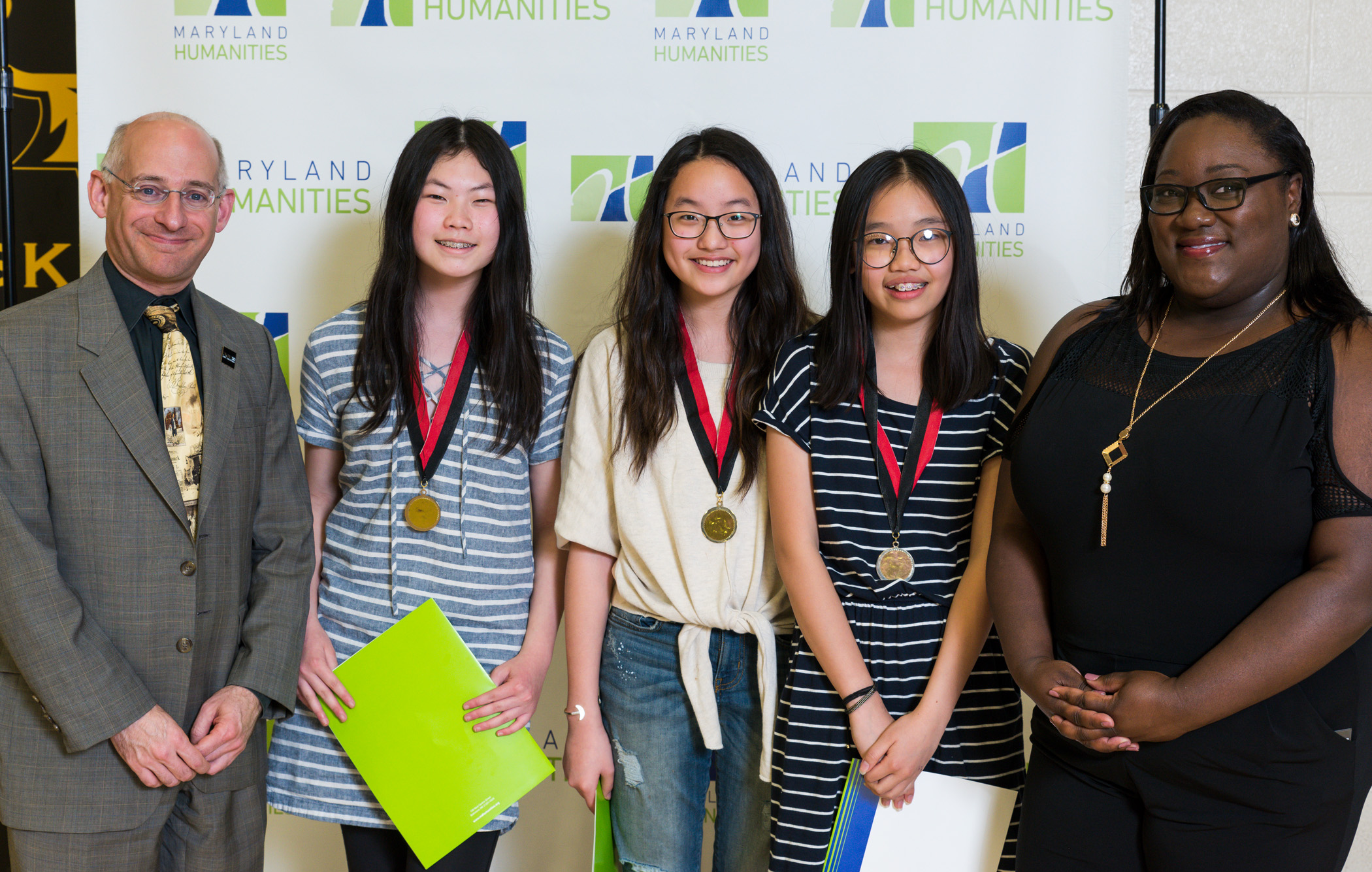
As everyone spoke with the artists, and with each other, reflecting on the day, Mallinson took this opportunity to connect with Lauren Highsmith and Vibha Rao. She wanted to hear their perspectives, and their advice, on how to engage and include more undergraduate and graduate students from Baltimore in violence prevention work, to ensure it tackles the most pressing issues, recognizes community work already underway, and can have a lasting impact.
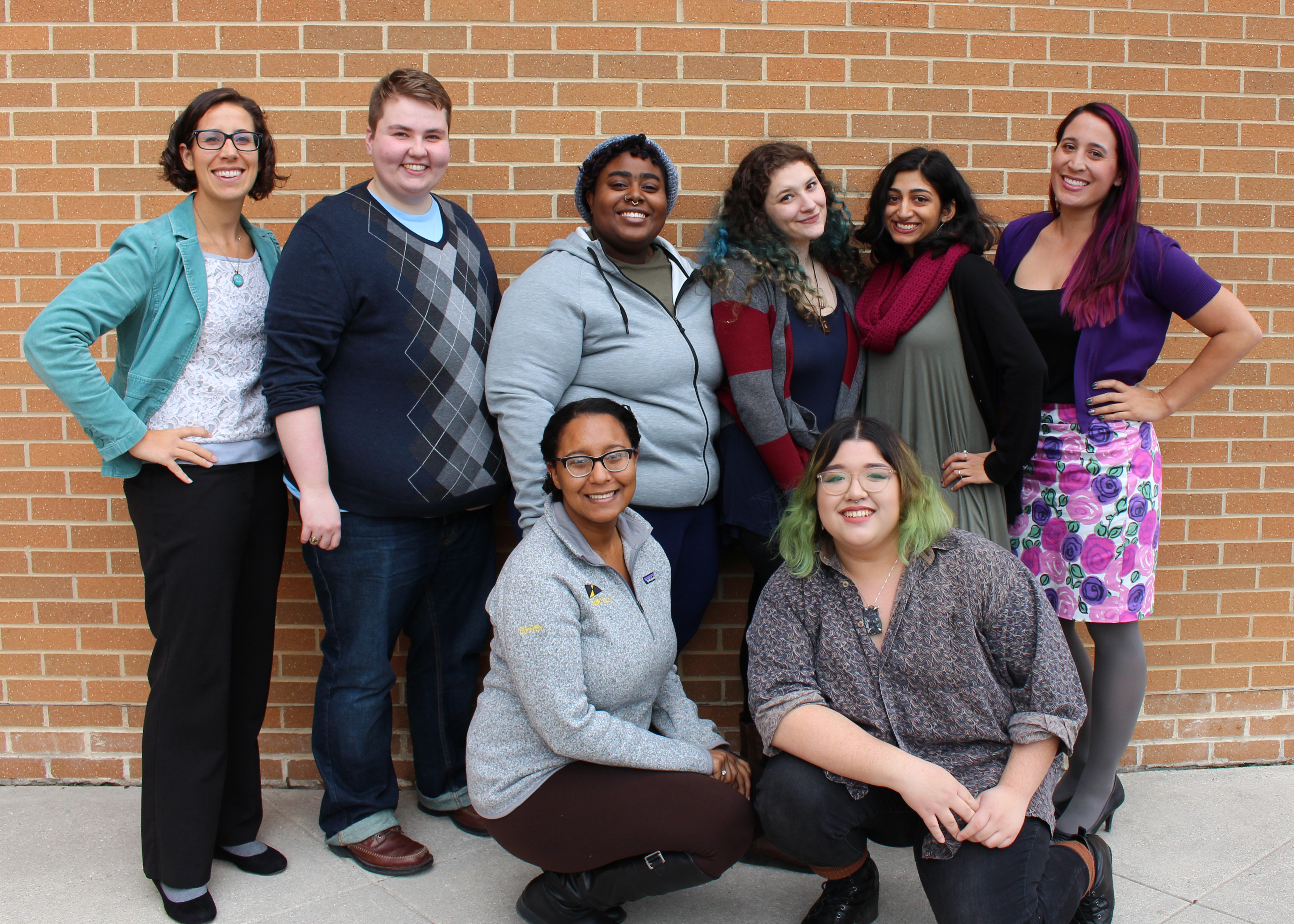
Banner image: Event organizer Christine Mallinson (r) speaks with summit participants. Photo by Marlayna Demond ’11 for UMBC.